
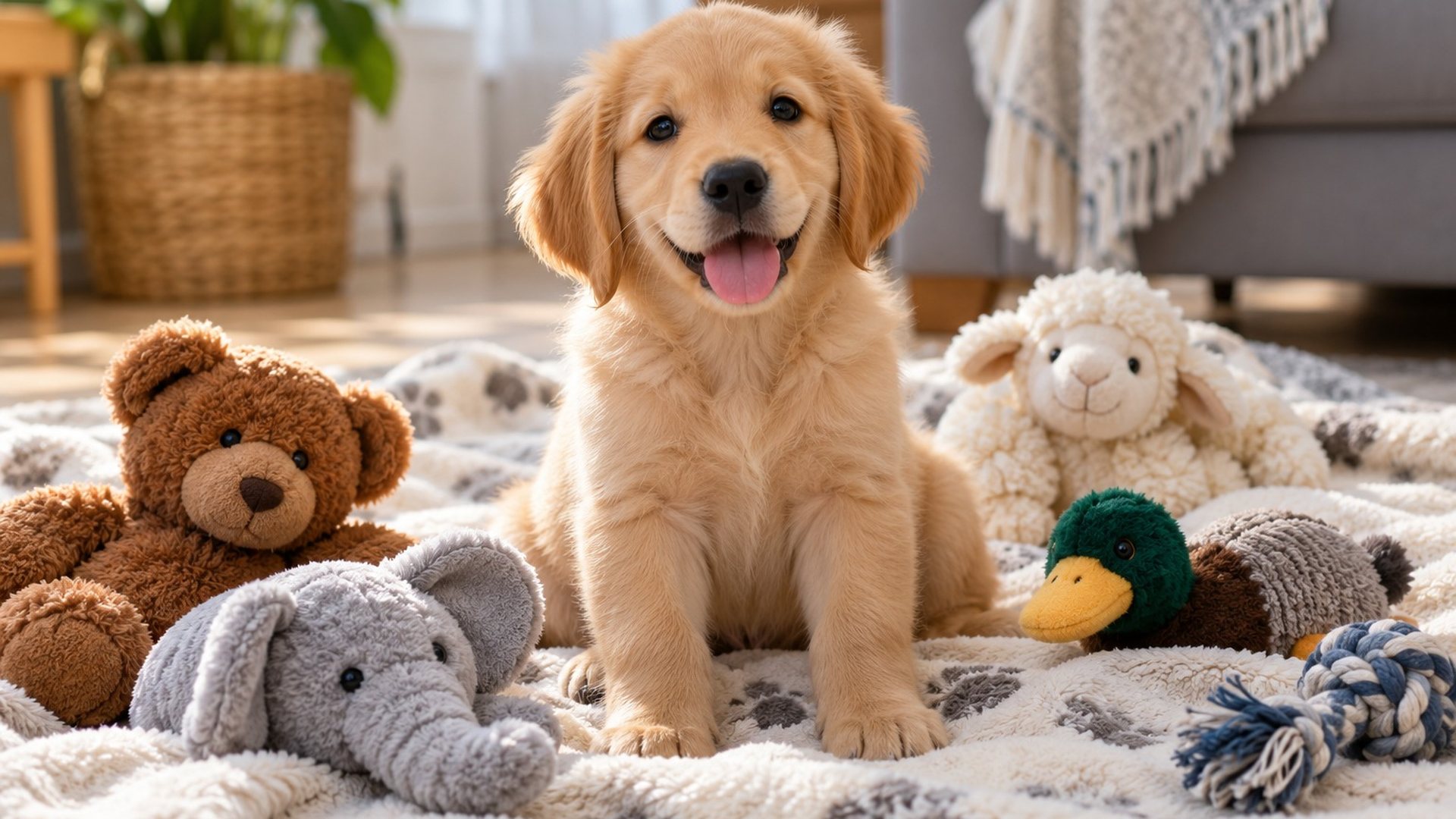
A puppy’s first year moves through clear stages: settling in and house-training in the first weeks home, a sensitive socialisation period that begins to close at around three months (roughly twelve to fourteen weeks), teething and rapid learning up to about six months, and then adolescence, when many well-behaved puppies seem to forget everything. Knowing what each stage needs lets you focus on the right things at the right time, instead of trying to do everything at once.
This guide walks through the first year stage by stage, with a checklist for each, the vet and care milestones to plan around, and links to the detailed guides on this site for every topic. Ages are approximate: breed, size and the individual puppy all shift the timings, and giant breeds in particular mature more slowly than small ones.
Try our free dog age calculator to see your dog’s age in human years.
At a glance
- Before they come home: choose a breed or type that fits your life, puppy-proof, and book a vet check.
- 8 to 12 weeks: settling in, house-training, gentle crate introduction and socialisation, which matters more now than at any other time.
- 3 to 6 months: teething, foundation training, building confidence, learning to be alone.
- 6 to 12 months: adolescence, lead manners, recall and patience. Training often seems to slip; it is normal and temporary.
- All year: vet care, parasite prevention, good food, grooming handling and plenty of rest. Puppies need a lot of sleep.
The first year at a glance: stage-by-stage table
| Age (approximate) | What is happening | Your main focus |
|---|---|---|
| Before arrival | Puppy is with mother and littermates | Choosing well, preparing the home, finding a vet |
| 8 to 12 weeks | Settling into a new home; peak socialisation sensitivity | House-training, positive new experiences, gentle routines |
| 12 to 16 weeks | Socialisation window closing; final puppy vaccinations often due at around 16 weeks or later | Safe outings, handling practice, first training cues |
| 4 to 6 months | Adult teeth arriving; growing fast | Chewing outlets, alone-time practice, lead skills |
| 6 to 9 months | Adolescence begins; hormones and independence rise | Recall, impulse control, consistency, management |
| 9 to 12 months | Still adolescent; small breeds nearing adult size | Real-world practice, exercise that suits growing joints, planning adult care |
Before your puppy comes home
The most important puppy decision happens before you meet them. Energy, grooming needs, size and temperament all shape the next ten to fifteen years, so start with an honest look at your lifestyle and space.
- Choosing the right dog breed for your lifestyle: how to match energy, grooming, temperament and health tendencies to the life you actually live.
- How to safely introduce a new dog to your household: planning first meetings with resident pets, children and visitors so arrival day stays calm.
Pre-arrival checklist
- Agree house rules with everyone at home: where the puppy sleeps, which rooms are open, and the words you will use for cues.
- Puppy-proof: lift cables, shoes, cleaning products, medicines and houseplants out of reach.
- Set up a quiet resting area with a bed and, if you plan to use one, a crate.
- Buy the food the puppy is already eating, so you can change gradually later if needed.
- Find a vet and book an early check-up. Ask what records to bring.
- Check local rules on microchipping, registration and identification tags, which differ between countries and regions.
- Choose a few safe, size-appropriate chews and toys.
8 to 12 weeks: settling in
Many puppies go to new homes at around eight weeks, although rules and breeder practice vary by country. These first weeks are about safety, comfort and routine. Your puppy has just left everything familiar, so expect some unsettled nights and lots of sleeping between short bursts of play.
House-training
Take your puppy out after waking, after eating, after play and at regular intervals, go out with them, and reward the moment they finish. Accidents are information, not misbehaviour.
- How to house-train a puppy: a week-by-week plan: timing, routines and how to reward the right spot for faster, calmer progress.
Resting and crate introduction
- How to crate train your dog without the guilt: introducing a crate gradually so it becomes a place your puppy chooses to rest.
- Teaching your dog to settle on a mat: an early, portable relaxation skill that helps at home, in cafés and at the vet.
Socialisation begins in earnest
Puppies have a sensitive period, roughly from three weeks to around twelve to fourteen weeks of age, when new experiences shape how they feel about the world for life. The goal is quality, not quantity: calm, positive encounters with sounds, surfaces, people, handling and places, always at a pace your puppy is comfortable with.
- Puppy socialisation: the window that matters most: what to expose your puppy to, how to keep experiences positive, and how to socialise safely before vaccinations are complete.
- Understanding canine body language: reading ears, tail, posture and expression so you know when your puppy is enjoying something and when they have had enough.
- How to spot the hidden signs of stress in your dog: the subtle signals, like lip licking, yawning and looking away, that tell you to slow down.
8 to 12 week checklist
- A predictable routine for meals, toilet trips, play and naps.
- Short, happy handling sessions: paws, ears, mouth and collar, with treats.
- A new positive experience most days, from the safety of your arms or garden if your vet advises.
- First vet visit and a vaccination and parasite plan.
- Plenty of sleep: overtired puppies bite and struggle to settle.
12 to 16 weeks: closing the socialisation window
Around this age the primary vaccination course is often finishing, and your vet will tell you when your puppy can safely walk in public places and meet unfamiliar dogs. The World Small Animal Veterinary Association (WSAVA) 2024 guidelines recommend starting core puppy vaccines at six to eight weeks, repeating them every two to four weeks until 16 weeks of age or older, then giving a further dose at around 26 weeks. Schedules differ between countries and products, so follow your own vet’s advice rather than a general timetable. Keep socialising, keep it positive, and start simple training.
Foundation training
- Positive reinforcement dog training: a beginner’s guide: how timing, reward value and small steps make training work, and why kind methods build a confident dog.
- Teaching a recall your dog will actually come back for: start now, while your puppy naturally wants to follow you, with a fresh cue and great rewards.
Health and care in this stage
- How to know when to call the vet: the symptoms that need an urgent call versus those that can wait for a routine appointment, especially useful with a young puppy.
- Flea and tick prevention for dogs: how parasites live, how to check your puppy and how to choose a plan with your vet.
- How to read a dog food label without getting fooled: finding the nutritional adequacy statement for growth, so you know a food is suitable for puppies.
- Dog gut health: how to support healthy digestion: why gradual food changes matter and the tummy signs that mean a vet check.
4 to 6 months: teething, chewing and growing
Most puppies replace their baby teeth with adult teeth between roughly three and seven months. Chewing ramps up, so give your puppy safe, appropriate outlets and keep tempting items out of reach. This is also a good stage to build short, positive spells of alone time and to practise lead skills before your puppy gets bigger and stronger.
Chewing and play
- Chews and chew toys: how to choose safely: sizing, materials and supervision, so teething chews help rather than harm.
- Choosing the right toy for your dog’s play style: matching toys to shredders, chewers, fetchers and tuggers.
- Dog dental care: start gentle mouth handling and tooth brushing early, while adult teeth come through.
Mental exercise
Short bursts of mental activity can tire a puppy as well as physical play does. Sniffing, foraging and simple puzzles are ideal ways to use energy without overdoing physical exercise.
- 20 easy dog enrichment ideas: low-cost sniffing, foraging and problem-solving games that settle busy puppies.
- Scent work at home: a simple step-by-step start to nose games that tire puppies out mentally.
- How much exercise does your dog actually need?: why age, breed and health shape the right amount, and what matters more than walk length.
Learning to be alone and walking nicely
- Separation anxiety in dogs: what actually helps: building alone time gradually now helps prevent panic later.
- How to stop your dog pulling on the lead: harness choice, a fixed-length lead and rewarding walking beside you.
Grooming and handling
- Home grooming by coat type: a routine matched to your puppy’s adult coat, introduced gently while they are young.
4 to 6 month checklist
- Safe chews available at all times, and items you value out of reach.
- Two or three short training sessions a day, a few minutes each.
- Gradual alone-time practice, starting with seconds and building slowly.
- Regular grooming and tooth-brushing practice with rewards.
- Recheck collar and harness fit every week or two as your puppy grows.
6 to 12 months: adolescence
Adolescence typically starts somewhere around six months and can last until eighteen months or beyond, especially in larger breeds. Your puppy may ignore cues they knew perfectly, become more distractible, test boundaries or seem suddenly worried by things they used to accept. This is normal development, not a failure of training. Keep rewarding what you want, manage the environment to prevent rehearsal of unwanted habits, and lower your expectations in exciting places for a while.
- Dog adolescence: how to survive the teenage phase: why trained puppies seem to forget everything, and how to get through it calmly.
- How to understand your dog: the simple truth behind everyday behaviour: instinct, past rewards, emotion, physical state and environment, explained plainly.
- How to understand your dog’s bark: the six common kinds of bark and what each one needs from you.
- The guilty look: what your dog is really doing: why that look is appeasement, not confession, and why punishment after the fact backfires.
Fears that can appear in adolescence
Some young dogs go through a phase, sometimes described as a second fear period, of becoming more cautious; research on its exact timing is limited. Support them rather than pushing them through it.
- Fireworks, thunder and noise fear: practical ways to help a frightened dog, and why comfort is fine to give.
- Building confidence in a fearful or rescue dog: routine, choice and patience for dogs who find the world worrying.
- The reactive dog on the lead: understanding barking and lunging as a request for distance, and how to help.
Out and about
- Car travel with your dog: restraints and calm travel habits worth building while your dog is young.
- Boarding kennel or pet sitter: how to choose: options for when you travel, and how to prepare a young dog for a stay away.
- Hot pavement and your dog’s paws: a quick surface test before walks in warm weather.
- Does your dog need boots?: when paw protection helps and how to introduce boots gently.
6 to 12 month checklist
- Keep training sessions short and rewards generous; go back a step when things get hard.
- Use a long line for recall practice in open spaces until recall is reliable.
- Talk to your vet about neutering or spaying, if relevant. Recommended timing varies by breed, size and individual health, and evidence is still developing.
- Ask your vet when to move from puppy food to adult food; this often depends on expected adult size.
- Keep exercise suitable for growing joints: lots of sniffing and free movement rather than long, repetitive runs.
Planning for the years ahead
Good habits built in the first year pay off for life. The guides below look further ahead, so you know what healthy ageing looks like and how today’s choices support it.
- Joint health in dogs: how weight, exercise, diet and veterinary care keep a dog moving well from puppyhood onwards.
- Caring for a senior dog: what changes with age, by breed and size, and what to bring to your vet’s attention.
- What your dog’s tail is actually telling you: a lifelong communication skill worth learning early.
Vet and care milestones to plan around
| Milestone | Typical timing | What to ask your vet |
|---|---|---|
| First health check | Within the first days home | Overall health, vaccination plan, parasite control, diet |
| Primary vaccination course | Several visits over the first months | Which diseases are covered locally, and when your puppy can go out in public |
| Parasite prevention | Ongoing from the start | Worming, fleas, ticks and any regional risks |
| Microchip and registration | Before or soon after arrival | Local legal requirements and how to keep details up to date |
| Neutering or spaying discussion | Often during the first year or after | Best timing for your puppy’s breed, size and health |
| Change to adult food | Varies by breed size, often around the first birthday | When and how to switch gradually |
| Booster vaccinations | Often at around six months (WSAVA suggests 26 weeks) or around the first birthday, depending on your vet’s protocol | Ongoing schedule and lifestyle risks |
Common first-year mistakes
- Doing too much, too fast. Overwhelming experiences can create fear. A few good experiences beat many rushed ones.
- Waiting until vaccinations finish to socialise. The sensitive period may be closing by then. Ask your vet how to socialise safely in the meantime.
- Not enough sleep. Overtired puppies become mouthy and frantic. Build in regular naps.
- Punishing accidents or nipping. Punishment damages trust and makes puppies hide behaviour rather than change it. Redirect and reward instead.
- Skipping alone-time practice. Puppies who are never left can struggle later. Build it in small steps.
- Giving up in adolescence. This is when training matters most. Keep going, keep it kind.
- Forgetting handling practice. Puppies who are used to gentle handling find vet visits and grooming much easier as adults.
For the timing of each injection, see this week-by-week puppy vaccine schedule, including what the names on the record card mean.
Related guide: When Do Puppies Lose Baby Teeth? A Simple, Smart Timeline.
Related guide: Spay vs Neuter: How to Make the Right, Safe Choice.
Related guide: When Do Puppies Open Their Eyes? A Simple, Happy Timeline.
Sources this guide draws on: the American Veterinary Society of Animal Behavior (AVSAB) position statement on puppy socialisation; the World Small Animal Veterinary Association (WSAVA) 2024 guidelines for the vaccination of dogs and cats; and research on canine adolescence by Asher and colleagues (2020), Biology Letters.
Handy gear for this guide
Practical picks we think suit this topic. As an Amazon Associate, Mind A Dog earns from qualifying purchases, at no extra cost to you. Prices and availability are set by Amazon and may vary by country.
- Nylabone New Puppy Starter Kit (3 Pack)
Puppy-soft chews sized for teething mouths.
View on Amazon - MidWest iCrate Double Door Dog Crate (36 inch)
Folding wire crate with a divider panel, so it can grow with your dog.
View on Amazon - Zak George’s Dog Training Revolution (book)
A friendly, reward-based guide to raising a well-behaved dog.
View on Amazon
Frequently asked questions
What is the hardest stage of a puppy’s first year?
Many owners find the first few weeks and early adolescence the hardest. The first weeks bring broken sleep and constant toilet trips, while adolescence brings forgetfulness and testing. Both are temporary and respond well to routine, management and steady, kind training.
When does the puppy socialisation window close?
The most sensitive period is usually described as running from about three weeks to around twelve to fourteen weeks of age, though it varies between individuals. Socialisation should continue well beyond that, but early experiences carry special weight.
When can my puppy go outside?
Your puppy can usually enjoy your own garden and be carried to see the world early on. Your vet will advise when it is safe to walk in public places and meet unfamiliar dogs, based on the local vaccination schedule and disease risks.
How much should a puppy sleep?
Young puppies sleep a great deal, often much of the day, with short bursts of activity. If your puppy is biting, zooming or unable to settle, they may need a nap more than more play.
At what age is a dog no longer a puppy?
Smaller dogs often reach adult size around their first birthday, while larger and giant breeds may keep growing and maturing well into their second year. Emotional maturity can take longer than physical growth.
Should I take my puppy to training classes?
A well-run puppy class that uses reward-based methods can be valuable for socialisation and learning. AVSAB advises that puppies can usually start classes at around seven to eight weeks, once they have had at least one set of vaccines a week or more beforehand and their first worming, as long as they stay up to date. Look for small groups, calm environments and trainers who never use punishment or aversive equipment.
Your puppy’s first year goes by quickly, and no one gets every stage perfect. Focus on safety, positive experiences, steady routines and kind training, lean on your vet for health decisions, and use the guides above whenever a new stage brings new questions.