
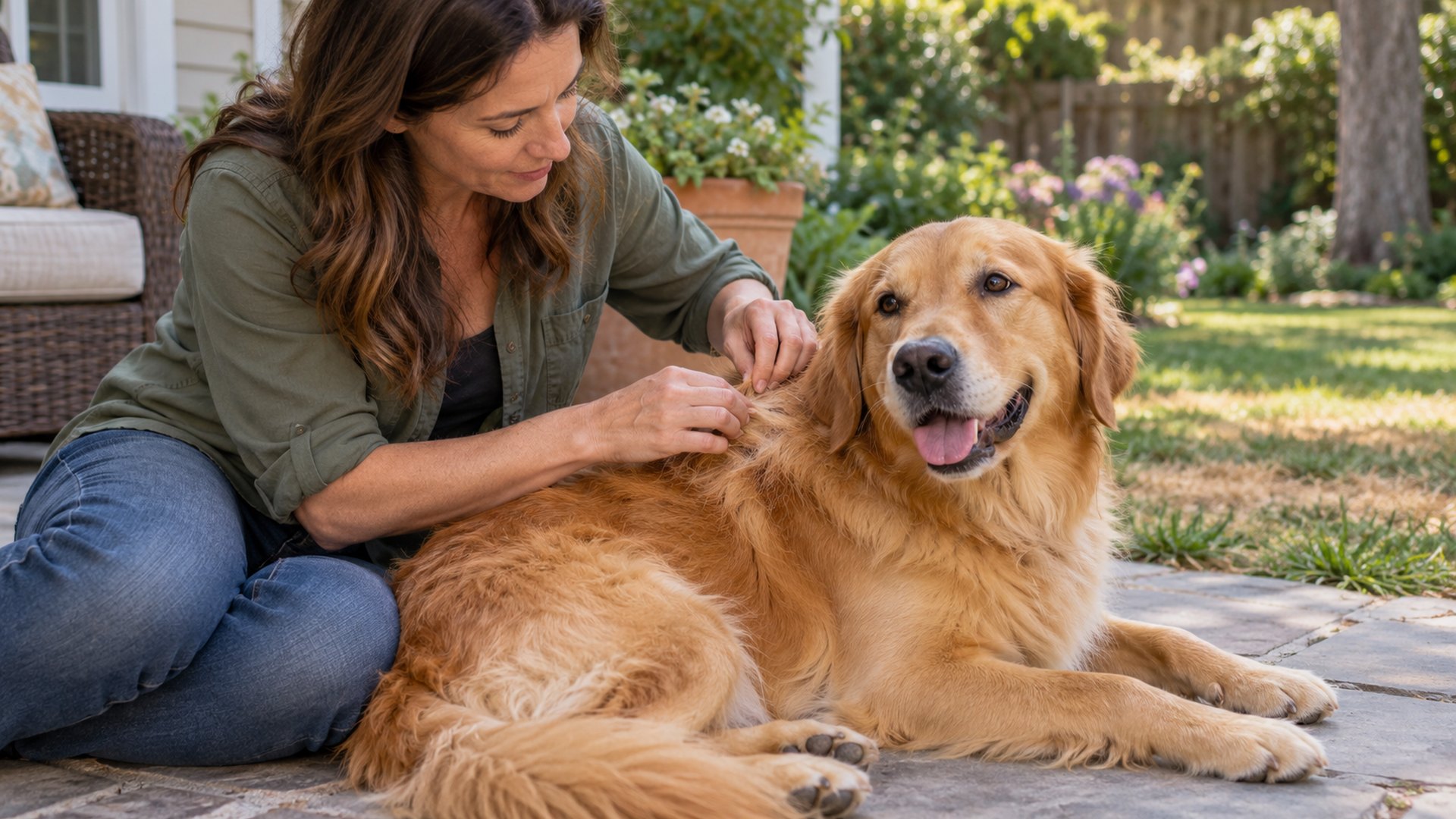
The best flea and tick prevention for dogs combines three things: a vet-recommended preventive given on schedule in the right weight band, a quick hands-on check after walks, and regular cleaning of your dog’s bedding and home. In many climates that means protection all year, not just in summer, and in tick areas it means checking your dog every day. Which product is right depends on where you live, your dog’s age and health, and who else shares your home.
Disclosure: this guide contains affiliate links, marked as such. If you buy through them, Mind A Dog may earn a small commission at no extra cost to you.
This guide explains how fleas and ticks live, which risks matter in different parts of the world, how to compare the main types of preventive, how to check your dog and remove a tick, and how to break a flea problem in the home. It is general information only. If your dog is unwell, scratching constantly, losing fur, or you find a tick and your dog seems weak, wobbly or has trouble breathing, contact your vet straight away.
At a glance
- Most fleas are not on your dog. Eggs, larvae and cocoons live in bedding, carpets and cars, so treat the home as well as the dog.
- Tick risk is local. Paralysis ticks, Lyme disease and other tick-borne infections depend on where you live and travel. Your vet knows your area.
- Every pet in the home needs a plan. Some dog products, especially those containing permethrin, can be deadly to cats.
- Weigh your dog and follow the label. The weight band and the schedule matter as much as the brand.
- Prevention does not replace the daily check in tick areas.
Why fleas and ticks matter
For many dogs, fleas start as an itch. But some dogs are allergic to flea saliva, a condition called flea allergy dermatitis, and a few bites can leave them scratching, chewing and losing fur. Fleas also carry the common dog tapeworm: a dog that swallows an infected flea while grooming can become infected, which is why vets often pair flea control with worming. Heavy infestations in small puppies can even cause anaemia.
Ticks bring different risks. Depending on the region, ticks can carry infections such as Lyme disease, anaplasmosis, babesiosis and ehrlichiosis. In eastern Australia, the paralysis tick produces a toxin that can kill a dog if not treated quickly. Itching and skin problems have many causes besides fleas; our guide to dog allergies, itching and paw licking covers the others.
Know your local risk
There is no single worldwide plan, which is why advice from a vet in your area matters more than any box in a shop. The table is a broad guide only.
| Region | Key parasite concerns for dogs | What it means for your plan |
|---|---|---|
| Eastern coast of Australia | Paralysis tick; fleas all year in warm areas | Year-round tick prevention is usually advised, plus daily checks. Paralysis signs are an emergency. |
| Northern Australia | Brown dog tick, which spreads ehrlichiosis (detected in northern Australia since 2020) | Ask your vet about products that repel or kill ticks quickly, and about travel to the region. |
| North America | Ticks carrying Lyme disease, anaplasmosis and ehrlichiosis, varying by state and province; fleas | Many vets advise year-round prevention; ask about local tick-borne disease and testing. |
| UK and Europe | Ticks carrying Lyme disease and, in parts of Europe, babesiosis; fleas indoors all year | Seasonal or year-round tick cover depending on area; check rules and risks before travelling abroad. |
| Hot, humid regions worldwide | Fleas and ticks active most of the year | Expect continuous prevention rather than seasonal. |
How fleas live, and why they “come back”
Adult fleas live on the dog, feed and lay eggs that fall off wherever the dog goes. The Companion Animal Parasite Council notes that female fleas start producing eggs about a day after their first blood meal and can lay around 40 to 50 eggs a day. Eggs hatch into larvae that hide in carpet, bedding, cracks and shady spots outdoors, then spin cocoons. Inside a cocoon a new flea can wait for weeks to months until warmth, vibration or breath tells it a host is near.
This explains why fleas seem to return after treatment, why indoor dogs still get fleas, and why it takes several weeks of consistent effort to clear a home. A good plan always covers the dog and the environment.
How ticks live
Ticks do not jump or fly. They climb grass, shrubs and leaf litter and wait for an animal to brush past. Once on board, they crawl to thin-skinned spots such as the head, ears, neck, armpits, between the toes and under the tail, then attach and feed for several days. The longer a tick feeds, the greater the chance of passing on infection or toxin, which is why fast removal matters. Long grass, bushland, scrub and coastal dunes are higher-risk areas.
Comparing the main types of preventive
Your vet will match a product to your dog, but it helps to know the options. Coverage differs a lot, even within one type, so always read which parasites a product covers.
| Type | How it is given | Strengths | Things to consider |
|---|---|---|---|
| Chewable tablet | By mouth, monthly or every few months depending on product | No residue on the coat; not affected by bathing or swimming | Some act only once a tick or flea bites; a few dogs have reactions (see below) |
| Spot-on | Liquid applied to the skin at the neck or along the back | Some also repel ticks; many cover worms too | Bathing and swimming rules apply; avoid contact with cats if the product is toxic to them |
| Collar | Worn continuously for several months | Long-lasting; some repel ticks | Must fit correctly; check safety with children and other pets, and remove if irritated |
| Shampoos, rinses and sprays | Applied during bathing or grooming | Can kill fleas present at the time | Short-acting; usually a support, not a full plan |
| Home and yard products | Sprays or treatments for carpets and outdoor areas | Target eggs and larvae off the dog | Follow safety directions closely, especially with cats, fish and children |
Several modern chewables belong to a drug class called isoxazolines. In 2018 the US Food and Drug Administration alerted owners and vets that this class has been linked with neurological reactions such as muscle tremors, unsteadiness and seizures in some animals, and asked for label warnings. Most dogs take these products without problems, but tell your vet if your dog has ever had a seizure, and report any reaction.
Questions to ask your vet
- Which fleas, ticks and worms are a risk in our area, and in which months?
- Does this product cover paralysis ticks or local tick-borne diseases, or fleas only?
- Is it suitable for my dog’s weight, age, breed, health and any pregnancy or breeding plans?
- How often is it given, and what should I watch for after the first dose?
- Is it safe with the cat, other pets and young children in the house?
- Do we need different cover when we travel?
Where to buy your dog’s flea and tick products
Once you and your vet have chosen a product, Pet Care Supplies stocks well-known flea, tick and worming brands for dogs and cats, with regular discounts and shipping to many countries.
Shop dog flea and tick care at Pet Care Supplies → (affiliate link)
Browse all dog supplies at Pet Care Supplies (affiliate link)
Signs your dog may have fleas
- Scratching, nibbling or licking, especially around the lower back, tail base and back legs
- Small dark specks in the coat (“flea dirt”) that turn reddish-brown on damp white paper
- Red, bumpy or scabby skin, or thinning fur
- Restlessness, especially at night
- Fast-moving brown insects when you part the fur
- Itchy bites on people, often around the ankles
Persistent itching or sore skin is a reason to see your vet, because several other conditions look similar.
Signs your dog may have a tick, and when it is an emergency
- A small bump felt while stroking, which can look like a skin tag or wart
- Head shaking or scratching at one ear
- Licking or chewing one spot, especially between the toes
In paralysis tick areas, the following are emergencies even if you have removed the tick: a change in bark or voice, coughing, gagging or retching, wobbly or weak back legs, laboured or noisy breathing, or reluctance to eat. Keep your dog calm and cool and go to a vet immediately. Elsewhere, fever, lethargy, lameness or loss of appetite in the days or weeks after a tick bite also warrant a vet visit. Our guide on when to call the vet lists the signs that always need a same-day visit.
The two-minute daily check
- Start at the head. Run your fingertips slowly over the face, lips, around and inside the ear flaps and under the collar.
- Work down the body. Use fingertips, not your palm, and move against the lie of the fur so you feel the skin.
- Check the hidden places. Armpits, groin, under the tail and between every toe.
- Look at the tail base. Part the fur and look for flea dirt or moving fleas, or run a flea comb through.
- Reward your dog. A treat at the end turns the check into something your dog looks forward to.
Long or double coats take longer; our guide to home grooming by coat type has tips for getting through thick fur calmly.
If you find a tick
Keep your dog calm and still. Remove the tick promptly with a purpose-made tick hook or fine-pointed tweezers, gripping as close to the skin as possible and lifting or twisting steadily without squeezing the body. Avoid old methods such as burning the tick or smothering it in oil or alcohol. Keep the tick in a sealed bag or container in case your vet wants to identify it, note the date, and phone your vet, particularly in paralysis tick areas, if you are unsure you removed it all, or if your dog shows any warning signs. Keep watching closely for the next few days, as paralysis signs can develop after removal.
Breaking the flea cycle at home
- Wash bedding hot, along with blankets and washable toys, weekly while dealing with fleas.
- Vacuum often: carpets, rugs, couches, skirting boards and the car. Vibration encourages fleas out of their cocoons. Empty the vacuum outside straight away.
- Treat every pet with a species-appropriate product. Never use a dog product on a cat.
- Tidy the yard: keep grass short, clear leaf litter and discourage wildlife from nesting under decks and sheds.
- Keep going. Because of the cocoon stage, expect new fleas to appear for a few weeks even when everything is working.
Puppies, seniors, travel and special cases
Many products have a minimum age and weight, and some are not suitable during pregnancy or for dogs with certain medical histories. Tell your vet about every other medicine or supplement your dog takes. Our puppy first-year guide covers how parasite control fits with vaccinations and vet visits, and our guide to caring for a senior dog covers older dogs.
Travel can change your dog’s risk completely. A dog that never sees a tick at home may meet several on a beach or camping trip, so ask your vet whether your current product covers your destination, pack a tick hook and flea comb, and keep up the daily check. Our dog car safety guide covers the journey itself. Parasite prevention is an ongoing cost; our guide to the cost of owning a dog helps you budget for it.
Common mistakes
- Only treating in summer when fleas survive indoors all year and ticks can be active on warm winter days.
- Guessing the weight band. Weigh your dog; under-dosing may not work and the wrong band can be risky.
- Bathing at the wrong time around spot-on products. Check the label for bathing and swimming advice.
- Using a dog product on a cat, or letting cats groom a dog just treated with a product toxic to cats.
- Skipping the home, which lets the flea cycle keep running.
- Assuming a product covers ticks when it only covers fleas, or covers some ticks but not paralysis ticks.
- Relying on the product alone in tick areas instead of checking daily.
- Waiting to see after finding a tick and noticing a voice change or wobbly legs.
Quick checklist
- Prevention plan agreed with your vet, written in your calendar, given on time in the right weight band
- Every pet in the home included with a product made for its species
- Hands-on check after every walk in tick season
- Flea comb once or twice a week
- Bedding washed hot and floors vacuumed regularly
- Tick hook in the house and the car
- Your vet’s number and the nearest after-hours clinic saved in your phone
Related guide: Worms in Dog Poop: How to Spot Them and Keep Everyone Safe.
Sources this guide draws on: World Small Animal Veterinary Association parasite guidance; ESCCAP (European Scientific Counsel Companion Animal Parasites) guidelines for dogs; Companion Animal Parasite Council (USA) flea and tick guidance; US Food and Drug Administration 2018 notice on isoxazoline flea and tick products; Australian Veterinary Association pet owner advice on ticks; Australian Government Department of Agriculture information on ehrlichiosis in dogs.
Handy gear for this guide
Practical picks we think suit this topic. As an Amazon Associate, Mind A Dog earns from qualifying purchases, at no extra cost to you. Prices and availability are set by Amazon and may vary by country.
- EVERLIT Pet First Aid Kit (95 Pieces)
Bandages, gauze and basics in one bag for home, car or hikes while you contact your vet.
View on Amazon - Hepper Bio-Enzyme Pet Stain and Odour Spray
Enzyme cleaner for accidents on carpets, floors and bedding.
View on Amazon - Portable Dog Water Bottle with Food Container
Fresh water and a snack on walks and car trips.
View on Amazon
Frequently asked questions
Do dogs need flea and tick prevention all year?
In many places, yes. Fleas breed indoors through winter in heated homes, and ticks can be active whenever it is mild. Some cold regions have a clear off-season for ticks, so ask your vet what suits your area.
Which is better, a chewable or a spot-on?
Neither is better for every dog. Chewables are not affected by swimming or bathing and leave nothing on the coat, while some spot-ons and collars repel ticks before they bite. The right choice depends on which parasites are local, your dog’s health and whether cats share the home.
Can indoor dogs get fleas?
Yes. Fleas and their eggs can arrive on other pets, on people’s clothing or after a short trip outside, and the cocoons can survive in a home for weeks to months.
How do I know if I got the whole tick out?
Look at the tick: you should see its head and mouthparts. A small piece left in the skin usually works its way out like a splinter, but watch for swelling or infection, and in paralysis tick areas, phone your vet whatever happens and keep watching your dog.
Are natural or essential-oil flea treatments safe?
Some essential oils can irritate skin or be toxic to dogs and especially cats, and most natural products have little evidence of reliable protection. If you prefer a gentler approach, ask your vet about options and combine them with combing and home cleaning.
Can my dog give me fleas or ticks?
Dog fleas will bite people, usually around the ankles, though they do not live on humans. Ticks can drop off a dog inside the house and attach to people, so check yourself after walks in tick areas too.
Fleas and ticks are a normal part of life with a dog, but they do not have to be a constant battle. A plan chosen with your vet, a daily check and a clean home keep most dogs comfortable. When in doubt, especially with ticks, ring your vet early.
This article is general information only and is not a substitute for advice from your vet about your own dog.