
The short version
Dogs become senior at very different ages, early in some large breeds and late in many small ones. Sleeping more, stiffness on rising, fading hearing, restless nights and changed toilet habits all belong in a conversation with your vet rather than filed under old age. Traction on floors, a warm supportive bed and shorter, more frequent walks do much of the rest.
Somewhere along the way your dog stops meeting you at the door quite so fast. They take a moment to get up, they sleep through things they used to bark at, and they eye the car boot as though it has grown taller.
None of this needs to be sad. Old age is a stage with its own pleasures, and much of what makes it hard is fixable, or at least softenable. The main thing an older dog needs from you is that you keep noticing.
“Senior” arrives at very different ages
There is no single birthday at which a dog becomes old. Small dogs often stay bright and springy well into double figures, while some large and giant breeds start showing their years around six or seven. Two dogs of the same age can be at completely different stages, and health history matters as much as size.
So the useful question is not “is my dog a senior yet?” but “what is different about my dog this year compared with last year?” That is the question your vet will find most useful too.
What owners actually notice first
Ageing rarely announces itself. It arrives as a series of small adjustments that are easy to explain away one at a time.
- Sleeping more, and more deeply. Older dogs nap longer and are harder to rouse, which is startling the first time you have to touch them to wake them.
- Stiffness on rising. The first few steps are careful, then they loosen up, and cold mornings are worse. Stairs, cars and slippery floors become a visible calculation.
- Hearing and sight fading. A dog who ignores you from the garden may not be ignoring you. Bumping furniture in dim light, or hesitating on unfamiliar ground, often comes first.
- Confusion, especially at night. Pacing, standing in corners, waking and wandering, or seeming unsure where they are.
- Toilet habits changing. Needing out more often, accidents overnight, or asking at odd times.
- Less patience with boisterous dogs. An old dog who has always been sociable may start turning away from bouncy young ones, or grumbling when they get too close.
A grumble is communication, not a character change. An older dog who is sore, deaf, or slow to see a dog coming has good reason to want more space, and the kindest answer is to give it rather than insist they tolerate the puppy.
“Just getting old” is usually something specific
This is the most useful idea here. Ageing itself is not a diagnosis. The things we casually call old age are usually particular changes in particular parts of the body, and many of them can be helped.
Stiffness usually means discomfort. Restlessness at night can mean discomfort too, or fading sight, or changes in the ageing brain. Drinking more, losing weight, a new lump, a change in appetite, coughing, or sudden grumpiness are all things vets would rather see early than late.
Dogs are also good at carrying on. They do not limp to complain, and they keep doing the walk they have always done. A dog who has quietly stopped jumping onto the sofa has told you something, they just have not said it out loud.
Not every change is serious. But which ones are is a question for your vet, rather than for a worried evening on the internet.
Adapting the home
Older dogs manage far better in a house that has been tweaked for them, and most of the tweaks are small.
Traction
Hard floors are the biggest hazard in most homes. A dog whose back legs slip starts bracing and avoiding, and a fall knocks their confidence for weeks. Lay runners or rugs along the routes they use most, and keep the fur between their pads trimmed so the claws can grip.
Getting up and down
A ramp or a set of steps to the sofa, bed or car saves a great deal of jarring. Many dogs take a few days to trust a ramp, so introduce it flat on the ground with treats before it becomes a slope.
Bowls, beds and warmth
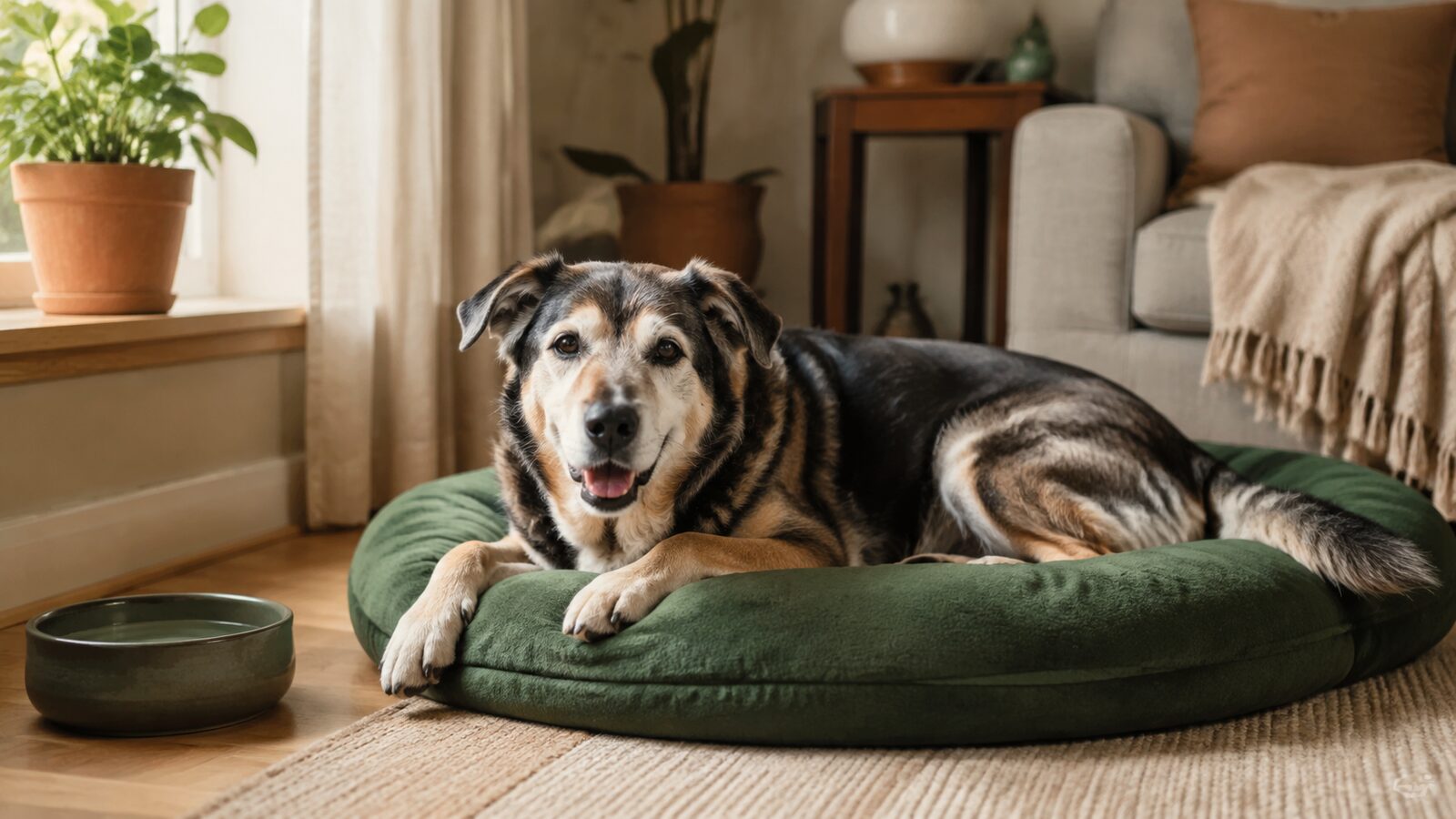
Raised bowls suit dogs who find bending uncomfortable, though ask your vet whether they suit your dog. Beds matter more than they used to: thick and supportive, in a warm draught-free spot, low enough to step into rather than climb. Older joints stiffen in the cold, so a warm sleeping place, and a coat for winter walks on thin-coated dogs, is not indulgence.
Light and predictability
Night lights along the route to the water bowl and the back door help dogs with fading sight, and dogs who wake disorientated. Keep furniture where it is: a dog who has memorised the layout does not want it rearranged.
Exercise, adapted rather than reduced
The instinct is often to stop walking an older dog. Usually the better answer is to change the shape of the exercise: shorter, more frequent, gentler underfoot, and much more about sniffing than distance.
Three twenty-minute wanders usually suit an older body better than one long march, because stiffness sets in when a dog goes from lying down to a big effort and back. Start gently, avoid the heat of the day, and let the pace be theirs.
Watch the day after, not just the walk. A dog who is sore the next morning did too much, however delighted they seemed at the time.
Keeping the mind working
Mental work is where older dogs shine, and it tires them pleasantly without straining their joints. Scatter their food in the grass, hide treats around a room, offer a food-dispensing puzzle toy, or take a slow sniffing walk somewhere new.
Training still works. Old dogs learn perfectly well, and short, easy sessions do a lot for a dog who cannot do what they used to. If hearing is fading, start pairing hand signals with the words you already use. Owners are often surprised how quickly a deaf dog picks up visual cues.
Quality of life is a conversation, not a moment
The thing most owners quietly worry about is whether their dog is still enjoying life. It helps to treat that as an ongoing conversation rather than a decision waiting somewhere ahead.
A practical habit is to note the good days and the harder ones, along with the few things your dog has always loved: dinner, the greeting at the door, a particular walk, lying in the sun. Patterns over weeks tell you far more than any single day, and give you something concrete to show your vet.
Your vet has had this conversation many times, with many families, and can talk it through with you at any stage, long before anything is decided. It is a conversation to have with them, and you do not have to have it alone.
When to get professional help
Most vets suggest check-ups at least twice a year once a dog is getting on, because things change faster now and small findings are easier to manage early. Write down what you have noticed before you go, since the details fall out of your head in the consulting room.
Ring sooner if your dog is drinking or weeing noticeably more, losing weight, coughing, struggling to settle at night, suddenly reluctant on stairs, off their food, or if you find a new lump. Sudden loss of house-training in a previously reliable dog is also a reason to ring rather than to retrain.
An accredited, reward-based trainer or a qualified behaviourist can help with the behaviour side of ageing, such as a dog who has become anxious or intolerant of other dogs, once your vet has looked at pain as a possible driver.
Frequently asked questions
At what age is a dog considered senior?
It varies with size and individual health. Many small dogs are not noticeably old until eleven or twelve, medium dogs around eight or nine, and some large and giant breeds show their years from about six or seven. Rather than watching the calendar, watch for changes compared with last year and mention them at your dog’s next check-up.
My older dog is stiff getting up in the morning. Is that just age?
Stiffness usually means discomfort, and discomfort is worth a vet visit rather than acceptance. It is one of the most common things owners put down to age when there is often something that can be done to keep a dog more comfortable. Meanwhile, add traction on slippery floors, keep the bed warm and supportive, and swap long walks for shorter, more frequent ones.
Why is my old dog restless and pacing at night?
Restlessness at night can come from discomfort, from failing sight in low light, from needing the toilet more often, or from changes in the ageing brain. It is not something to wait out, because several of the causes can be helped once identified. Note what happens and when, and book a vet appointment to talk it through.
My senior dog has started growling at our young dog. What should I do?
Take it as information rather than misbehaviour. Older dogs often want more space, particularly if they are sore, hard of hearing, or slow to see another dog approaching. Give them a quiet area the younger dog cannot reach, supervise their time together, and ask your vet to check for pain, a common reason for an easy-going dog to become short-tempered.
Read next
- When to Call the Vet: A Calm Guide to Symptoms That Worry Owners
- Dog Enrichment: Twenty Ideas That Cost Almost Nothing
- Puppy Socialisation: The Window That Matters Most
- Dog Adolescence: Why Your Lovely Puppy Turned Feral at Eight Months
More in Puppies & Life Stages.
A note on this article
This is general information for owners of older dogs, meant to help you notice things and ask better questions. It is not veterinary advice, and cannot take account of your dog’s history or health. Your vet is the person who can say what any of these changes mean for your dog, and a qualified behaviourist can help with the behavioural side.