
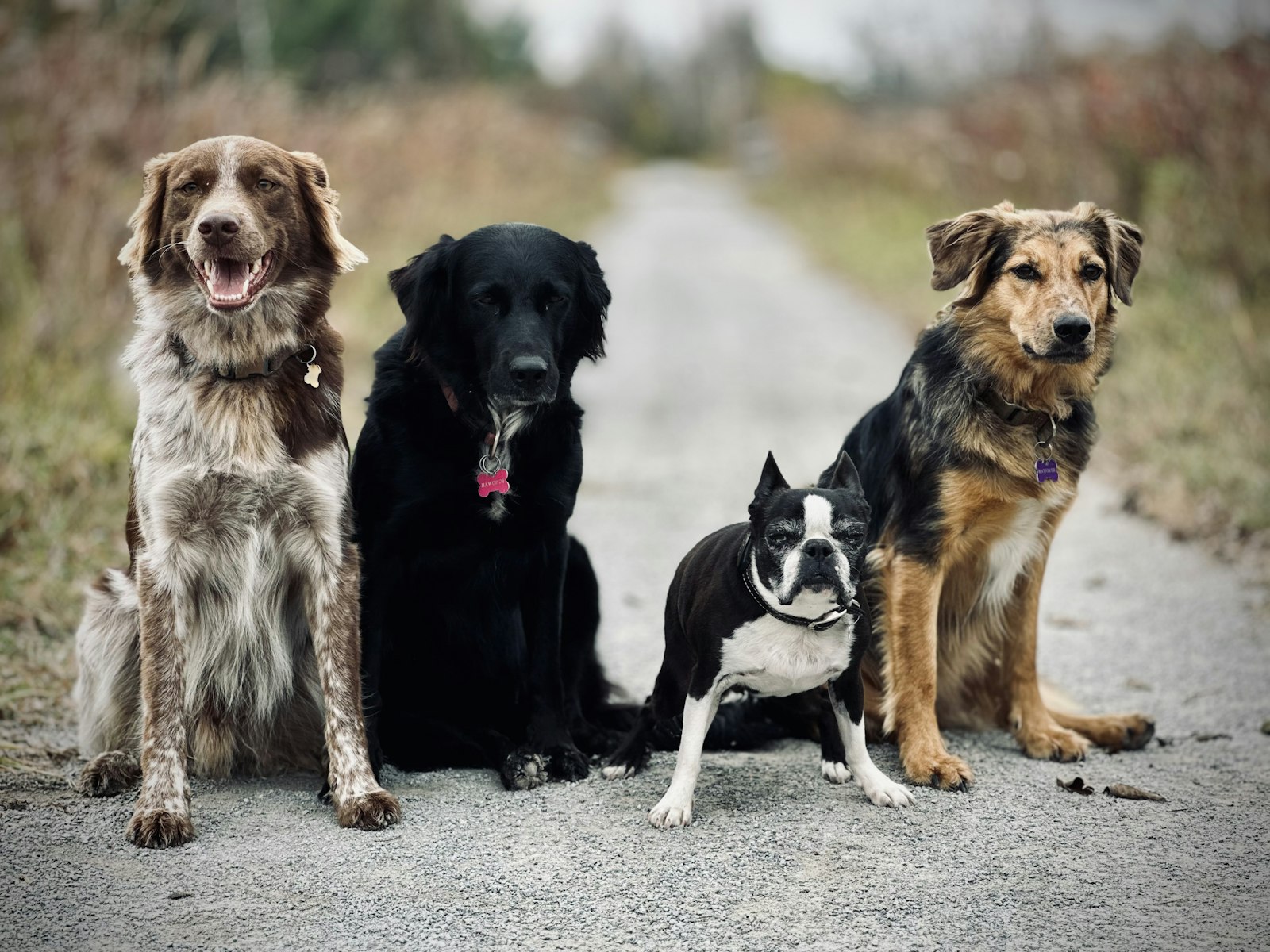
To choose the right dog breed, start with your life, not a list of breeds: how much time and energy you have each day, your home, who lives with you, your budget and how much grooming you will really do. Then shortlist breed types whose original job fits that life, check their common health problems, and meet real dogs, because breed shapes tendencies but each dog is an individual. An honest match now is the best protection against a decade of frustration for you and the dog.
This guide gives you a self-assessment, a comparison of breed groups, the health and cost questions most guides skip, a step-by-step process for narrowing your choice, and the mistakes that most often lead to a poor match.
At a glance
- Match the job, not the look. A breed’s original work (herding, retrieving, guarding, companionship) predicts its needs better than its size or appearance.
- Breed is a guide, not a guarantee. A large 2022 genetic study found breed explains only a small share of the behaviour differences between individual dogs.
- Health is part of the choice. Flat-faced and some giant breeds carry well-known health risks and costs.
- Plan for 10 to 15 years of time, money and care, including the busy and tired days.
- Meet before you commit. Spending time with adult dogs of the breed, or a rescue dog whose personality is already known, beats choosing from photos.
How much does breed really predict?
Breed matters, but less than many people think. In a study published in Science in 2022, Morrill and colleagues combined DNA from more than 2,000 dogs with owner surveys covering over 18,000 dogs. They found that breed explained only around 9% of the variation in behaviour between individual dogs. Some traits, such as how easily a dog responds to direction and how interested they are in toys, were more strongly linked to ancestry than others, while traits like how readily a dog becomes upset were far less predictable from breed.
The practical takeaway: use breed to understand likely needs, such as exercise, grooming, size and health risks, but judge temperament by meeting the individual dog and, for a puppy, its parents. Upbringing, socialisation and training make a large difference. Our guide to puppy socialisation explains why the early weeks matter so much.
Step one: an honest look at your life
Answer these as you actually live now, not as you hope to live with a dog.
- Time: How many hours a day is the dog alone? Most dogs struggle with long stretches by themselves.
- Energy: What exercise do you enjoy and can keep up in bad weather? See how much exercise a dog needs for realistic numbers.
- Home: Flat or house, yard or no yard, stairs, neighbours close by, and any rental, body corporate or council rules on size or type.
- People and pets: Young children, older relatives, cats or other dogs.
- Experience: First dog, or confident with training?
- Budget: Food, routine vet care, parasite prevention, insurance, grooming and emergencies. Our guide to the cost of owning a dog breaks this down.
- Tolerance: How do you feel about hair on furniture, drool, barking and digging?
Breed groups compared
Kennel clubs sort breeds into groups by original purpose. The names differ: the American Kennel Club and the UK Kennel Club each use seven groups, while the international FCI uses ten. The broad types below appear in most systems.
| Breed type | Examples | Typical energy and needs | Often suits | Think twice if |
|---|---|---|---|---|
| Herding (pastoral) | Border Collie, Australian Shepherd, Kelpie | Very high; needs daily mental work as well as exercise | Active owners who enjoy training or dog sports | You want a laid-back dog or are out all day |
| Gundog (sporting) | Labrador, Golden Retriever, spaniels, pointers | Moderate to high; loves retrieving, water and scent games | Families with time for daily walks and play | You expect “easy” to mean low effort |
| Sight hound | Greyhound, Whippet | Short bursts of running, often calm and quiet at home | Quieter homes, flats with access to safe running areas | You have small pets or no secure off-lead space |
| Scent hound | Beagle, Basset Hound | Moderate; strong drive to follow their nose; can be vocal | People who enjoy sniff walks | You need reliable off-lead recall or have weak fencing |
| Terrier | Jack Russell, Border Terrier, Staffordshire Bull Terrier | Moderate to high; bold, may dig and chase | Owners who like a dog with lots of personality | You have small pets or want a quiet garden |
| Toy and companion | Cavalier King Charles Spaniel, Shih Tzu, Bichon Frise | Lower exercise, but still need walks, play and training | Smaller homes; people at home more often | The dog would be alone for long periods |
| Working and guardian | Rottweiler, Bernese Mountain Dog, livestock guardians | Varies; strong, large, needs early socialisation and steady training | Experienced owners with space and budget | You are a first-time owner or have limited space |
Many popular breeds sit in “utility” or “non-sporting” groups, such as Poodles, Bulldogs and Dalmatians, which are mixed bags and need to be judged breed by breed.
Energy, size and space
A mismatch between a dog’s energy and the owner’s lifestyle is one of the most common reasons dogs are rehomed. High-energy working breeds without enough to do often invent their own jobs, such as chasing bikes, herding children, barking or chewing. Lower-energy breeds are not no-energy: every dog needs daily walks, sniffing and play. Size matters less than energy for flat living; a calm large dog can do better in an apartment than a busy small terrier, as long as you can manage stairs, lifts and the costs that come with size.
Health: the questions most guides skip
Some breed health problems are serious enough to be part of the decision itself, not a footnote.
- Flat-faced (brachycephalic) breeds, such as Pugs, French Bulldogs and English Bulldogs, are prone to brachycephalic obstructive airway syndrome, which makes breathing, exercise and coping with heat harder. Many veterinary organisations, including the British Veterinary Association, encourage choosing dogs with moderate features.
- Large and giant breeds are more prone to hip and elbow dysplasia and, in deep-chested breeds, bloat, and tend to have shorter lives.
- Some small breeds are prone to dental disease and kneecap problems.
- Specific inherited conditions exist in many breeds, such as heart disease in Cavalier King Charles Spaniels or eye conditions in some herding breeds.
If buying a puppy, ask which health tests are recommended for the breed by its breed club or kennel club, and ask to see the parents’ results. Health problems also affect costs, so look at insurance before you choose; our guide on whether dog insurance is worth it explains what to check.
Grooming and coat
Short single coats need little more than a weekly brush. Double coats, such as those of German Shepherds, Huskies and Golden Retrievers, shed heavily, especially seasonally. Continuously growing coats, such as Poodles, Bichons and many doodles and terriers, need clipping every few weeks, which is a real recurring cost. No dog is completely hypoallergenic; people with allergies should spend time with the breed before committing. Our guide to home grooming by coat type shows what each coat involves.
Puppy, adult or rescue?
| Option | Pros | Cons |
|---|---|---|
| Puppy from a responsible breeder | Known parents and health tests; you shape early experiences | Big time commitment for toilet training, socialisation and the teenage phase; personality still developing |
| Adult dog from rescue | Size, energy and temperament already visible; often already house-trained; rescues can match you | History may be partly unknown; some dogs need time and patience to settle |
| Breed-specific rescue | Breed knowledge plus an adult dog’s known personality | Waiting lists for popular breeds |
| Mixed breed | Huge variety; can combine traits well | Adult size and traits harder to predict in a puppy |
If you choose a puppy, read our puppy first-year guide before you bring them home, and be ready for dog adolescence, when many otherwise good matches are tested.
How to narrow your choice: seven steps
- Write down your answers to the self-assessment above.
- Rule out breed types from the table that clearly do not fit your time, space or experience.
- Shortlist three to five breeds or types, including mixed breeds and rescue options.
- Research health for each: common conditions, recommended tests and typical lifespan.
- Price it: food for that size, grooming, insurance and likely vet costs.
- Meet adult dogs of each breed through owners, breed clubs, shows or rescues. Notice energy, noise, shedding and how they react to strangers.
- Choose the individual, not just the breed: meet the puppy’s parents, or ask a rescue how a particular dog behaves with children, cats, visitors and being alone.
Red flags when buying a puppy
- You cannot see the puppy with its mother, or meet in a car park or “halfway”
- No health test results for the parents, or vague answers about them
- Many breeds or litters available at once
- Puppies offered younger than eight weeks, or pressure to pay a deposit fast
- No questions asked about you, your home or your plans
- Extreme features promoted as selling points, such as very flat faces or “teacup” sizes
Rules on selling dogs differ between countries and states, so check local requirements such as breeder registration or microchipping before purchase.
Common mistakes
- Choosing on looks or from social media rather than on needs.
- Buying for the life you plan rather than the one you have.
- Assuming small means easy or big means unsuitable for a flat.
- Ignoring breed health until the first big vet bill.
- Believing “hypoallergenic” labels without testing your own reaction.
- Expecting breed to guarantee behaviour, and skipping training and socialisation.
- Bringing a new dog home without a plan for existing pets; see how to introduce a new dog safely.
Some popular breeds, including Bulldogs, Cocker Spaniels and Shih Tzus, are more prone to eye conditions such as cherry eye, which is worth factoring into your choice.
Related guide: Low-Shedding Dogs: How to Pick the Right One Without Regret.
Related guide: Smallest Dog Breeds: How to Choose the Right Tiny Dog Safely.
Sources this guide draws on: Morrill and colleagues, “Ancestry-inclusive dog genomics challenges popular breed stereotypes”, Science (2022); American Kennel Club, UK Kennel Club and Fédération Cynologique Internationale breed group systems; British Veterinary Association guidance on brachycephalic breeds; RSPCA advice on choosing and buying a puppy.
Handy gear for this guide
Practical picks we think suit this topic. As an Amazon Associate, Mind A Dog earns from qualifying purchases, at no extra cost to you. Prices and availability are set by Amazon and may vary by country.
- MidWest iCrate Double Door Dog Crate (36 inch)
Folding wire crate with a divider panel, so it can grow with your dog.
View on Amazon - rabbitgoo No-Pull Dog Harness (Medium)
Front and back leash clips and adjustable straps for comfortable walks.
View on Amazon - Outward Hound Fun Feeder Slo Bowl
Ridged bowl that slows down dogs who gulp their meals.
View on Amazon
Frequently asked questions
What is the best dog breed for a first-time owner?
There is no single best breed, but first-time owners usually do best with a dog of moderate energy, a sociable temperament and a manageable coat and size. An adult rescue dog whose personality is already known is often an excellent first dog.
Which dog breeds are best for apartments?
Energy and noise matter more than size. Calm, quieter dogs, including many small companion breeds and some sight hounds, often settle well in flats, provided they get daily walks and mental exercise. Check building rules first.
Are mixed-breed dogs healthier than purebreds?
Mixed-breed dogs are less likely to inherit some breed-specific conditions, but they can still have health problems, and a well-bred purebred from health-tested parents can be very healthy. Judge each dog’s background rather than relying on the label.
Does breed determine a dog’s personality?
Only partly. Research published in 2022 found breed explained around 9% of behavioural differences between individual dogs. Breed tells you about likely tendencies and physical needs, while upbringing, training and the individual dog shape personality.
Which breeds are best with children?
Many gentle, sociable dogs do well with children, but the individual dog matters more than the breed. Choose a dog who is relaxed around children, supervise all interactions, and teach children how to behave around dogs.
Taking time over this choice is not fussiness. It is the first act of care in a commitment that usually runs for well over a decade, and it pays back every day you spend together.
This article is educational and informational only. Breed generalisations describe tendencies, not guarantees, and every dog is an individual. For advice about a specific dog or health concern, consult a veterinarian or a qualified behaviourist.