Spaying and neutering are both surgeries that stop a dog from being able to breed: a spay removes a female dog’s ovaries (and usually the uterus), while neutering (castration) removes a male dog’s testicles. “Spay vs neuter” is really a question of sex, not of choosing one procedure over the other. The bigger decisions are whether and when to do it, and current veterinary guidance says the best timing depends on your dog’s expected adult size, breed and sex, so it is a conversation to have with your vet.
This guide explains the two procedures in plain language, how timing advice has changed for larger breeds, what drives the cost, what recovery usually looks like, and the questions worth asking before you book. It is education, not a substitute for advice from a vet who has examined your dog.
At a glance
- Spay is for females (ovaries, and often the uterus, removed); neuter or castration is for males (testicles removed). In Australia both are often called desexing.
- Timing is no longer one-size-fits-all. AAHA guidelines suggest waiting until growth stops for dogs expected to weigh 45 lb (about 20 kg) or more as adults.
- Research shows trade-offs. Earlier spaying is linked with lower mammary tumour risk; later neutering in some large breeds is linked with fewer joint disorders.
- Costs vary widely by country, clinic, dog size and method, so get an itemised quote.
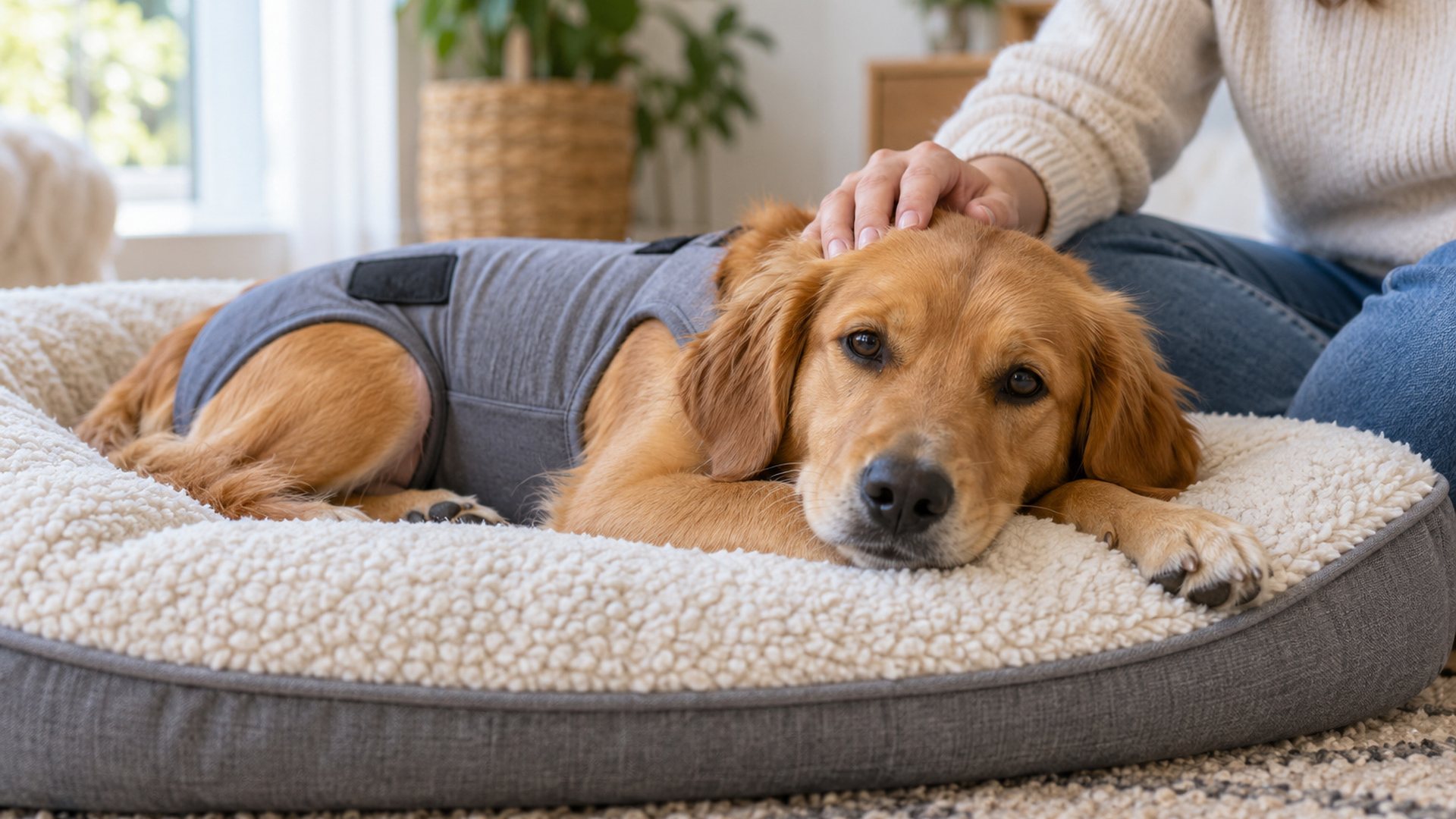
- Recovery is usually about 10 to 14 days of restricted activity while the wound heals, with a cone or surgical suit to stop licking.
Spay vs neuter: what each procedure involves
| Spay (female) | Neuter / castration (male) | |
|---|---|---|
| Medical name | Ovariohysterectomy (ovaries and uterus) or ovariectomy (ovaries only) | Orchiectomy or castration |
| What is removed | Ovaries, and in an ovariohysterectomy, the uterus | Both testicles |
| Where the incision is | Abdomen (open surgery), or small ports in keyhole (laparoscopic) surgery | Usually just in front of the scrotum |
| Complexity | Abdominal surgery, generally more involved | Usually a shorter, less invasive procedure |
| Typical cost relative to the other | Usually costs more | Usually costs less |
| Main effects | No heat cycles or pregnancies; no risk of pyometra (womb infection) if the uterus is removed | No litters sired; no risk of testicular cancer |
Both are done under general anaesthetic, and your dog will normally go home the same day. Keyhole spays use smaller incisions and may mean a gentler recovery for some dogs, but they are not available at every clinic and generally cost more.
When should you spay or neuter your dog?
For decades, many vets recommended spaying or neutering at around six months for almost every dog. Advice has since become more individual, mainly because of research into large breeds.
What the AAHA guidelines say
The American Animal Hospital Association’s 2019 canine life stage guidelines propose ages based on the dog’s projected adult weight:
| Projected adult size | Males (castration) | Females (spay) |
|---|---|---|
| Small breed, under 45 lb (about 20 kg) | Around 6 months | Before the first heat, around 5 to 6 months |
| Large breed, 45 lb (about 20 kg) or more | After growth stops, roughly 9 to 15 months | After growth stops, roughly 5 to 15 months, using clinical judgement |
The guidelines note the trade-off directly: spaying before the first heat is linked with a lower risk of mammary tumours and avoids unwanted litters, while waiting until growth stops may lower the risk of orthopaedic disease, some cancers and urinary incontinence in larger dogs.
What the UC Davis research found
A 2020 study by Hart and colleagues at the University of California, Davis, published in Frontiers in Veterinary Science, looked at 15 years of hospital records across 35 breeds. It examined joint disorders (hip dysplasia, elbow dysplasia and cranial cruciate ligament tears) and several cancers, including lymphoma, mast cell tumours, haemangiosarcoma and osteosarcoma.
- Small breeds generally showed no increased risk of joint disorders linked to neutering.
- Some larger breeds, such as Labrador Retrievers, German Shepherds and Rottweilers, showed higher joint-disorder rates when neutered early.
- Size alone did not predict risk: the two giant breeds studied, Great Danes and Irish Wolfhounds, showed no increase in joint disorders at any neutering age.
- Effects sometimes differed between males and females of the same breed, and urinary incontinence was a concern in females of some breeds.
The authors say their breed tables are meant to help owners and vets choose a neutering age case by case, and that individual factors must be considered. They also note the study covers relatively few breeds and could not record why owners chose to neuter or not. If your dog is a mixed breed, your vet can help you weigh their likely adult size and background. Our guide to joint health in dogs covers ways to protect growing joints whatever you decide.
Other things that affect timing
- Living situation. Waiting longer means managing heat cycles in females or an intact male’s interest in females in season, which needs reliable containment and supervision.
- Local rules and rescue contracts. Some councils offer reduced registration fees for desexed dogs, and many rescues and breeders include desexing terms in their contracts.
- Health history. Retained testicles, previous heat-related problems or other conditions can change the plan.
- Behaviour. Neutering is not a training fix. Behaviour is best handled with reward-based training, and changes during dog adolescence are normal whatever the timing.
Benefits and drawbacks to weigh
| Consideration | Possible benefit | Possible drawback or trade-off |
|---|---|---|
| Reproduction | No unplanned litters; no heat cycles to manage | Permanent; the dog can never be bred |
| Reproductive disease | Removes risk of pyometra (spay with uterus removed) and testicular cancer (neuter) | None for these specific conditions |
| Mammary tumours | Lower risk when spayed earlier, per AAHA guidance | Benefit must be balanced against other risks in larger breeds |
| Joints and some cancers | Small breeds generally show no added joint risk | Some large breeds show higher risk when neutered early |
| Urinary incontinence | Not a benefit | A recognised risk in some spayed females, varying by breed and age |
| Weight | Not a benefit | Energy needs often drop afterwards; portion sizes may need adjusting |
| Anaesthesia and surgery | Usually routine | All surgery carries some risk; your vet will explain yours |
How much does it cost to spay or neuter a dog?
There is no single price, and costs change, so treat any figure as a rough starting point. In the United States, a PetMD article from July 2025 cites a range of roughly US$250 to US$2,000 for a routine dog spay, with low-cost and non-profit clinics often charging under US$300. Neutering a male is generally cheaper than spaying a female because the surgery is less involved. Prices in the UK, Australia and elsewhere vary just as widely between clinics and regions, so the best way to know the real cost is to ask several local clinics for an itemised quote. These are figures at the time of writing (October 2026), and prices change.
What drives the price
- Where you live and the type of clinic (private practice, specialist hospital, charity or council-subsidised clinic).
- Your dog’s size, age and body condition, since larger or older dogs take longer to operate on.
- Method: keyhole spays usually cost more than open surgery.
- Pre-anaesthetic blood tests, intravenous fluids and monitoring.
- Pain relief to take home, a cone or recovery suit, and the post-op check.
- Whether a female is in heat or pregnant, or a male has a retained testicle, which can make surgery more complex.
Some animal welfare charities, shelters and councils run reduced-cost desexing schemes, often based on location or income. Ask your local shelter or council what is available. Routine desexing is not covered by many pet insurance policies; our guide on whether dog insurance is worth it explains what to look for, and the guide to dog ownership costs helps you budget for it alongside vaccinations and other first-year expenses.
Questions to ask your vet before booking
- Based on my dog’s breed, sex and expected adult size, what age would you recommend, and why?
- Do you offer keyhole (laparoscopic) spays, and would it suit my dog?
- What is included in the quote: blood tests, fluids, pain relief, cone or suit, and follow-up checks?
- Will the stitches dissolve, or do they need removing, and when?
- How should I adjust food afterwards to prevent weight gain?
- Is my dog’s breed known for incontinence or joint issues that change the timing?
- What should I do if my female comes into heat before the planned date?
Recovery checklist: the first two weeks
Most dogs feel sleepy on the day of surgery and brighter within a day or two, but the wound takes around 10 to 14 days to heal. UK veterinary charity Animal Trust’s post-operative advice includes about 10 days of rest, short lead-only toilet walks, and no jumping or rough play for two weeks. Always follow the discharge instructions your own vet gives you.
- Prepare a quiet, comfortable resting area before you collect your dog. A crate or puppy pen your dog already likes can help; see crate training without the guilt.
- Offer a small meal that evening only if your vet advises it, and fresh water.
- Use the cone or recovery suit to stop licking or chewing at the wound.
- Check the wound twice daily. Mild pinkness is normal; increasing redness, swelling, discharge or more than a few drops of blood is not.
- Keep the wound dry: no baths or swimming until your vet says so.
- Lead-only walks, short and calm. No off-lead running, stairs at speed, jumping on furniture or rough play.
- Give any medication exactly as your vet has prescribed, and never give human pain medicines.
- Replace exercise with gentle brain games such as sniffing and food puzzles. Our scent work at home guide has calm ideas.
- Attend the post-op check, and have stitches removed if needed.
When to call the vet
Contact your vet promptly if your dog is very quiet or seems in pain, has pale gums, is bleeding, has not eaten within 24 hours, is vomiting, is still very drowsy 12 to 24 hours after the anaesthetic, or the wound opens, swells or discharges. Our guide on when to call the vet explains how to judge urgency.
Common mistakes
- Booking on age alone. A six-month rule for every dog ignores breed and size research. Ask your vet about your individual dog.
- Comparing quotes that include different things. A cheap quote may exclude blood tests or pain relief. Compare like for like.
- Letting the dog off too early. Feeling bright is not the same as healed. Keep restrictions for the full period your vet gives.
- Skipping the cone. Licking is one of the most common reasons wounds become infected or reopen.
- Not adjusting food. Many dogs need fewer calories afterwards. Weigh your dog monthly and adjust portions.
- Expecting surgery to fix behaviour. Pulling, jumping and barking need training, not surgery.
- Delaying without a plan. If you wait until growth stops, have a clear plan for managing heat cycles or an intact male safely.
Sources this guide draws on: the American Animal Hospital Association 2019 Canine Life Stage Guidelines (spay and neuter timing); Hart and colleagues, “Assisting Decision-Making on Age of Neutering for 35 Breeds of Dogs”, Frontiers in Veterinary Science (2020); the AKC Canine Health Foundation summary of that study; Animal Trust’s post-operative care advice for a bitch spay; and PetMD’s 2025 article on dog spay costs.
Handy gear for this guide
Practical picks we think suit this topic. As an Amazon Associate, Mind A Dog earns from qualifying purchases, at no extra cost to you. Prices and availability are set by Amazon and may vary by country.
- EVERLIT Pet First Aid Kit (95 Pieces)
Bandages, gauze and basics in one bag for home, car or hikes while you contact your vet.
View on Amazon - Hepper Bio-Enzyme Pet Stain and Odour Spray
Enzyme cleaner for accidents on carpets, floors and bedding.
View on Amazon - Portable Dog Water Bottle with Food Container
Fresh water and a snack on walks and car trips.
View on Amazon
Frequently asked questions
What is the difference between spay and neuter?
A spay is surgery on a female dog to remove the ovaries and usually the uterus. Neutering, or castration, is surgery on a male dog to remove the testicles. “Neuter” is also sometimes used loosely for both sexes, and in Australia both are commonly called desexing.
What is the best age to spay a female puppy?
It depends on her expected adult size and breed. AAHA guidelines suggest around five to six months, before the first heat, for small breeds, and waiting until growth stops for dogs expected to weigh 45 lb (about 20 kg) or more. Your vet can weigh mammary tumour risk against joint and incontinence risks for your puppy.
How much does it cost to neuter a dog?
Neutering a male is generally cheaper than spaying a female, but prices vary widely by country, clinic and dog size. Low-cost and charity clinics are often much cheaper than private hospitals. Ask for an itemised quote so you know what is included.
How long does recovery take after a dog spay?
Most wounds take around 10 to 14 days to heal. Expect about two weeks of restricted activity: short lead walks, no jumping or rough play, and a cone or suit to prevent licking. Follow your vet’s specific instructions and attend the post-op check.
Will neutering calm my dog down?
Neutering removes the main source of male hormones, but it does not replace training and will not change a dog’s basic personality or energy level. Most behaviour concerns respond best to reward-based training, enrichment and enough exercise.
Is it safe to spay a dog in heat?
Many vets prefer to wait until a heat cycle has finished, because blood vessels around the reproductive tract are larger at that time, which can make surgery more complex and sometimes more costly. Ask your vet what they recommend for your dog.
Whether and when to spay or neuter is a personal, informed decision. Use the research as a starting point, talk it through with your vet, and plan a calm, comfortable recovery so your dog is back to normal life as quickly as possible.