
The short version
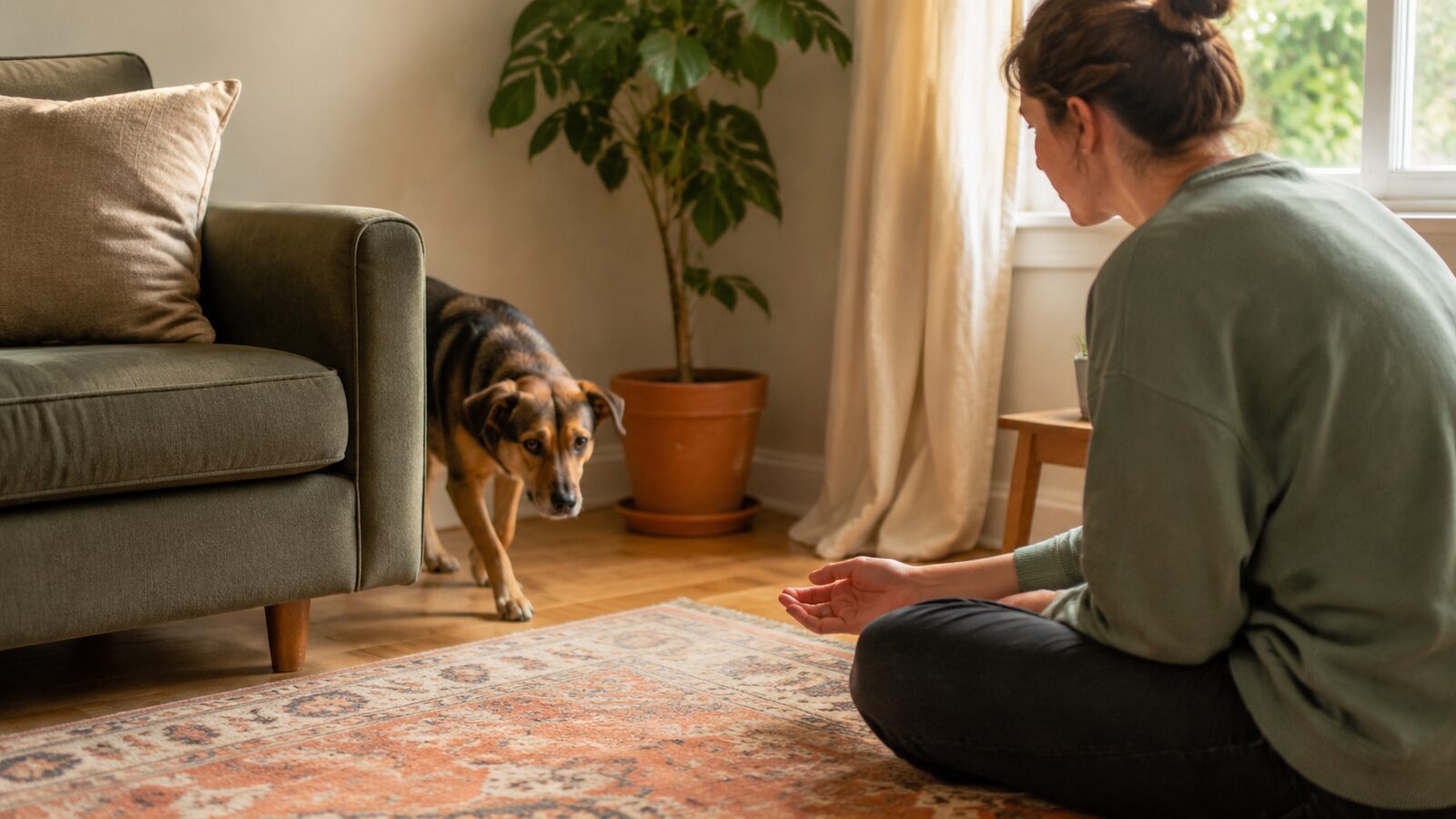
Confidence grows from choice and predictability, not from exposure. Give a newly adopted or fearful dog weeks of quiet routine, let them set the distance from anything that worries them, never force an approach, and teach a few simple skills they can succeed at. Progress is slow and uneven, and that is normal rather than a sign you are doing it wrong.
Starting where you actually are
Maybe your dog hides behind the sofa when someone knocks. Maybe they freeze on the pavement, flinch from hands, or have not yet taken food from you. Maybe they were fine for a fortnight and have barked at everything since.
None of that means you picked the wrong dog. Fearful dogs are not broken and they are not being difficult. They are behaving sensibly, given what the world has taught them.
The things that build confidence are quiet, unglamorous and free. The hard part is how long they take.
The first weeks are not the real dog
A dog who has just moved in is not showing you their personality. They are showing you how they cope in a strange place, on very little sleep.
Rescue organisations tend to talk about settling in over weeks and months rather than days. Some dogs arrive quiet and polite, then grow louder and more opinionated as they relax. Owners read that as their dog getting worse. Usually it is the opposite: the dog feels safe enough to have opinions.
So the first weeks are not for training or introducing. They are for sleep, food, rhythm and as little pressure as possible.
What decompression looks like
- Short, quiet walks in dull places, or just the garden if walks are frightening.
- No visitors, no dog parks, no meeting the neighbours’ dog, no trips to the shops.
- A bed in a quiet corner nobody disturbs, that your dog can leave freely.
- Food scattered or left down rather than offered by hand, if hands still worry them.
- A great deal of sleep. Unsettled dogs are often badly sleep deprived.
Choice is the active ingredient
If one thing reliably builds confidence, it is your dog being able to affect what happens to them. A dog who learns they can leave, refuse and come back becomes braver, because nothing is a trap.
This is why exposure alone so often backfires. Being taken into the middle of the thing you fear, with no way out, teaches a dog that their opinion does not count.
Never force an approach
Do not hold out a hand, hold the lead short while someone reaches over, or use food to lure a worried dog closer than they meant to go. Luring works, and that is the problem: your dog ends up somewhere they were not ready for.
With visitors, what works is simply nothing. No looking, no talking, no reaching. Ask people to sit down, angle away and carry on talking to you. If your dog wants to investigate, they will. Food can be dropped on the floor without eye contact.
Let your dog set the distance
Distance is the thing your dog can feel. Walk where you have room to move away, cross the road early, choose the quiet hours, and use a long line so your dog can put ground between themselves and anything unwelcome.
The same applies to touch. Stroke for three seconds, stop, take your hands back. A dog who wants more moves into you. A dog who stays still has answered.
Predictable days make braver dogs
Fear thrives on not knowing what comes next, so a routine your dog can predict does a good deal of the work for you. Keep the shape of the day the same: sleep, food, a walk, quiet time, food, sleep. It need not run to the minute, only be recognisable.
It also helps to narrate the predictable bits with the same words each time. A quiet “lead on” before you clip the lead, “back soon” before you leave, “all done” at the end of handling. Your dog stops having to watch you for clues.
Confidence comes from being able to do things
A dog who knows how to make good things happen is a different dog from one who is only avoiding bad things. Simple skills, taught with food and no pressure, give your dog something to do when unsure. Three are worth more than the rest.
- A hand touch. Your dog boops your palm with their nose and gets food. It gives a worried dog a job, and a way past something without being dragged.
- Find it. Scatter food on the ground. Sniffing settles most dogs, and it turns strange ground into ordinary ground.
- A mat cue. Rewarding your dog for going to one bed builds a place that means nothing bad happens.
Keep sessions to a minute or two, several times a day, and stop while your dog still wants more. If they will not take food, make the situation easier.
New things, at your dog’s pace
Novelty is how confidence spreads, but only when your dog can approach on their own and retreat without consequence. One new thing at a time, short, always with an exit. Start with dull, empty places at quiet times, because a closed car park at dawn teaches more than a busy park.
Surfaces
Many fearful dogs are wary underfoot, especially on shiny floors. Lay a path of towels or non-slip mats through the house so your dog is never stuck. Outside, let them choose whether to cross gravel or decking.
Objects
Put something harmless and unfamiliar in the middle of the room and ignore it: a cardboard box, an upturned bucket, a folded umbrella. Scatter a little food nearby and carry on with your day. Investigating on their own terms, while you are boring about it, is the practice.
A gentle first month
Treat this as a shape, not a schedule. If your dog needs a month on week one, spend it.
- Week one. Sleep, food, garden or short quiet walks, no visitors, no demands.
- Week two. Add the routine words and a couple of very short food games indoors.
- Week three. Introduce a hand touch and a mat. Try one new dull place, briefly.
- Week four. Add one object or surface at home, and perhaps one calm person who will ignore your dog.
What you can do tonight
Scatter a handful of your dog’s dinner on the floor and walk away. Sit somewhere your dog can reach you and read for half an hour without calling them. Turn the television down. Move the bed to a quieter corner. Cancel tomorrow’s visitor.
When it feels like nothing is changing
This is the part most articles skip, and it is where most owners live.
Progress with a fearful dog is not a line. It is a scribble that trends upward if you stand far enough back. Good weeks are followed by a bad day for no visible reason, and one frightening event can undo weeks of quiet work. That is normal, not you failing.
It also helps to measure the right thing. Most owners watch for the reaction disappearing, which is the slowest thing to change. Look instead at how quickly your dog recovers, how close they can cope, and whether they eat afterwards.
Write the small wins down, because you will forget them. Ate breakfast with me in the room. Came out from under the table alone. Walked past the bin without freezing. Six weeks of those notes tell you what memory cannot.
Be honest about the destination too. Some dogs stay careful, and a careful dog can have a lovely life: a quiet home, a few trusted people, walks they enjoy, no obligation to like crowds. The goal is a dog who copes and enjoys their days, not one who loves everyone.
When to get professional help
See your vet first if fear has appeared suddenly, worsened sharply, or comes with any physical change. Pain and illness make dogs less able to cope, which is a medical question, not a training one.
For fear that is not shifting, or where anyone is at risk, ask your vet about a referral to a qualified behaviourist, and find an accredited, reward-based trainer for everyday practice. Choose someone who talks about distance, choice and your dog’s pace, and who would never flood a frightened dog with what they fear.
Frequently asked questions
How long does it take a rescue dog to settle in?
Longer than most people expect, and it varies enormously between dogs. Think in weeks and months rather than days. Many dogs seem quiet and easy at first and show their real personality only once they feel safe, so a dog who gets louder after a few weeks is usually settling in.
My rescue dog was fine at first and is now worse. What happened?
This is one of the commonest patterns in newly adopted dogs. A dog who has just arrived often copes by shutting down. As they relax, they start reacting to things they had ignored. It usually means your dog feels safe enough to have an opinion, and it is a moment to make the world small again.
Should I force my shy dog to meet people so they get used to it?
No. Being made to face something frightening with no way out tends to make fear worse. Let your dog choose whether to approach, ask visitors to ignore them, and let your dog leave whenever they want. Dogs who learn that people are ignorable often become curious far sooner.
My dog will not take treats when they are scared. Why?
A dog who cannot eat is over threshold, meaning the situation is too much for them. That is useful information rather than a problem. Add distance, lower the intensity, or leave, then try again somewhere easier. The point at which your dog eats again is roughly the level they can learn at.
Will my fearful dog ever be a normal, confident dog?
Many fearful dogs improve a great deal, and some stay careful for life. Both can mean a happy dog. Aim for a dog who recovers quickly, manages ordinary life and enjoys their walks, rather than one who loves everybody. Recovery time is the kinder measure of progress.
Read next
- Scent Work at Home: The Easiest Way to Tire a Dog Out
- Signs of Stress in Dogs That Most Owners Miss
- Separation Anxiety in Dogs: What Actually Helps
- Fireworks, Thunder and Noise Fear: Helping a Frightened Dog
- How to Safely Introduce a New Dog to Your Household
More in Anxiety & Wellbeing.
A note on this article
This is general guidance about living with a fearful dog. It is educational, not veterinary or behavioural-medicine advice, and no article can assess the dog in your house. If fear is severe, has changed suddenly, or anyone is at risk, speak to your vet about a referral to a qualified behaviourist.