
The short version
A dog frightened of fireworks or thunder is not being silly, and comforting them will not reinforce the fear. What helps is a safe, den-like place they choose themselves, steady background sound to blunt the bangs, secure doors and up-to-date identification, and calm company. Longer term, gentle sound work outside the season helps, and your vet is worth talking to well before the date.
Most owners meet noise fear the same way. One year the dog barely notices, the next they are shaking behind the sofa, and nobody can point to what changed.
It is one of the most common fears in pet dogs and one of the most miserable to watch, because the thing frightening your dog cannot be reasoned with or turned off. Most of what helps is practical, and can be set up weeks before the noise starts.
What noise fear looks like
It is not always dramatic. Some dogs bolt and scream; plenty just go quiet and small, which is easy to miss. Signs include:
- Trembling, panting or drooling with no exercise or heat to explain it
- Pacing and restlessness, or an inability to settle for hours
- Hiding behind furniture, in cupboards, in the bath or under a bed
- Clinging to you, or following you from room to room
- Refusing food they would normally take
- Scrabbling at doors trying to get out, or toileting indoors
- Flattened ears, tucked tail, wide eyes with the whites showing
Many dogs also react to whatever predicts the noise: the pressure change before a storm, the first distant bang, the sound of rain.
Why it often gets worse rather than better
Owners often say the same thing: they hoped their dog would grow out of it, and instead each year is harder. That pattern makes sense. Every frightening episode a dog gets through with no way of escaping or predicting it tends to deepen the association rather than wear it away.
The fear also spreads. A dog frightened of fireworks may come to dread thunder, gunshots or a car door slamming, because one sudden bang generalises to another.
Older dogs can struggle more than they used to. Changes in hearing, sight and joints make a frightening night harder to weather, which is why noise fear appearing or worsening in an older dog is worth mentioning to your vet.
Comforting your dog does not reinforce fear
This myth has done real damage, and it is worth being clear about.
It comes from a misreading of how reinforcement works. Reinforcement applies to behaviour, not emotion. You can accidentally reward a dog for barking, because barking is something a dog chooses to do. You cannot reward terror, because your dog is not choosing to be terrified.
What comfort does is give a frightened animal what they are seeking: someone safe. Most dogs come looking for their person during a storm, and turning them away leaves them frightened and alone. Sit with your dog, speak normally, let them lean on you.
Two caveats. Do not haul a hiding dog out to comfort them, let them choose. And keep your manner ordinary rather than fussy, because anxious cooing and hovering tells your dog you think something is wrong too.
Build the den before the season starts
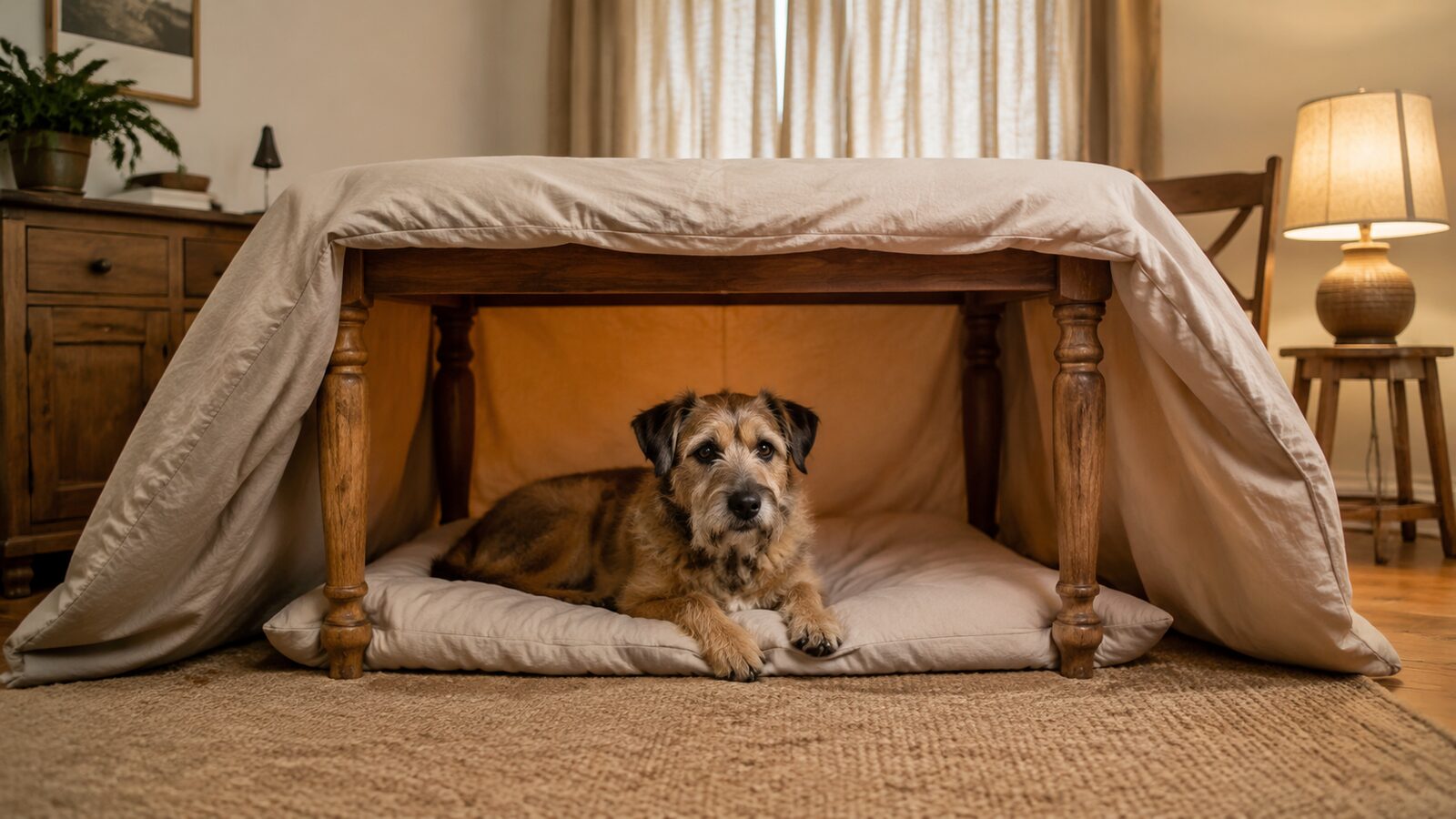
The most useful thing you can offer is a small, enclosed, dark place your dog can get into and feel covered. Set it up weeks ahead, not on the night, and pick the spot your dog already retreats to: usually an interior room away from windows, a downstairs bathroom, a cupboard, or the gap beside a bed.
- Make it enclosed: a covered crate with the door fastened open, or a bed pushed under a table with a blanket over it
- Use thick blankets, which muffle sound as well as giving somewhere to burrow
- Put in something that smells of you, an unwashed jumper is ideal
- Keep it available all year, so it stays familiar
- Never shut your dog in. A den they cannot leave becomes a trap
- Feed treats and chews there on ordinary days
Dogs often choose somewhere odd. If yours picks the shower tray, let them have the shower tray.
Masking the sound
Bangs frighten partly because they are sudden and unpredictable, and steady background sound blunts the edges. Close windows and internal doors, draw heavy curtains, and put a radio or television on at conversational volume in the room your dog is in. Something at a consistent level beats anything with dramatic quiet-then-loud moments.
Flashes matter too. Curtains drawn before dark and lights left on take away half the signal.
The long game: gentle sound work
Between seasons, when nothing frightening is happening, many dogs can be helped to feel differently about the sounds themselves. It is slow work and only helps if it is done gently: a recording played so quietly your dog barely registers it, paired with something they like, built up over weeks.
- Choose a good-quality recording of the sound your dog fears
- Play it at a volume so low it is almost inaudible, when your dog is relaxed
- At the same time, scatter a few treats, feed a meal, or start a gentle game
- Keep sessions very short, a couple of minutes at most
- Raise the volume in tiny steps across many sessions, over weeks
- If your dog stops eating, lifts their head or leaves, you have gone too far. Drop back below that level for several sessions
Two rules make or break this. Never use it as a test, playing loud noises to see how your dog copes, because that is a fright rather than training. And never start during firework season, when real bangs undo the work between sessions.
What to do on the night
During the day, walk early in daylight before anything is likely to start, and feed a little earlier than usual, since many dogs will not eat once it begins.
From dusk onwards:
- Keep your dog indoors, and take them out to toilet on a lead even in a secure garden
- Close windows, curtains and internal doors, and turn the lights on
- Put the background sound on before the noise starts, not after
- Open the den, and let your dog use it or not as they like
- Stay in if you possibly can. Company matters more than anything else you will do
- Offer a chew or a food-dispensing toy, and do not worry if it is ignored
- Never tell your dog off for pacing, panting, whining or an accident indoors
If your dog copes better under the bed than beside you, that is fine. The aim of the night is not progress, it is getting through with as little fright as possible.
Doors, gates and identification
Firework nights are a well-known time for dogs to go missing, because a panicking dog will get through gaps they would never normally attempt.
Check the fence line and gate catches in daylight. A delivery arriving mid-panic is how a lot of dogs get out, so warn anyone coming to the house.
Make sure the collar tag is readable and the microchip details are current, including your mobile number. If you have moved or changed phone since the chip was registered, update it now.
Planning ahead with your vet
If your dog’s fear is severe, ring your vet weeks before the season rather than on the afternoon of it. There are options worth discussing, and most need time to set up.
Your vet can also check whether anything physical is making things harder. Pain and hearing changes both lower a dog’s ability to cope, and are easy to miss in an older dog whose fear is being put down to age.
What else might suit your individual dog is a decision for the vet who can examine them, not something to work out from an article or a neighbour’s leftovers from last year.
When to get professional help
Speak to your vet if your dog injures themselves, cannot settle for hours afterwards, will not eat the next day, or if the fear is spreading to everyday sounds and affecting normal life.
Ask about a referral to a qualified, force-free behaviourist for a plan built around your dog, particularly if sound work has not shifted things or you are not confident doing it alone.
Frequently asked questions
Will comforting my dog during fireworks make the fear worse?
No. Fear is an emotion, not a behaviour, so it cannot be reinforced by attention the way a trained action can. Comforting a frightened dog gives them what they are looking for, which is safe company. Let your dog choose the contact rather than pulling them out of a hiding place.
Should I take my dog to watch fireworks so they get used to them?
No. Flooding a frightened animal with the thing that scares them, at full intensity, tends to deepen the fear rather than cure it, and dogs who seem unbothered can be quietly overwhelmed. Work on noise sensitivity needs to start at a level so low your dog barely notices, in a quiet season.
My dog hides in the bathroom. Should I stop them?
Not at all. Hiding is a sensible coping strategy, and a dog who has found a spot that feels safe is doing better than one with nowhere to go. Make it comfortable with a bed and a blanket, leave the door open so they are never trapped, and let them come out in their own time.
Why is my old dog suddenly scared of thunder when they never were?
Fears can appear or worsen later in life, sometimes after one bad experience, sometimes alongside changes in hearing, sight, joints or general health that make coping harder. A new fear in an older dog is worth a conversation with your vet, to check for anything physical and to plan ahead.
Read next
- Building Confidence in a Fearful or Rescue Dog
- Signs of Stress in Dogs That Most Owners Miss
- Separation Anxiety in Dogs: What Actually Helps
- The Reactive Dog: What Lunging and Barking on the Lead Really Means
More in Anxiety & Wellbeing.
A note on this article
This is general information for dog owners, not veterinary advice, and it cannot replace someone who can examine your dog. Nothing here is a treatment plan. If your dog is badly frightened by noise, please talk to your own vet and, where it helps, a qualified behaviourist who knows your dog.