
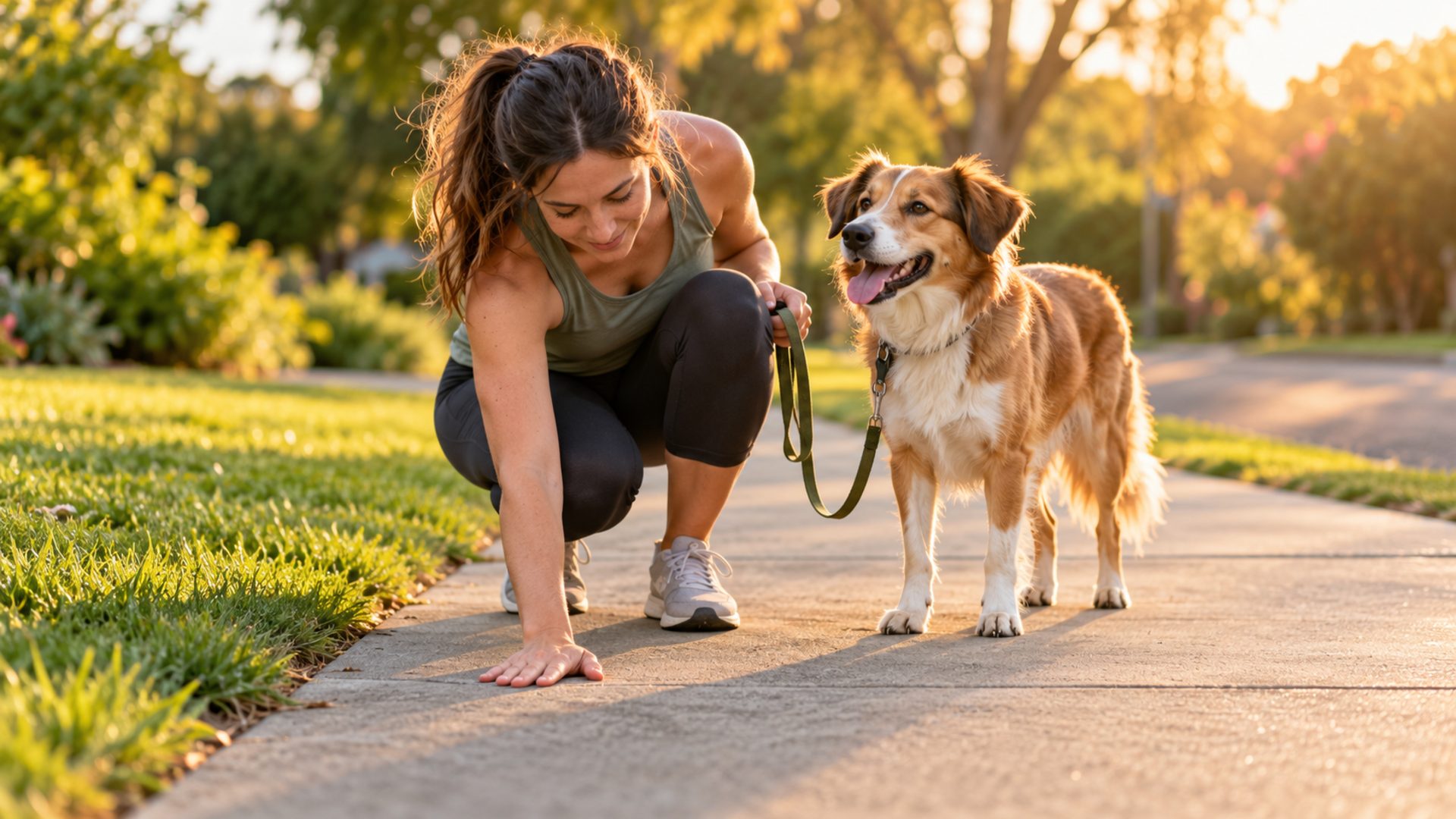
To check whether pavement is too hot for your dog, put the back of your hand flat on the surface for seven seconds. If you cannot hold it there comfortably, it is too hot for paws: change the time, the route or the length of the walk. Ground in direct sun, especially dark asphalt and metal, can be far hotter than the air, and pad burns often show up hours after the walk rather than during it.
This guide explains why surfaces heat up the way they do, compares common surfaces, sets out a simple pre-walk routine, and covers the signs of sore or burnt pads, first steps if it happens, and which dogs need extra care. It also touches on heatstroke, which is the bigger hot-weather danger for the whole dog.
At a glance
- The seven-second test: back of your hand on the actual surface you will walk on. Too hot for you means too hot for paws.
- Air temperature misleads. Asphalt and metal in sun heat fast and stay hot into the evening.
- Timing is the strongest fix: walk early morning, when surfaces have cooled overnight.
- Watch afterwards for limping, paw licking, redness, peeling or blisters.
- Blisters, open wounds or not bearing weight mean a call to your vet, not home treatment.
Why ground temperature is not air temperature
Surfaces absorb heat according to what they are made of, their colour and how much sun they have had. Dark, dense, man-made materials, asphalt above all, absorb sunlight efficiently and release it slowly. They keep heating through the day and stay hot after the sun moves off them. A footpath that felt fine at breakfast can be a real hazard by mid-afternoon and still be warm well into the evening.
Paw pads are tougher than the skin on your hand, but they are not heat-proof, and all of a dog’s contact with the ground is concentrated through them. Damage can also build up. A dog may walk on a surface that is uncomfortable rather than instantly injurious, show nothing at the time, and develop sore, inflamed pads that evening. Because of that delay, owners often do not connect the two.
How common surfaces compare in the sun
| Surface | Heat risk on a sunny day | Notes |
|---|---|---|
| Metal (drain covers, ramps, decking fixings, play equipment) | Very high | Heats quickly and can injure fastest. Avoid in warm weather. |
| Dark asphalt (roads, car parks, driveways) | Very high | Heats fast, holds heat longest, often still warm after sunset. |
| Artificial turf | High | Can get much hotter than natural grass in full sun. |
| Dry sand | High at midday | Wet sand near the water is much cooler; beaches vary within metres. |
| Concrete and paving | Moderate to high | Pale concrete in shade is usually fine; in full sun all morning it may not be. |
| Bare soil and dirt paths | Low to moderate | Usually cooler than made surfaces, cooler again in shade. |
| Natural grass in shade | Low | Living plants lose heat through evaporation; the best choice in warm weather. |
The table is a rule of thumb. Sun, shade, wind and the time of day change everything, which is why testing the actual surface beats guessing.
The seven-second hand test
- Find the surface you will actually walk on, not the shaded path by your front door.
- Place the back of your hand flat on it. The back of the hand is more sensitive than the palm.
- Hold for seven seconds. This is a widely used guideline from animal welfare organisations.
- If you want to pull away before seven seconds, it is too hot. Change the plan.
- Re-test along the route if it moves from shade into sun or onto a different surface.
Do not rely on your dog to tell you. An excited young dog or a stoic older dog may keep walking on a surface that is hurting them. Your hand is the better judge.
A simple hot-weather walk plan
Move the walk
Timing is the most effective change. Early morning is usually coolest underfoot because surfaces have had all night to lose the previous day’s heat. Late evening is second best, but asphalt can stay warm for hours after sunset, so test it.
Change the route
Grass, shaded paths and tree-covered parks are much cooler than streets and car parks. A mostly grassy route can be walked at times when a street route cannot.
Shorten it and swap in brain work
Less time on warm ground means less exposure. On very hot days a short, shaded toilet walk plus indoor enrichment is often the kindest plan. The guides to easy dog enrichment ideas and scent work at home offer ways to tire a dog out without the heat. For how much exercise your dog really needs, see how much exercise a dog needs.
Consider protective footwear
Boots put a physical barrier between pad and ground. They work when they fit and when the dog has been introduced to them gradually. The guide to dog boots and paw protection covers types, fitting and a reward-based introduction. Paw balms or waxes add only a thin layer and are not a substitute for avoiding hot ground.
Rinse and check afterwards
Cool water over the feet after a warm-weather walk is pleasant for the dog and gives you a moment to look at the pads properly. Making that a habit catches problems at the redness stage rather than the blister stage.
Signs of sore or burnt paw pads
- Limping or favouring one or more feet, especially if it starts partway through a walk.
- Licking or chewing at the paws in the hours afterwards. This is the most commonly missed sign because it happens at home.
- Reluctance to walk, stopping often, or trying to move onto grass or shade.
- Pads that look darker or redder than usual, feel rough, are peeling, or have blisters or discharge.
If you think your dog’s pads are burnt
- Get off the hot surface onto grass or shade straight away. Carry a small dog if needed.
- Cool the paws gently with cool, not ice-cold, water.
- Stop your dog licking the area and keep it clean.
- Call your vet for anything more than mild redness: blisters, peeling, open wounds, bleeding, or a dog that will not bear weight. Burns can be more serious than they first look and can become infected.
- Rest and avoid rough or hot surfaces until your vet says the pads have healed.
Do not put human creams or medicines on the pads unless your vet recommends them.
Do not forget heatstroke
Hot ground often comes with hot air, and dogs can overheat on walks, not only in cars. Heavy panting, drooling, weakness, stumbling, vomiting, collapse or a dog that will not settle are warning signs. Stop, move to shade, start cooling with cool water and contact a vet urgently. The guide on when to call the vet lists other emergency signs. Never leave a dog in a parked car in warm weather; the guide to car travel with your dog covers safe travel.
Dogs that need extra care
- Puppies, whose pads are still toughening up. The puppy first-year guide covers safe exercise at each stage.
- Older dogs, who may keep walking on something a younger dog would avoid.
- Dogs that mostly walk on soft ground, whose pads are less used to hard surfaces.
- Dogs recovering from a pad injury, since healing tissue is more vulnerable.
- Flat-faced breeds, overweight dogs and thick-coated dogs, which are at higher risk of overheating in general.
- Dogs with skin conditions; ask your vet what they advise.
Pre-walk checklist for warm days
- Have I done the seven-second hand test on the route’s main surface?
- Is there a cooler time today I could walk instead?
- Does my route include grass and shade, and avoid metal and car parks?
- Am I carrying water for my dog?
- Is today a day for a shorter walk plus indoor enrichment?
- Will I rinse and check paws when we get home?
Common mistakes
- Judging by the air. A pleasant breeze says nothing about the asphalt.
- Testing the wrong spot. The shaded front path can be far cooler than the street around the corner.
- Assuming evening is safe. Asphalt can stay hot well after sunset.
- Waiting for the dog to complain. Many dogs do not, and damage can appear later.
- Treating boots as a fix for midday walks. They protect pads, not the dog from heatstroke.
- The first warm day of spring. A long walk gets planned on how nice the air feels while the pavement heats up.
The rest of the year
Heat is the summer version of a year-round point: the ground has its own conditions. In winter, de-icing salt irritates pads and ice is slippery and abrasive. In warm climates, checking the ground is a daily habit rather than a seasonal one. In every case the answer starts the same way: put your hand down before you set off.
Related guide: Why Do Dogs Pant? How to Tell Normal From Worrying Signs.
Sources this guide draws on: hot-weather and heatstroke guidance from animal welfare organisations including the RSPCA and PDSA; general veterinary first-aid guidance on paw pad burns.
Handy gear for this guide
Practical picks we think suit this topic. As an Amazon Associate, Mind A Dog earns from qualifying purchases, at no extra cost to you. Prices and availability are set by Amazon and may vary by country.
- Dog Cooling Mat (44 x 32 inch)
A cool spot to lie on during hot weather, no power needed.
View on Amazon - Portable Dog Water Bottle with Food Container
Fresh water and a snack on walks and car trips.
View on Amazon - EVERLIT Pet First Aid Kit (95 Pieces)
Bandages, gauze and basics in one bag for home, car or hikes while you contact your vet.
View on Amazon
Frequently asked questions
What temperature is too hot to walk a dog on pavement?
There is no single safe number because the surface, sun exposure and time of day matter more than the air temperature. Asphalt in full sun can be much hotter than the air on a day that feels only warm. Use the seven-second hand test on the actual surface instead of a forecast.
How quickly can hot pavement burn a dog’s paws?
On very hot surfaces, injury can happen quickly, and metal is the fastest. On merely uncomfortable surfaces, damage can build up over a walk and only show later. Because of this, it is safer to avoid hot ground than to try to limit how long your dog is on it.
Is it safe to walk my dog in the evening in summer?
Often, but not always. Asphalt can hold heat for hours after the sun goes down, so test the surface before you go. Early morning is usually the coolest time underfoot.
Do paw balms protect against hot pavement?
Balms and waxes add a thin layer and can help keep pads supple, but they offer much less protection than boots and do not make hot ground safe. Treat them as a small extra, not a solution.
How do burnt paws heal?
Mild redness may settle with rest and keeping the area clean, but blisters, peeling or open wounds need a vet, who may recommend dressings, protection from licking and time off walks. Healing time depends on the depth of the burn, so follow your vet’s advice before returning to normal walks.
Seven seconds with your hand on the ground is the easiest piece of dog care there is. Make it a habit on warm days and your dog’s paws will thank you.
This article is general information only and is not veterinary advice. If you are worried about your dog’s paws or health, please speak to your vet.