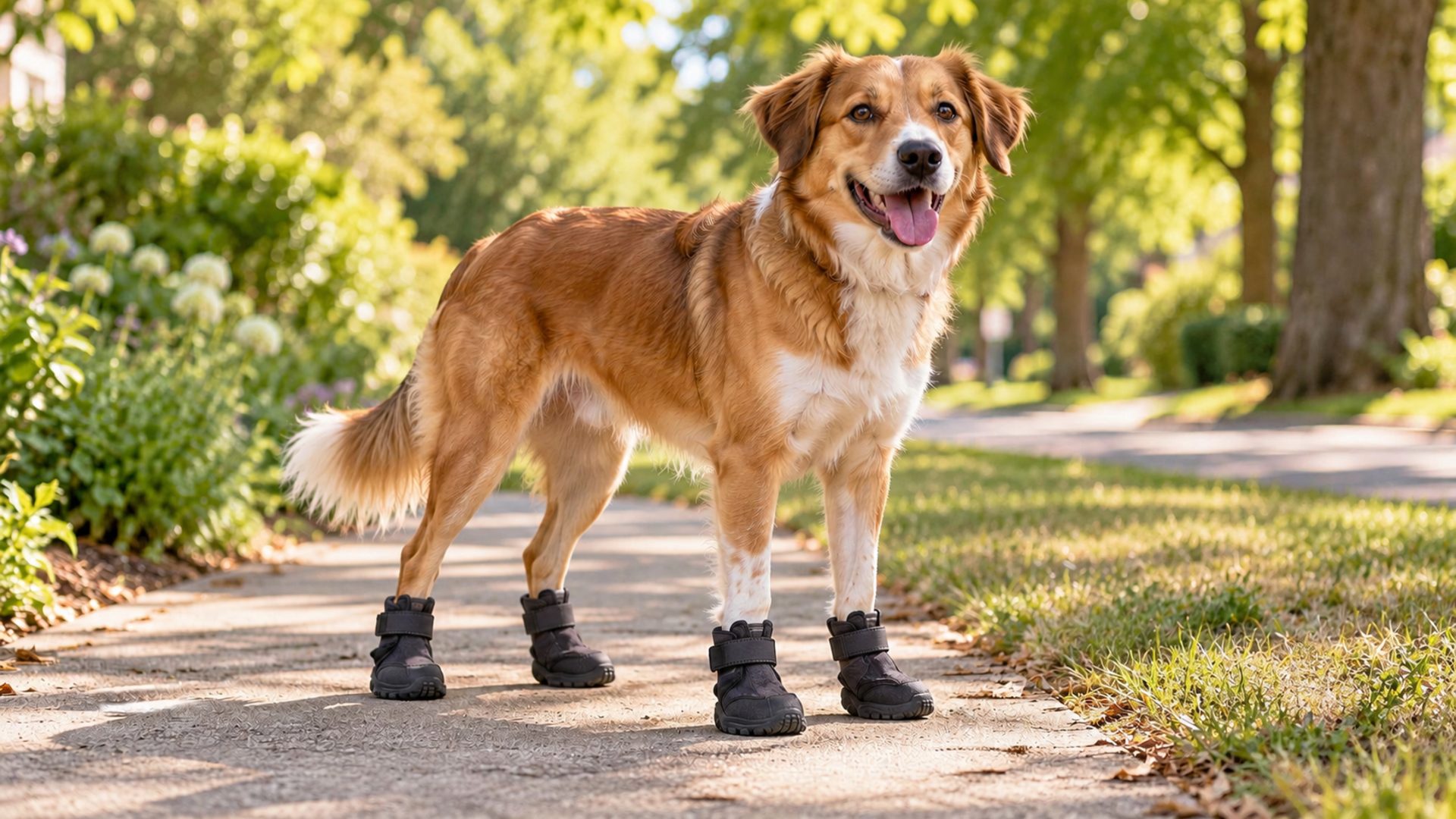
Most healthy dogs do not need boots for everyday walks on grass, dirt or mild footpaths: their paw pads are built for it. Boots are worth having for specific situations: hot surfaces you cannot avoid, ice and de-icing salt, sharp or rocky trails, ground covered in debris, and when your vet wants a dressed paw kept clean. If you do use them, fit and a slow, reward-based introduction matter more than the brand.
This guide helps you decide whether your dog needs boots, compares the main types, explains how to measure for a good fit, and sets out a step-by-step plan to get your dog comfortable wearing them. It also covers the checks to make after every walk and when a paw problem needs a vet.
At a glance
- Boots are a tool for conditions, not a daily necessity. Change the time and route first; use boots when you cannot avoid hard conditions.
- Match the boot to the job: everyday, hiking, winter, thin rubber booties or indoor grip socks.
- Measure the paw while your dog stands, front and back, and use that brand’s own size chart.
- Introduce boots over several short, rewarding sessions and never force them on.
- Check paws after every booted walk for rubbing, and see your vet for wounds, limping or burnt-looking pads.
Why paws sometimes need protection
Paw pads cushion each step, help with grip and give a dog information about the ground. They also contain sweat glands, although dogs mainly cool themselves by panting. The skin on the pads is thick, but it is still skin. It can be burnt, cut, scraped, cracked or irritated by chemicals.
Because dogs walk on their pads every day, a small injury gets walked on again tomorrow. Many dogs also hide discomfort, so the first sign may be licking a paw at home, slowing down or refusing to walk. Protection is about recognising the handful of situations where the ground is harder on feet than usual.
When boots are worth using
Hot ground you cannot avoid
Asphalt, concrete, metal, sand and artificial turf can get far hotter than the air in direct sun. Walking early and late, and choosing grass and shade, solves most of the problem. The guide to checking hot pavement before a walk explains the back-of-the-hand test and how different surfaces behave. Boots are a backup for car parks, city centres or holidays with little shade. They do not stop a dog overheating, because dogs lose most heat through panting rather than their feet.
Ice, snow and de-icing salt
Snow can pack into balls between the toes, ice can be sharp, and salt or chemical de-icers can dry and irritate pads. Some dogs also lick these chemicals off their feet later. Boots keep feet dry and away from treated surfaces. If you do not use them, rinse with plain water and dry the paws after winter walks.
Rough trails and hiking
Dogs used to soft grass can wear their pads quickly on a long day over rock, gravel, scree or volcanic ground. A set of boots in your pack is a sensible precaution, even if you only use them on the roughest section or if a pad gets sore partway through.
Hidden hazards
Broken glass, building sites, ground after storms or floods, spiky plants and grass seeds can all hide sharp objects. Boots give a layer of protection where you cannot see what your dog is stepping on.
Slippery floors at home
Older dogs and dogs with mobility problems can struggle on smooth timber or tiles. Grip socks may help them feel steadier. Rugs and runners are often easier still. Frequent slipping or trouble getting up is worth raising with your vet, as pain or weakness may be behind it. The guide to caring for a senior dog covers other ways to make home easier.
Protecting a dressing
If your vet has bandaged a paw, they may suggest a protective boot for toilet trips. Follow their instructions on how long it stays on and how often the dressing is checked.
When your dog probably does not need boots
For normal walks on grass, dirt paths and comfortable footpaths, bare paws give the best grip and the best feedback from the ground. Regular walking on varied surfaces also helps keep pads in good condition. A badly fitted boot can rub and cause the very sore spots you were trying to avoid, and some dogs find boots stressful. If the ground is comfortable to touch with the back of your hand, is not icy or chemically treated, and is not covered in sharp debris, bare paws are usually best.
Types of dog boots compared
| Type | Best for | Strengths | Limitations |
|---|---|---|---|
| Everyday boots | Hot footpaths, city walking, light trails | Flexible sole, good all-rounder, easy straps | Less tread and protection than hiking boots |
| Hiking boots | Rock, gravel, long trail days | Thick, tough sole; good tread; often two straps | Stiffer, heavier, need more getting used to |
| Winter boots | Snow, ice, salted footpaths | Water-resistant or insulated upper, grippy sole | Can be warm for mild weather; take longer to dry |
| Thin rubber booties | Salt, wet ground, short city walks | Light, close to bare-paw feel, often accepted more easily | Little protection from heat or sharp objects; tear easily |
| Grip socks | Indoor use on slippery floors | Soft, comfortable, adds traction at home | Not for outdoor walking; can twist if loose |
How to measure for a good fit
A boot that is too loose twists, slips off or collects grit. One that is too tight rubs and can restrict circulation.
- Measure standing up. Place your dog’s paw on paper while they stand so the paw spreads as it does when walking. Mark the widest points on either side, and from the tip of the longest nail to the back of the main pad.
- Measure front and back paws. Many dogs have larger front paws. Some brands sell mixed-size sets.
- Trim nails first. Long nails change the measurement and can push against the toe of the boot. The guide to trimming dog nails at home shows how to do it calmly.
- Use the maker’s chart. Sizing varies a lot between brands. If your dog falls between sizes, follow that brand’s advice.
- Check the strap. It should be snug without pinching, with room to slide a finger underneath, and should not press on the dewclaw.
- Look at the sole. It should bend with the paw, grip well and be thick enough for the conditions.
Getting your dog used to boots
Almost every dog high-steps the first time it wears boots. That is normal. The key is to go slowly, make each step pleasant with food rewards and never force the issue. The same principles appear in the beginner’s guide to positive reinforcement.
- Make the boots good news. Put them on the floor and reward your dog for sniffing them. Repeat a few times over a day or two.
- Practise paw handling. Touch and hold each paw for a second, then reward. Build up slowly if your dog is unsure about having feet handled.
- One boot at a time. Put one boot on, reward straight away, then take it off. Repeat until your dog is relaxed.
- All four indoors. Put on all four boots and play a favourite game or scatter food to find, so your dog is moving and thinking about something fun. Keep sessions to a minute or two.
- Short walks outside. When your dog walks normally indoors, try a short walk on an easy surface and build up gradually.
If your dog becomes worried at any step, go back to the last step where they were comfortable. Signs include freezing, lip licking, yawning, a tucked tail and trying to pull the boots off. The guide to signs of stress in dogs helps you spot these early. Some dogs never accept boots happily; for them, choosing times and routes carefully is the better answer.
After every walk: paw and boot checks
- Remove the boots and look at each paw, including between the toes and around the dewclaw.
- Look for redness, rubbing marks, swelling, blisters or broken skin, especially along the strap line.
- Shake out grit and sand.
- Let boots dry fully before the next use; damp boots can irritate skin.
- Take boots off once you no longer need them, and never leave them on overnight.
If you see a wound, a pad that looks burnt, raw or peeling, or your dog is limping or keeps licking a paw, stop using the boots and contact your vet. The guide on when to call the vet explains which signs are urgent.
Quick decision checklist: boots today?
- Is the ground too hot to hold the back of your hand on it for seven seconds? Change the time or route first; use boots only if you cannot avoid it.
- Is there ice, snow, salt or de-icer on the footpaths? Boots, or rinse and dry paws afterwards.
- Are you heading onto sharp rock, gravel or a long trail? Pack boots.
- Is the area covered in glass or debris? Boots, or choose another route.
- Has your vet dressed a paw? Follow their advice on a protective boot.
- Is it a normal walk on grass or a comfortable footpath? Bare paws are usually best.
Other ways to look after paws
- Walk at the right time. In summer, early morning and evening walks are kinder to paws and to the whole dog.
- Choose softer, shaded surfaces such as grass and dirt paths.
- Keep the fur between pads tidy on long-coated dogs so it does not trap ice, burrs or grass seeds. The guide to home grooming by coat type covers this.
- Rinse after beach, salt or muddy walks with plain water and towel dry.
- Build up gradually before a big hike, increasing distance on rougher ground over a few weeks.
Common mistakes
- Using boots as permission to walk in the heat. Boots protect pads, not the rest of the dog. Heatstroke is still a risk.
- Guessing the size. Measuring by eye or buying one size for all four feet often leads to rubbing or lost boots.
- Doing up straps too tightly to stop boots slipping, instead of choosing a better-fitting size.
- Forcing boots on a worried dog or laughing at the high-stepping while the dog is clearly uneasy.
- Skipping the after-walk check, so a small rub becomes an open sore.
- Treating a burnt or cut pad at home when it needs a vet.
Related guide: Dog Sweaters and Coats: Does Your Dog Really Need One?.
Sources this guide draws on: general paw-care and hot-weather guidance from animal welfare organisations including the RSPCA and PDSA; general veterinary guidance on paw pad injuries.
Handy gear for this guide
Practical picks we think suit this topic. As an Amazon Associate, Mind A Dog earns from qualifying purchases, at no extra cost to you. Prices and availability are set by Amazon and may vary by country.
- EVERLIT Pet First Aid Kit (95 Pieces)
Bandages, gauze and basics in one bag for home, car or hikes while you contact your vet.
View on Amazon - Hepper Bio-Enzyme Pet Stain and Odour Spray
Enzyme cleaner for accidents on carpets, floors and bedding.
View on Amazon - Portable Dog Water Bottle with Food Container
Fresh water and a snack on walks and car trips.
View on Amazon
Frequently asked questions
Do vets recommend boots for dogs?
Vets generally see boots as useful in particular situations, such as protecting a dressing, hot or salted ground, or rough trails, rather than as everyday wear. Your own vet can advise whether your dog’s paws, age or health make boots a good idea.
Are dog boots bad for dogs?
Well-fitted boots used for the right conditions are not harmful. Problems come from poor fit, wearing them for long periods when they are not needed, wet boots, and forcing them on a stressed dog. Check paws after each use.
How long can a dog wear boots?
For the length of the walk or the section that needs protection. Take them off afterwards so paws can dry and breathe, and never leave them on overnight. On long hikes, check for rubbing at rest stops.
Why does my dog walk funny in boots?
Boots change the feel of the ground, so most dogs high-step at first. With short, rewarding sessions most dogs walk normally after a little practice. If your dog stays stiff or distressed, the fit may be wrong or the boots may not suit that dog.
Can I use socks instead of boots?
Grip socks are designed for indoor floors and do not protect against heat, sharp objects or wet ground. For outdoor protection, choose boots with a proper sole.
Boots are a useful piece of kit for the days when the ground is harder on paws than usual. Pick the right type, fit it carefully, introduce it kindly, and keep using timing and route as your first line of protection.
This article is general information only and is not veterinary advice. If you are worried about your dog’s paws or health, please speak to your vet.