
The short version
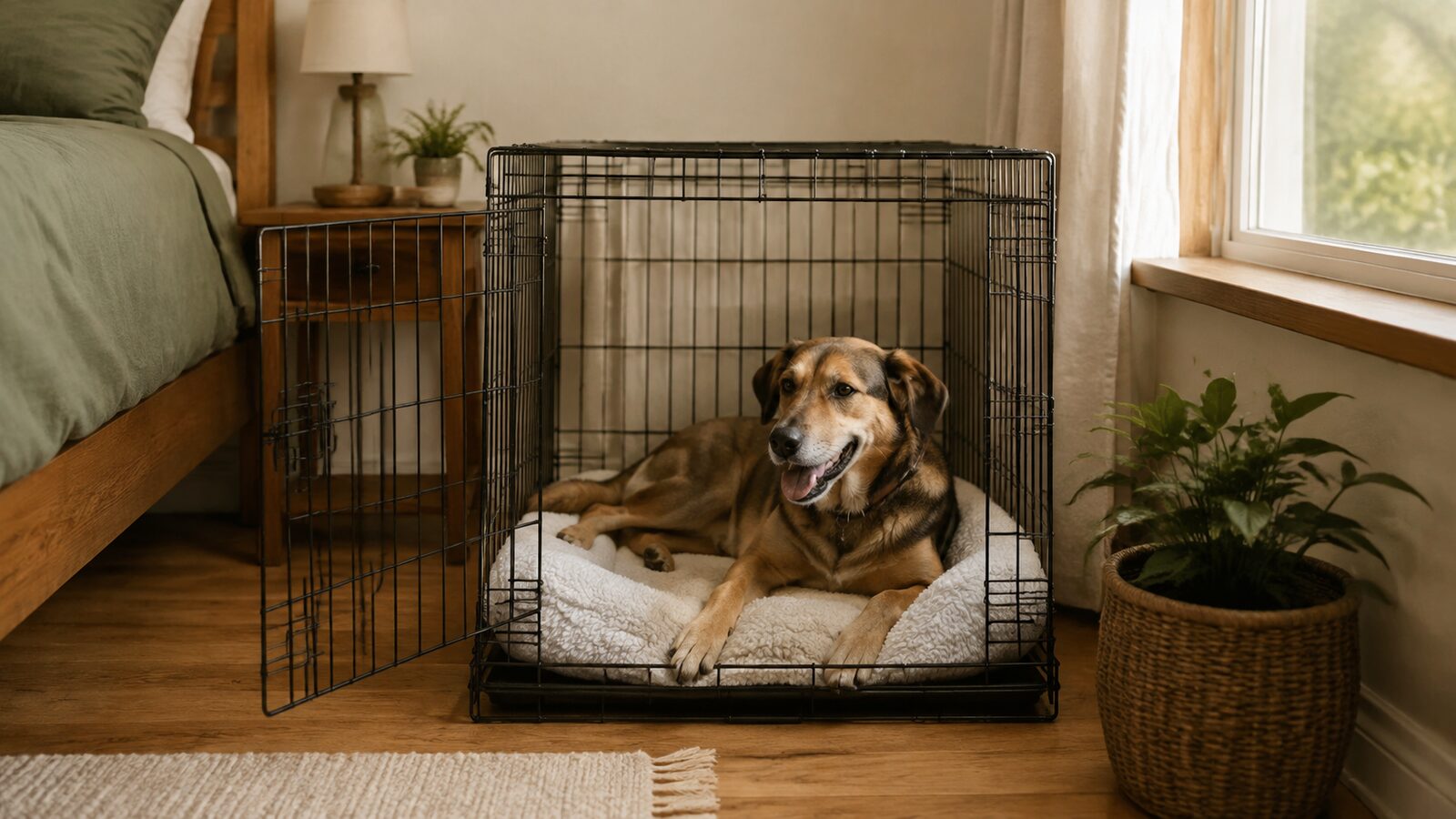
A crate is a small, comfortable room your dog chooses to go into, not somewhere they are shut to solve a problem. Introduce it over days rather than hours, feed meals inside, leave the door open at first, and build up time slowly. A dog who panics when the door closes is telling you something a crate cannot fix.
Plenty of owners feel uneasy about crates. It looks like a cage, and that is hard to square with a dog you love.
That unease points at something real. A crate can be a kind, useful piece of furniture, or it can be a way of storing a dog. The difference is not the crate itself, it is how it is introduced and what it gets used for.
What a crate is for, and what it is not for
Used well, a crate gives your dog a predictable place to rest where nobody bothers them. The genuine uses are worth being clear about:
- A settled sleeping spot, particularly for a puppy still learning to switch off.
- Support for house-training rhythm, since most dogs prefer not to soil where they sleep.
- Safety when the front door is propped open or tradespeople are in.
- Rest after an injury or operation, if your vet has asked for it.
- A retreat from children or visitors, with a rule that nobody follows the dog in.
What a crate is not for matters just as much. It is never a punishment. If the crate is where your dog goes when you are cross, it becomes the place where bad things happen.
It is also not a substitute for company, exercise and something to do, and not a solution to chewing, barking or toileting. A closed door manages those for an hour and does nothing about the cause.
The den idea, handled honestly
You will often hear that dogs are den animals and therefore want a crate. That is half true at best. Wild canids use dens for raising young, not as year-round housing, and dogs left to themselves don’t build a box to live in.
What is true is that many dogs like enclosed, slightly dark places to rest: under a table, behind the sofa, in the footwell of the car. That preference is real and easy to see in your own dog.
But choosing to lie in an enclosed space and being shut into one are different things. The den argument explains why the shape suits a lot of dogs. It says nothing about the door, and the door is a separate skill you teach kindly.
Size, place, and what goes inside
Size. Your dog should be able to stand without ducking, turn round easily, and lie fully stretched on their side. Buy for the adult size a puppy will reach.
You may have been told to keep it small so a puppy won’t toilet inside. Treat that carefully: a puppy left longer than they can manage will soil it anyway, and a dog who repeatedly lies in a soiled bed stops trying to stay clean. A divider panel in a larger crate is kinder.
Place. Where the family actually sits, not the far end of the house, and away from radiators, direct sun, draughts and the front door. A quiet corner suits many dogs by day, with the bedroom at night for puppies. Once it is somewhere good, leave it there.
Inside. Washable bedding, water in a spill-resistant bowl for longer stays, and something safe to chew. Take collars and harnesses off first, since tags and straps can catch on bars. A cover over part of the top suits some dogs, but leave one side open.
Introducing a crate: days, not hours
The whole method is that your dog decides the crate is good before the door ever closes. Move on only when they are loose and relaxed at the stage before, and go back one the moment they hesitate.
Stage one: furniture
Set the crate up with the door removed or fastened wide open, and say nothing about it. Drop small pieces of something excellent inside when your dog isn’t watching, so they keep discovering that it produces food on its own.
Stage two: meals and chews
Feed dinner in the crate, bowl just inside the entrance at first, then further back over several days. Door open every time. This is usually the stage that does most of the work.
Then give a long-lasting chew in there, door still open, while you sit nearby doing something dull. Your dog is learning that the crate is where slow, pleasant things happen.
Stage three: the door
Close the door for two seconds, post a treat through it, then open it before your dog thinks to ask. Build up in mixed lengths, two seconds, ten, five, thirty, rather than always going longer. Then a minute or two with a chew.
Stage four: your absence
Potter about the room, then step out for a few seconds, then longer. Come back before your dog is worried, and open the door while they are still relaxed rather than once they have started asking.
Tonight you can do stage one. Put the crate somewhere sensible with the door fixed open, and each time you walk past, drop a piece of chicken inside without comment. That is the whole task, and it matters more than it looks.
Night-time and daytime are different jobs
Night is usually the easier one. Your dog is tired, sleeping is passive, and you are in the house. Many puppies settle fastest with the crate beside your bed for the first few weeks, moved later if you want it elsewhere. Expect toilet trips: outside, no chat, straight back.
Daytime crating is a bigger ask, because it combines being confined with being alone. Those are two separate lessons. If your dog isn’t yet comfortable alone, a closed door adds a worry rather than solving one, so teach them separately and combine them only once each is easy.
How long is too long?
There is no single correct number, and official guidance varies. A few principles hold up:
- Sleeping overnight with you in the house is very different from daytime confinement.
- For a puppy the bladder sets the limit. A rough guide many trainers use is about an hour per month of age during the day, and that is a ceiling, not a target.
- For an adult, a couple of hours occasionally, with exercise, toilet and company either side.
- Never crated overnight and for most of the day as well.
Watch the dog rather than the clock. Not settling, damp bedding, chewing the bars, coming out frantic or hesitating at the door all mean it has been too long, or gone too fast. If your working day is long, the answer is different arrangements rather than a bigger crate.
When a crate is not the answer
Some dogs don’t merely dislike being crated, they panic. That looks like relentless howling, heavy drooling, scrabbling at the door until nails or teeth are damaged, soiling in a dog who is otherwise clean, or refusing to go near it.
This is distress, not stubbornness, and it does not wear off with repetition. Shutting a panicking dog in teaches them that panic happens in the crate, and the link tends to strengthen rather than fade. If nails or mouth are damaged, book a vet appointment.
The useful question is what the panic is about. If your dog is distressed whenever they are left, crate or not, the subject is separation-related distress, and our separation anxiety material is the place to start. If they are generally wary of novelty and handling, begin with the confidence-building work for fearful and rescue dogs.
Meanwhile, you do not have to persist. A baby gate, a pen or a dog-proofed room gives most of the same safety with far less pressure, and plenty of dogs live excellent lives having never used one.
Crates are viewed differently around the world
Crates are ordinary household items in some countries and regarded with suspicion in others. Some places regulate their use, limit how long a dog may be confined, or discourage routine daytime crating in welfare codes. Rules for transport, air travel and boarding differ again.
Check the guidance published by your own national or state animal welfare body, and the rules wherever you travel with your dog. Nothing here overrides local law or your vet’s advice.
When to get professional help
Ring your vet if your dog panics when confined, has hurt themselves trying to get out, or has suddenly stopped settling somewhere they were happy before. Pain and illness make confinement much harder to tolerate, and are worth ruling out first.
For ongoing distress at being confined or left alone, ask your vet to refer you to a qualified behaviourist. If the introduction has simply stalled, an accredited reward-based trainer can get it moving again.
Frequently asked questions
Is crate training cruel?
It depends entirely on how it is done. A crate introduced slowly, kept comfortable, used for short periods and never used as punishment becomes a resting place many dogs choose for themselves. One used to contain a dog for long stretches, or to shut away a behaviour problem, is a welfare issue. The object is neutral; the practice is what matters.
How long can I leave my dog in a crate?
Less time than most people assume. Overnight sleep with you at home is generally fine for a settled dog, but daytime confinement should be short: a couple of hours at most for an adult, less for a puppy, whose bladder sets the limit. For a full working day, a pen or dog-proofed room plus a walker is better.
My puppy cries in the crate at night. What should I do?
Move the crate next to your bed for the first few weeks. Most night crying is about being alone rather than the crate itself, and being able to hear and smell you settles most puppies quickly. Take them out to toilet when they wake, calmly and without conversation, then straight back. Once nights are settled, move it gradually if you wish.
Do I have to crate train at all?
No. Crates are useful, not compulsory, and a great many dogs live perfectly good lives without one. That said, a dog who is relaxed about being confined tends to cope better with the vet, travel, boarding and recovering from injury, so it is worth teaching even if you rarely shut the door at home.
Read next
- Separation Anxiety in Dogs: What Actually Helps
- House-Training a Puppy: A Week-by-Week Plan
- Positive Reinforcement Dog Training: A Beginner’s Guide That Actually Works
- How to Stop Your Dog Pulling on the Lead
More in Training & Communication.
A note on this article
This is general information for dog owners rather than advice about your own dog, and it is not veterinary or behavioural-medicine guidance. If your dog becomes distressed when confined or left alone, or has hurt themselves trying to get out, please talk to your vet and ask about a referral to a qualified behaviourist.