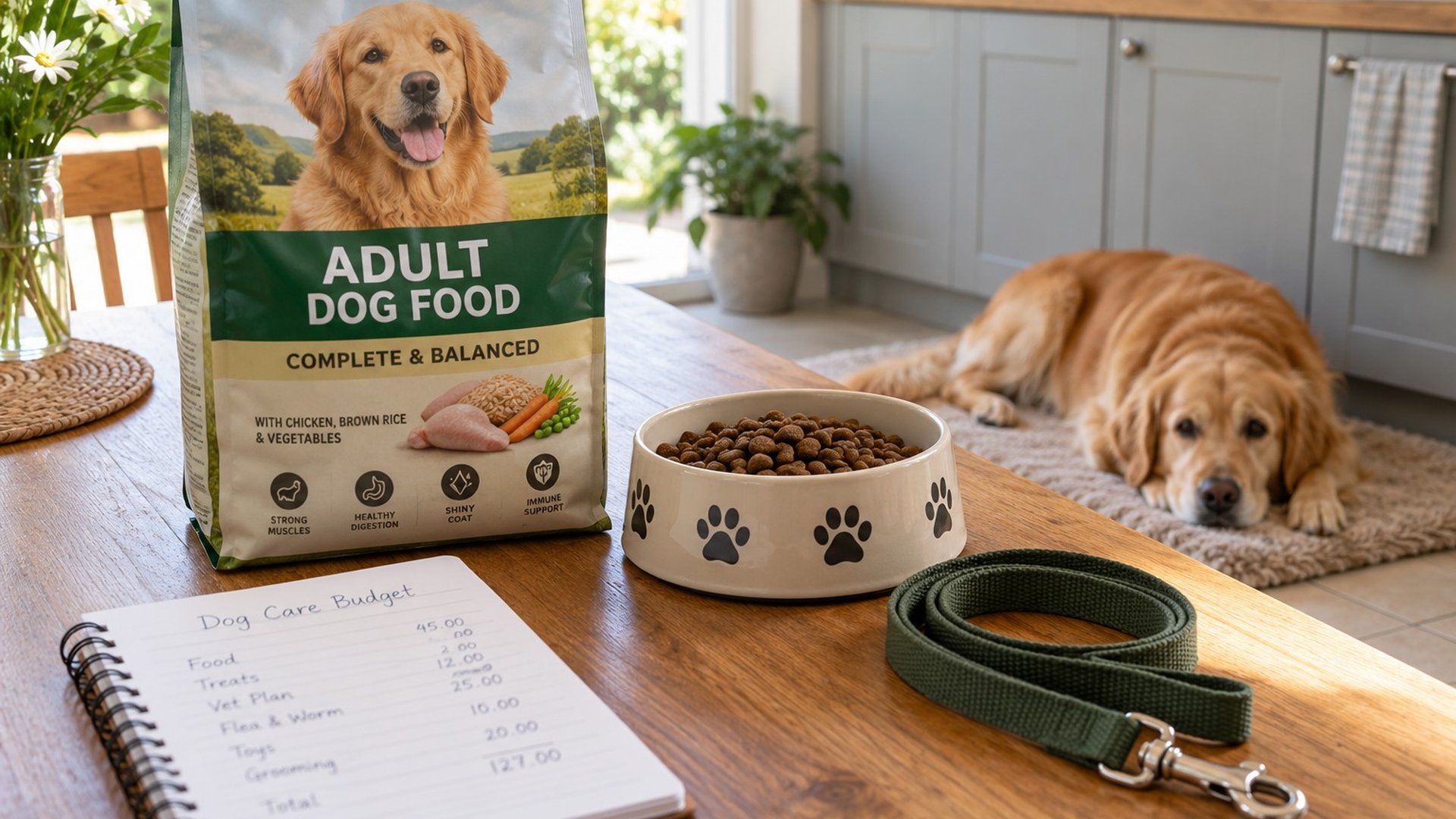
A dog costs more than most people expect. Beyond the one-off cost of bringing them home, you are paying every year for food, routine vet care, parasite prevention, insurance or an emergency fund, grooming and care while you are away, and the first year usually costs the most. Real figures vary widely by country, dog size and lifestyle, so the smartest approach is to build your own budget from the cost categories below rather than relying on a single average.
This guide walks through every cost category in plain words, shares the published estimates from three well-known animal welfare organisations (with their dates), separates first-year costs from the ongoing yearly ones, and finishes with a budget checklist you can fill in with prices from your own area.
At a glance
- The first year is almost always the most expensive, because one-off costs (getting your dog, desexing, first vaccinations, microchipping, equipment, training classes) land on top of the everyday ones.
- Every year after that, food, routine vet care, parasite prevention and insurance or savings make up the core of the budget.
- Larger dogs generally cost more to feed, medicate and board, and long-lived dogs cost more over a lifetime.
- The cost most owners forget is the unexpected one: an accident or illness. Plan for it with insurance, savings, or both.
- Prices differ hugely between countries, cities and clinics, so phone local providers and build your own figures.
What published estimates say (and why they differ)
Several animal welfare organisations publish cost estimates. They are useful as a reality check, but each was calculated in a different country, in a different year and with different assumptions, so they cannot be compared directly. All figures below are as published by those organisations, checked at the time of writing (October 2026). Prices change, and your costs may be quite different.
| Source | Country and currency | What it estimates | Notes |
|---|---|---|---|
| PDSA (UK veterinary charity) | United Kingdom, pounds | Ongoing costs of at least £69 a month for a small dog, £83 for a medium dog and £116 for a large dog; set-up costs of around £415 to £560 depending on size, not including buying the dog; lifetime costs of at least £6,200, rising to £18,800 or more for some large breeds | PDSA says its costs were last calculated in 2024 and are minimums |
| RSPCA NSW (Australia) | Australia, dollars | A minimum of $910 a year for a dog’s care, every year of their life; it also cites the Australian Veterinary Association’s figure that the average owner spends more than $25,000 over a dog’s lifetime | No calculation date is shown on the page |
| ASPCA (US animal welfare charity) | United States, dollars | An annual total of $1,391 and a first-year total of $3,221 | Labelled a 2021 update, so likely to be lower than today’s prices |
The pattern across all three is the same: the first year costs noticeably more than later years, and the published figures are best read as a floor, not a ceiling. None of them can include the cost of a serious illness or accident, which is the part of the budget that surprises people most.
First-year costs: the one-off expenses
These are the costs you pay once, mostly in the first weeks and months. Some will not apply to you, for example if you adopt an adult dog who is already desexed, vaccinated and microchipped.
Adoption or purchase
Adoption fees from shelters and rescue groups are usually far lower than the price of a puppy from a breeder, and they often include desexing, vaccinations, microchipping and a health check. That bundle can represent real savings, so ask exactly what the fee covers. Breeder prices vary enormously by breed, region and demand. A very cheap puppy can turn out to be the most expensive, because poorly bred or poorly raised puppies may arrive with health or behaviour problems. If you are still deciding what kind of dog suits you, think about adult size, coat type and exercise needs now, because they shape almost every cost that follows.
Desexing
Desexing (spaying or neutering) is often one of the larger single vet bills in the first year. The price depends on your dog’s sex, size and age, and on your clinic and country. Many shelters, councils and charities run lower-cost desexing programmes, and the ASPCA specifically suggests looking for low-cost or free spay and neuter programmes. Talk to your vet about the right timing for your dog.
Vaccinations and first health checks
Puppies need a course of vaccinations spread over several visits, followed by boosters as advised by your vet. Which vaccines are recommended depends on where you live. The ASPCA suggests asking your vet which vaccines your dog truly needs, while never skipping the required and core ones. Each puppy visit is also a chance for a general health check and a conversation about parasite control.
Microchipping and registration
Microchipping and registration or licensing rules differ between countries, states and local councils. In some places microchipping is compulsory and registration carries a yearly fee, sometimes cheaper for desexed dogs; in others the rules are lighter. Check with your local council or government animal management service before your dog comes home.
Equipment and set-up
Bed, crate or pen, bowls, collar and ID tag, lead and harness, grooming tools, toys, chews, a car restraint, cleaning supplies and, for puppies, plenty of patience and enzyme cleaner. These can add up quickly. Our puppy essentials checklist separates what you genuinely need from day one from what can wait.
Training classes
Puppy classes or sessions with a qualified, reward-based trainer are one of the best investments you can make. Good early training and socialisation help prevent behaviour problems that are far harder, and more costly, to change later. Prices vary between group classes and private sessions. Our guide on how to choose a dog trainer covers what to look for and what to avoid.
Every year after: the ongoing costs
Food
Food is usually one of the largest regular costs, and it scales with your dog’s size, age and activity level. A giant breed can eat several times as much as a toy breed. The cheapest food per bag is not always the cheapest per day, because feeding amounts differ between products. Compare cost per day at the recommended feeding amount for your dog’s weight. Our guide on what to feed your dog explains the main options. Treats and chews are an extra line in the budget, especially during training.
Routine vet care
Plan for at least one general check-up a year, plus booster vaccinations as advised. Senior dogs often need more frequent visits and tests. Dental care is part of this too: some dogs need professional dental cleaning under anaesthetic during their life, which is a significant bill. Regular brushing at home with a dog-safe toothpaste can help. The ASPCA notes that keeping up with yearly exams can save money, because treating illness tends to cost more than preventing it.
Parasite prevention
Flea, tick, worm and, in many regions, heartworm prevention are ongoing costs that most dogs need all year round. Products are often priced by weight band, so a big dog costs more to protect. What your dog needs depends on where you live, so ask your vet. Our guide to flea and tick prevention for dogs explains the options and why gaps in cover cause problems.
Pet insurance or an emergency fund
This is the line that protects every other line. Insurance premiums depend on your dog’s breed, age, location and the level of cover, and they often rise as your dog gets older. Some owners choose to self-insure by putting a set amount into a dedicated savings account every month instead. Either way, decide in advance how you would pay a large, sudden vet bill. Our article Is dog insurance worth it? walks through excesses, exclusions, waiting periods and the questions to ask before you buy.
Grooming
Grooming costs depend heavily on coat type. A short-coated dog may need little more than a brush and the occasional bath at home, while curly, double or long coats can need regular professional grooming. Nail trims, ear cleaning and bathing at home all reduce how often you need to pay a groomer. See home grooming by coat type for a routine that matches your dog.
Boarding, pet sitting and day care
If you travel, work long hours or go away for weekends, you will need someone to care for your dog. Boarding kennels, home-based pet sitters, dog walkers and day care all charge differently, and prices usually rise in school holidays. Count the number of days you are likely to be away each year and multiply. Our guide to choosing a boarding kennel or pet sitter helps you compare the options.
Registration renewals, toys and replacements
Annual registration or licence fees (where they apply), replacement beds, worn-out harnesses and leads, and new toys and chews are small individually but steady over a year.
The cost nobody budgets for: emergencies
Accidents, swallowed objects, sudden illness and long-term conditions such as allergies, joint disease or diabetes can cost more in a week than everything else costs in a year. Emergency and after-hours care usually costs more than a standard appointment. You cannot predict this cost, but you can prepare for it. Decide now whether you will rely on insurance, savings, or both, and know where your nearest after-hours vet is before you need them.
Which costs change the most with your choices
| Cost category | One-off or ongoing | What pushes it up | What can bring it down |
|---|---|---|---|
| Adoption or purchase | One-off | Popular breeds, high-demand areas | Adopting from a shelter, where the fee often includes vet work |
| Desexing | One-off | Larger dogs, private clinics in expensive areas | Low-cost charity or council programmes |
| Vaccinations | First year, then boosters | Higher-risk areas needing extra vaccines | Asking your vet which vaccines are core for your area |
| Food | Ongoing | Large or very active dogs, special diets | Comparing cost per day, not per bag; avoiding overfeeding |
| Parasite prevention | Ongoing | Larger weight bands, regions with heartworm or ticks | Staying consistent so you avoid treating an infestation |
| Insurance | Ongoing | Older dogs, breeds with known health issues, low excess | Starting while your dog is young and healthy; choosing an excess you can afford |
| Grooming | Ongoing | Curly, long or double coats needing professional clips | Learning brushing, bathing and nail care at home |
| Boarding and sitting | Ongoing | Frequent travel, school holiday bookings | Booking early, swapping care with trusted friends |
| Training | Mostly first year | Private sessions, behaviour problems left to grow | Early puppy classes and consistent practice at home |
| Emergencies | Unpredictable | No insurance or savings plan | Insurance, a dedicated emergency fund, safe home habits |
A worked way to build your own budget
Because prices vary so much, the most reliable budget is the one you build from your own local quotes. Here is a simple method, using no invented numbers.
- Pick the dog you are realistically considering. Note expected adult size, coat type and likely lifespan for that breed or mix.
- Phone two or three local vets. Ask for the price of a general consultation, the puppy vaccination course, annual boosters, desexing for a dog of that size, and microchipping.
- Price a month of food. Check the feeding guide for the expected adult weight, work out how many bags or tins that is per month, and multiply by twelve.
- Price parasite prevention for the adult weight band for a full year.
- Get two insurance quotes, or decide on a monthly amount you will put into an emergency fund.
- Estimate grooming from your coat type: home tools only, or a set number of professional visits a year.
- Count your days away and multiply by your local boarding or sitting rate.
- Check your council’s registration fee, if one applies.
- Add the one-off costs (getting your dog, equipment, training classes) to the first year only.
- Add a buffer of your choosing for treats, toys, replacements and price rises.
Total the ongoing lines for your yearly cost. Add the one-off lines to get your first-year cost. Then multiply the yearly cost by your dog’s expected lifespan for a rough lifetime picture.
Budget planning checklist
Copy this list and fill in the prices you find locally.
- Adoption fee or purchase price (and what it includes)
- Desexing, if not already done
- Puppy vaccination course or catch-up vaccinations
- Microchipping and registration or licence
- Set-up equipment: bed, crate, bowls, collar, ID tag, lead, harness, car restraint, grooming tools
- Puppy or training classes
- Food per month multiplied by twelve
- Treats and chews
- Annual vet check-up and boosters
- Flea, tick, worm and heartworm prevention for a year
- Insurance premium or monthly emergency savings
- Grooming: tools and any professional visits
- Boarding, pet sitting, walking or day care
- Annual registration renewal, where it applies
- Replacement toys, beds and equipment
- A plan for an emergency vet bill
Who should budget higher, and who may spend less
Budget higher if you are considering a large or giant breed, a breed with known health problems, a dog with a high-maintenance coat, a senior dog, or if you travel often or live in an area where vet care and services are expensive.
You may spend less if you adopt an adult dog who has already been desexed, vaccinated and microchipped, choose a smaller dog with an easy coat, groom at home, and rarely need paid care while away. Even then, keep a plan for emergencies.
Common mistakes to avoid
- Budgeting only for the first year. Most of the money is spent over the following ten to fifteen years or more.
- Using an average from another country. Published averages are calculated with local prices and a specific year. Use them as a guide only.
- Forgetting that size changes almost everything. Food, parasite products, boarding and some vet procedures cost more for big dogs.
- Skipping prevention to save money. Missing parasite prevention, vaccinations or dental care can lead to larger bills later.
- Having no emergency plan. An unexpected bill is the most common reason a dog budget falls apart.
- Buying the cheapest puppy available. Poor breeding and early care can bring ongoing health and behaviour costs.
- Overfeeding. It costs more in food and can contribute to weight-related health problems.
Sources this guide draws on: PDSA’s guidance on the cost of owning a dog (costs last calculated in 2024); RSPCA NSW’s cost of owning a pet guidance, including its reference to the Australian Veterinary Association; and the ASPCA’s pet care costs guidance (2021 update). All figures were checked at the time of writing (October 2026); prices change and vary by country and region.
Handy gear for this guide
Practical picks we think suit this topic. As an Amazon Associate, Mind A Dog earns from qualifying purchases, at no extra cost to you. Prices and availability are set by Amazon and may vary by country.
- EHEYCIGA Orthopedic Memory Foam Dog Bed (Large)
Firm, supportive foam with a washable waterproof cover.
View on Amazon - EHEYCIGA 4-Step Dog Stairs
Lets smaller or older dogs reach the couch or bed without jumping.
View on Amazon - EVERLIT Pet First Aid Kit (95 Pieces)
Bandages, gauze and basics in one bag for home, car or hikes while you contact your vet.
View on Amazon
Frequently asked questions
How much does it cost to own a dog per year?
It depends on your country, your dog’s size and your choices. As published, PDSA in the UK estimates ongoing costs of at least £69 to £116 a month depending on size, RSPCA NSW in Australia suggests a minimum of $910 a year, and the ASPCA’s 2021 figures give an annual total of $1,391 in the US. Treat these as rough starting points and build your own budget from local prices.
Why is the first year with a dog so expensive?
The first year combines one-off costs, such as adoption or purchase, desexing, the puppy vaccination course, microchipping, equipment and training classes, with all the everyday costs. From the second year, most of those one-off items drop away and the budget settles into food, routine vet care, prevention, insurance and care while you are away.
Are big dogs more expensive than small dogs?
Generally, yes. Larger dogs eat more, need higher weight-band parasite products, and often cost more to board and for some vet procedures. PDSA’s own estimates rise from small to large dogs. Smaller dogs often live longer, though, so their lifetime cost can still add up.
Is it cheaper to adopt a dog?
Adoption fees are usually lower than breeder prices and often include desexing, vaccinations and microchipping, which can save a lot in the first year. After that, the ongoing costs are much the same for any dog of a similar size and health.
Do I need pet insurance or can I save instead?
Either can work, as long as you have a realistic plan for a large, sudden bill. Insurance spreads the risk but has premiums, excesses and exclusions; savings take time to build and may not cover a very large bill early on. Our guide to whether dog insurance is worth it compares the two in detail.
How can I reduce the cost of owning a dog without cutting corners?
Keep up with prevention and annual check-ups, compare food by cost per day, learn basic grooming and nail care at home, look for low-cost desexing programmes, book boarding early, and avoid overfeeding. Saving on essentials such as vaccinations or parasite prevention usually costs more later.
A dog is a long-term commitment, and a clear budget is one of the kindest things you can prepare before they arrive. Build your figures from local quotes, plan for the unexpected, and you will be able to focus on the part that matters most: a happy, healthy life together. If something does go wrong, our guide on when to call the vet helps you decide how urgent it is.