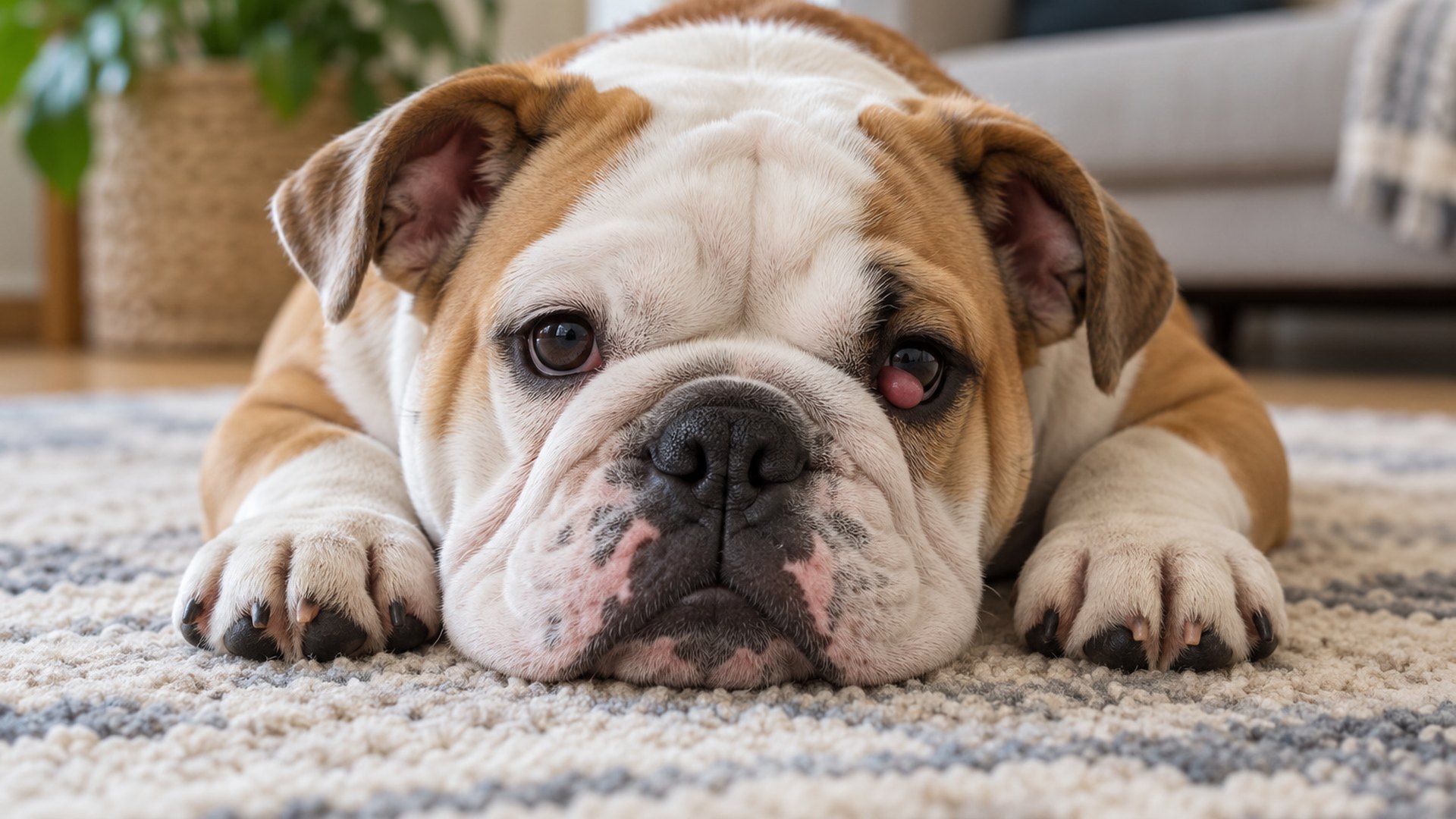
Cherry eye is when a tear gland tucked behind a dog’s third eyelid slips out of place and shows as a smooth, red, rounded lump in the inner corner of the eye. It is not usually an emergency, but it does need a vet visit soon, because that gland makes a large share of the eye’s tears and the earlier it is put back, the better the outlook. If the eye is also squinting, cloudy, bulging or clearly painful, treat it as same-day.
This guide explains what cherry eye is, which dogs get it, how to tell it apart from pink eye, red eyes and ordinary eye discharge, and how quickly each one needs a vet. It finishes with a simple checklist for the appointment and the mistakes worth avoiding.
At a glance
- The classic sign: a smooth, red, cherry-like lump in the inner corner of one or both eyes. Book a vet visit within days, not weeks.
- Emergency signs: squinting, a cloudy or bulging eye, obvious pain, an injury or sudden vision change. Same day.
- Pink eye (conjunctivitis) is a symptom, not one disease. Allergies, irritants, dry eye, scratches and other eye problems can all cause it.
- Do not use human eye drops, leftover drops from another pet, or try to push the gland back unless your vet has shown you how.
- Young dogs and certain breeds are affected most often, and the gland is usually repaired rather than removed.
What cherry eye is, and why the gland matters
Dogs have a third eyelid (the nictitating membrane), a thin fold that sits in the inner corner of each eye and sweeps across the surface to protect it. Wrapped around the base of the third eyelid is a tear gland. Normally you never see it. In cherry eye, the tissue that holds the gland in place is weak or stretched, so the gland “prolapses”: it flips up and out, and appears as a pink-to-red swelling.
That gland is not a spare part. Owner information from the American College of Veterinary Ophthalmologists (ACVO) describes it as one of the main tear-producing glands, responsible for roughly a third to two-thirds of the tears. Tears keep the surface of the eye comfortable, clean and healthy, which is why vets now aim to save the gland rather than cut it away.
What it looks like
- A smooth, rounded, red or pink lump in the inner corner of the eye, closest to the nose.
- It may come and go at first, looking bigger at some times of day than others.
- One eye is often affected first; the other eye may follow later.
- Some dogs carry on as normal. Others rub or paw at the eye, or have extra discharge because the exposed gland gets irritated.
Which dogs get it
Cherry eye mostly affects young dogs. ACVO guidance notes that most affected dogs first show it between about one and two years of age, and veterinary ophthalmologists at MSPCA-Angell describe it often appearing in dogs under five. Any dog can be affected, but some breeds are much more prone. Breeds named by the ACVO include:
| Breed | Size group |
|---|---|
| English Bulldog | Medium |
| American Cocker Spaniel | Medium |
| Beagle | Small to medium |
| Lhasa Apso | Small |
| Shih Tzu | Small |
| Pekingese | Small |
| Poodles | Toy to standard |
| Mastiff breeds | Giant |
Flat-faced (brachycephalic) breeds in general are at higher risk, likely because of the shape of their eye sockets and eyelids. If you are still deciding on a dog, breed health is worth weighing before you choose, alongside temperament and exercise needs.
Is it cherry eye or something else?
Many eye problems look red and sore, and owners often search “why are my dog’s eyes red” or “can dogs get pink eye” when what they are looking at is something else. Use this comparison to match what you see with the right next step. It is a guide to urgency, not a diagnosis: only a vet examining the eye can tell you what is going on.
| Problem | What you’ll see | Usually painful? | How urgent | What not to do |
|---|---|---|---|---|
| Cherry eye | Smooth red lump in the inner corner; eye otherwise open and bright | Often not at first; can become irritated | Vet within a few days | Don’t push it back or wait months for it to “settle” |
| Conjunctivitis (pink eye) | Pink or red lining around the eye, swelling, watering, blinking | Mild to moderate | Vet within a day or two; sooner if painful | Don’t use human drops or old prescriptions |
| Red eye with squinting or cloudiness | Eye half-closed, cloudy or blue-grey surface, rubbing | Yes | Same day | Don’t wait to see if it improves overnight |
| Bulging or displaced eye | Eye pushed forward or out of its normal position | Usually | Emergency, straight away | Don’t try to touch or reposition it |
| Something in the eye or an injury | Sudden one-sided squint, pawing, after a walk, scuffle or grass | Yes | Same day | Don’t try to pull anything out yourself |
| Green or yellow discharge | Thick, coloured discharge, often with redness | Variable | Vet within a day or two | Don’t just wipe it away and forget it |
| Watery eyes or tear staining | Wet fur or reddish-brown staining below the eye, no pain | No | Mention at a routine visit, unless it changes | Don’t use harsh products near the eye |
How urgent is it? A dog eye problem guide
Charities such as the PDSA advise contacting your vet whenever something looks wrong with your dog’s eyes, because eye problems can get worse quickly. Within that, these three tiers help you decide how fast. For a broader picture, see this calm guide to when to call the vet.
Same day or emergency vet
- Squinting, keeping the eye shut, or obvious pain.
- A cloudy, blue-grey or hazy surface to the eye.
- An eye that looks bulging or out of its normal position (PetMD describes a bulging eye as a medical emergency).
- Any injury to the eye, or a sudden problem after running through long grass or scrub.
- Sudden bumping into things or other signs of vision loss.
Within a day or two
- A new cherry eye lump with no pain or squinting.
- Red, swollen eye lining with watering or blinking.
- Green or yellow discharge.
- Any eye problem that is getting worse, or that keeps coming back.
Mention at your next visit, and keep watching
- Small amounts of clear or brownish crust in the corners in the morning.
- Long-standing, mild tear staining that has not changed.
If anything in the “watch” group changes, or your dog starts rubbing or squinting, move it up a tier.
Pink eye (conjunctivitis) in dogs
Yes, dogs can get pink eye. Conjunctivitis simply means the conjunctiva, the pink lining around the eye, is inflamed. It is a sign that something is irritating the eye rather than one illness with one fix. The PDSA lists a long range of possible causes, including:
- Allergies, such as atopic dermatitis. Allergies are a common cause of itchy, red eyes, often alongside paw licking and scratching.
- Irritants such as smoke, dust or sand.
- Dry eye (keratoconjunctivitis sicca), where the eye does not make enough tears.
- Bacterial infection, which may itself point to another problem such as dry eye or an ingrowing eyelash.
- Eyelid or eyelash problems, including eyelids that roll inwards or outwards.
- Corneal ulcers (scratches on the front of the eye), glaucoma and other eye diseases.
- Something stuck in the eye, such as a grass seed.
Because the cause could be anything from pollen to a scratch, a vet needs to look at the eye. Some tests, such as checking tear production or using a dye to look for scratches, are quick and are done in the consulting room.
Can I catch pink eye from my dog? The Irish animal charity Blue Cross describes it as extremely unlikely for people to catch conjunctivitis from a dog. Washing your hands after cleaning around your dog’s eyes or applying any prescribed treatment is still sensible.
Why are my dog’s eyes red?
Red eyes are a symptom, and the reasons range from mild to serious. A dog who has been in a dusty yard or a smoky room may have slightly pink eyes that settle quickly. Red eyes that come with squinting, cloudiness, rubbing or a change in behaviour are a different matter, because painful conditions such as ulcers and glaucoma can look like “just a bit of redness” at first.
Ask yourself three questions. Is the eye fully open? Is the surface clear and shiny? Is your dog behaving normally? If the answer to any of these is no, call the vet the same day. Older dogs can develop a range of eye changes as they age, so eye changes in older dogs are worth raising at every senior check-up.
Dog eye discharge and “eye boogers”: what’s normal
A little clear or brownish crust in the inner corner first thing in the morning is common and usually nothing to worry about. Signs that discharge needs a vet include:
- Green, yellow or thick discharge.
- Constant watering, or discharge in only one eye.
- Discharge with redness, squinting or rubbing.
- A change from what is normal for your dog.
For routine crust, a soft cloth dampened with plain water, used gently around (not in) the eye, is enough for most dogs. Long hair around the face can trap moisture and rub the eye, so keeping hair trimmed around the eyes helps, especially in long-coated breeds.
What the vet will do for cherry eye
At the appointment, the vet will look closely at both eyes, check that the lump really is the third-eyelid gland, and often look for other problems such as scratches or low tear production.
Treatment depends on how long the gland has been out and the individual dog. MSPCA-Angell’s ophthalmology service describes a vet sometimes gently replacing a recent, small prolapse with numbing drops, while noting that most glands put back this way slip out again over time. For that reason, a short surgical procedure to anchor or “pocket” the gland back in its normal place is the usual lasting fix. There are several techniques, and the choice depends on the surgeon and the dog.
Removing the gland used to be common but is now generally avoided. The ACVO explains that removal raises the risk of dry eye later in life, a lifelong condition that usually needs eye medication several times a day. Even after a successful repair, predisposed dogs can develop dry eye, so the ACVO recommends regular tear-production checks.
Can it come back? Yes. The gland can prolapse again after repair, and MSPCA-Angell notes this is more common in Bulldogs. The ACVO reports a success rate of around 92% when repair is carried out by a veterinary ophthalmologist. If one eye has had cherry eye, keep a close watch on the other.
Recovery usually involves prescribed eye treatment and preventing your dog from rubbing the eye, often with a protective collar your vet supplies. Costs vary widely by country, clinic and whether a specialist is involved, so ask for an estimate. If you are weighing up cover, here is a guide to whether pet insurance would cover surgery like this, and help with budgeting for vet bills generally.
What to do before the appointment: a checklist
- Take a clear, well-lit photo of the eye. The gland can change size during the day, so a photo helps the vet see what you saw.
- Note when you first noticed it and whether it is one eye or both.
- Write down any other signs: squinting, rubbing, pawing, discharge colour, or changes in behaviour or appetite.
- Stop your dog rubbing the eye by distracting them with a chew or calm activity. If rubbing is constant, ask the vet about a protective collar rather than improvising anything tight.
- Put nothing in the eye: no drops, creams or home rinses unless your vet tells you to.
- List your dog’s medicines and parasite treatments, and bring any products you have already used.
Common mistakes
- Waiting months for it to go away. The ACVO advises seeing a vet as soon as a prolapse is noticed: a long-exposed gland becomes more inflamed, and surgery can become more complicated.
- Pushing or massaging the gland because of an online video. Only do any at-home technique if your own vet has examined the eye and shown you how.
- Using human eye drops. Pet Poison Helpline warns against redness-relief drops such as Visine: they are not approved for pets and can do more harm than good, especially if there is an underlying eye problem.
- Using leftover drops from another pet or an old prescription. Some eye medicines are harmful if the eye is scratched.
- Assuming all pink eye is a simple infection. Redness can come from allergies, dry eye, a scratch or glaucoma.
- Ignoring squinting because the eye “only looks a bit red.”
- Letting your dog rub the eye on carpet or furniture, which can damage the gland and the eye surface.
Ears are the other common trouble spot to watch; see dog ear infection signs.
Sources this guide draws on: owner information from the American College of Veterinary Ophthalmologists on cherry eye; the MSPCA-Angell veterinary ophthalmology service’s guidance on third eyelid gland prolapse; the PDSA Pet Health Hub on conjunctivitis in dogs; Blue Cross (Ireland) owner advice on conjunctivitis; Pet Poison Helpline guidance on human eye drops; and PetMD’s conditions library on bulging eyes.
Handy gear for this guide
Practical picks we think suit this topic. As an Amazon Associate, Mind A Dog earns from qualifying purchases, at no extra cost to you. Prices and availability are set by Amazon and may vary by country.
- EVERLIT Pet First Aid Kit (95 Pieces)
Bandages, gauze and basics in one bag for home, car or hikes while you contact your vet.
View on Amazon - Hepper Bio-Enzyme Pet Stain and Odour Spray
Enzyme cleaner for accidents on carpets, floors and bedding.
View on Amazon - Portable Dog Water Bottle with Food Container
Fresh water and a snack on walks and car trips.
View on Amazon
Frequently asked questions
Will cherry eye go away on its own?
Sometimes the gland pops back in for a while, but it usually comes out again. Leaving it exposed for a long time can lead to inflammation and makes repair harder, so book a vet visit within a few days of noticing it.
Is cherry eye an emergency?
On its own, a cherry eye lump is not usually an emergency, but it is not something to leave for weeks either. If the eye is also squinting, cloudy, bulging or painful, see a vet the same day.
Can dogs get pink eye, and can I catch it from my dog?
Dogs do get conjunctivitis (pink eye), and it has many possible causes, from allergies to dry eye or a scratch. Blue Cross describes people catching it from a dog as extremely unlikely, but washing your hands after touching the area is good practice.
Why are my dog’s eyes red?
Red eyes can come from irritation, allergies, infection, dry eye, scratches or more serious problems such as glaucoma. Redness with squinting, cloudiness or pain needs a vet the same day; mild redness that does not settle within a day or two still needs a check.
Is a little eye discharge normal for dogs?
A small amount of clear or brownish crust in the corners, especially in the morning, is common. Green or yellow discharge, constant watering, or discharge with redness or squinting should be checked by a vet.
Can cherry eye come back after surgery?
Yes, it can, and it is more common in some breeds such as Bulldogs. Repair by an experienced surgeon has a high success rate, and regular check-ups help catch a repeat, or later dry eye, early.
Most eye problems that owners spot early are very manageable. Your job is simply to notice, match what you see to the urgency guide above, and let the vet take it from there. A quick photo and a prompt appointment do more good than anything you could try at home.