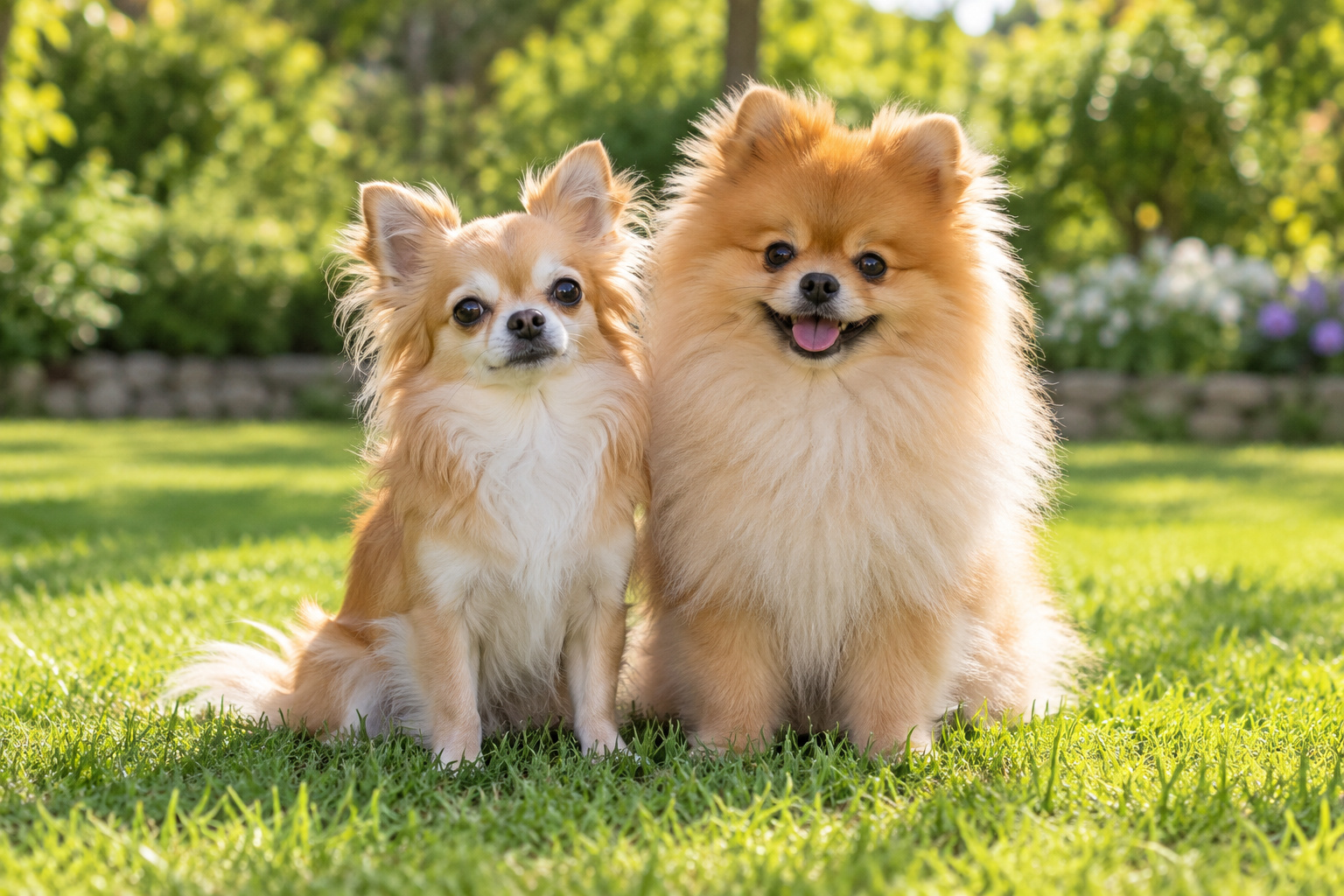
The Chihuahua is the smallest dog breed in the world, with breed guidance from the American Kennel Club (AKC) putting adults at no more than about 6 pounds (roughly 2.7 kg) and up to about 8 inches (20 cm) tall at the shoulder. The record for the shortest living dog also belongs to a Chihuahua: in 2023 Guinness World Records named a female called Pearl, who stood just over 9 cm tall. Close behind come the Toy Poodle, Russian Toy, Pomeranian, Yorkshire Terrier and Maltese, all typically topping out around 6 to 7 pounds (2.7 to 3.2 kg).
Size is only the start, though. This guide ranks the smallest dog breeds by typical adult weight, then explains what each is like to live with, the care needs that come with a tiny body, and why “teacup” dogs bred to be smaller than their breed standard raise real welfare concerns.
At a glance
- The Chihuahua is the smallest recognised breed, at up to about 6 pounds (2.7 kg).
- Most of the smallest dog breeds belong to the toy group and weigh under 4.5 kg (10 pounds) as adults.
- Small does not mean low-maintenance: tiny dogs need training, exercise, dental care and protection from cold and falls.
- Common toy-breed health issues include dental crowding, slipping kneecaps and windpipe problems.
- “Teacup” is a marketing label, not a breed. The UK Kennel Club does not recognise it, and the RSPCA has warned about the health problems of extreme miniaturisation.
The smallest dog breeds ranked by weight
The table below uses the typical maximum adult height and weight given in AKC breed information, listed from lightest to heaviest. Metric figures are rounded conversions. Breed standards differ slightly between kennel clubs (the UK Kennel Club and the international FCI set their own), and individual dogs vary, so treat these as a guide rather than a guarantee.
| Breed | Typical max weight | Typical max height | Temperament in brief | Coat |
|---|---|---|---|---|
| Chihuahua | 6 lb (2.7 kg) | 8 in (20 cm) | Loyal, alert, often devoted to one person | Smooth or long |
| Toy Poodle | 6 lb (2.7 kg) | 10 in (25 cm) | Clever, lively, very trainable | Curly, low-shedding, needs clipping |
| Russian Toy | 6.5 lb (2.9 kg) | 11 in (28 cm) | Cheerful, active, affectionate | Smooth or long |
| Pomeranian | 7 lb (3.2 kg) | 7 in (18 cm) | Bold, curious, vocal | Thick double coat, very fluffy |
| Yorkshire Terrier | 7 lb (3.2 kg) | 8 in (20 cm) | Confident, spirited terrier | Long, silky, needs regular grooming |
| Maltese | 7 lb (3.2 kg) | 9 in (23 cm) | Gentle, playful, people-focused | Long, white, silky |
| Biewer Terrier | 8 lb (3.6 kg) | 11 in (28 cm) | Friendly, playful | Long, silky |
| Toy Fox Terrier | 9 lb (4.1 kg) | 11.5 in (29 cm) | Energetic, smart, terrier-tough | Short, smooth |
| Russian Tsvetnaya Bolonka | 9 lb (4.1 kg) | 11 in (28 cm) | Easy-going, sociable | Soft, wavy, fluffy |
| Papillon | 10 lb (4.5 kg) | 11 in (28 cm) | Bright, quick to learn, outgoing | Long, with fringed “butterfly” ears |
| Brussels Griffon | 10 lb (4.5 kg) | 10 in (25 cm) | Sensitive, comical, close to its people | Rough or smooth |
| Affenpinscher | 10 lb (4.5 kg) | 11.5 in (29 cm) | Confident, playful, terrier-like | Wiry, shaggy |
| Silky Terrier | 10 lb (4.5 kg) | 10 in (25 cm) | Alert, busy, friendly | Long, silky |
| Miniature Pinscher | 10 lb (4.5 kg) | 12.5 in (32 cm) | Fearless, energetic, independent | Short, smooth |
| Japanese Chin | 11 lb (5 kg) | 11 in (28 cm) | Calm, gentle, cat-like | Long, silky |
Temperament notes describe tendencies, not promises. Every dog is an individual, shaped by genetics, early socialisation and how they are raised. Our guide to choosing the right dog breed explains how much breed really predicts and how to weigh it against your own lifestyle.
What is the smallest dog breed, really?
By breed standard, the Chihuahua is the lightest and is generally accepted as the smallest dog breed. By height alone, the Pomeranian can be just as short at the shoulder, though its fluffy coat makes it look bigger. Records for individual dogs go further: Guinness World Records recognised Pearl, a Chihuahua from Florida, as the shortest living dog in 2023, measuring just over 9 cm tall. Her record-holding predecessor, Miracle Milly, was also a Chihuahua.
Record dogs are interesting, but they are not a goal. A dog far smaller than the breed standard is more likely to face health problems, which is the heart of the “teacup” debate below.
Small dogs that are fluffy
If a soft, fluffy little dog is what you have in mind, the Pomeranian, Maltese, Papillon, Russian Tsvetnaya Bolonka, Biewer Terrier and long-coated Chihuahua all fit. Fluffy coats come with commitment: regular brushing to stop mats, trims around the eyes and feet, and in some breeds professional grooming every few weeks. Our guide to grooming at home by coat type explains what each coat needs.
If allergies are a concern, the Toy Poodle and Maltese are often suggested because they shed less, but no dog is truly allergy-free. Our guide to low-shedding dogs explains what that label can and cannot promise.
Caring for a tiny dog: what is different
Toy breeds are full dogs in small bodies. They need the same training, socialisation, exercise and mental stimulation as bigger dogs, plus some extra care.
Health issues more common in toy breeds
- Dental problems. Small jaws often mean crowded teeth, which trap plaque. Daily brushing and regular dental checks matter; see our dental care routine.
- Slipping kneecaps. Vets call this patellar luxation. Watch for a skipping step or a back leg held up for a few strides.
- Windpipe weakness. Some toy breeds are prone to a collapsing trachea, which can cause a honking cough. A harness rather than a collar takes pressure off the neck; our harness guide explains the options.
- Low blood sugar in young puppies. Very small puppies have tiny energy reserves. Weakness, trembling or wobbliness in a toy puppy needs a vet straight away.
- Heart valve disease later in life. Several small breeds are prone to mitral valve disease as they age, so ask your vet to listen to the heart at every check-up.
Everyday care needs
- Food. Small dogs burn energy quickly for their size and need small kibble and carefully measured portions. Our small-breed dog food guide covers what to look for.
- Warmth. Tiny, short-coated dogs lose heat fast. A well-fitting coat can help in cold weather; see whether your dog needs a coat.
- Safety at home. Falls from sofas, beds and arms are a common cause of injury. Use ramps or steps, and teach children to sit on the floor to cuddle.
- Training. Small dogs are often carried instead of trained, which can leave them anxious or barky. Reward-based training works just as well for a Chihuahua as for a Labrador.
- Exercise. Most toy breeds still need daily walks and play; short legs simply mean shorter distances.
The truth about “teacup” dogs
“Teacup”, “micro” and “pocket” are marketing words, not breeds. They usually describe dogs bred to be smaller than their own breed standard, often by repeatedly pairing the smallest dogs in a litter. The UK Kennel Club does not recognise “teacup” as a breed and will not register dogs under that label, and has warned that it can promote exaggerated and potentially unhealthy characteristics. The RSPCA has also warned that dogs bred to be extremely small can suffer from breathing problems and fragile bones.
Vets raise a long list of concerns about extreme miniaturisation, including:
- Fluid on the brain (hydrocephalus) and heart defects
- Dangerously low blood sugar
- Fragile bones that fracture easily
- Slipping kneecaps and other joint problems
- Collapsing windpipe and breathing difficulties
- Severe dental crowding and digestive problems
A tiny puppy sold as a “teacup” may also simply be younger than claimed, or underfed. A higher price tag for a smaller dog is a warning sign, not a mark of quality.
Buying a small dog responsibly: a checklist
- Choose a breed for its temperament and care needs, not for how small it might get.
- Avoid any seller advertising “teacup”, “micro” or “pocket” puppies.
- Ask to see the puppy with its mother, and ask how big both parents are.
- Ask which health tests the parents have had for problems common in that breed, and ask to see the results.
- Check the puppy’s age, vaccination and microchip records, and never take a puppy home too young.
- Be wary of sellers who offer to meet in a car park, deliver the puppy, or rush you to pay a deposit.
- Consider adopting: many rescues have small adult dogs whose size and personality you can see up front. Our rescue dog guide walks you through the first month.
- Plan your budget for grooming, dental care and insurance before you commit.
Common mistakes
- Choosing on size alone. A Toy Fox Terrier and a Japanese Chin weigh about the same but live very differently.
- Treating a small dog like a toy. Constant carrying and no training can lead to fear and frustration.
- Skipping socialisation. Small dogs need positive experiences with people, places and other dogs just as much as big ones.
- Ignoring the teeth. Dental disease is one of the most common problems in toy breeds.
- Paying more for “teacup” size. Smaller than standard often means more health risks, not better value.
- Assuming small means suits any home. Toy breeds can be fragile around very young children and boisterous larger dogs.
Sources this guide draws on: American Kennel Club breed information, Guinness World Records’ shortest living dog record, the UK Kennel Club’s position on “teacup” dogs, and RSPCA welfare guidance on extreme breeding, as reported by Your Dog magazine.
Handy gear for this guide
Practical picks we think suit this topic. As an Amazon Associate, Mind A Dog earns from qualifying purchases, at no extra cost to you. Prices and availability are set by Amazon and may vary by country.
- MidWest iCrate Double Door Dog Crate (36 inch)
Folding wire crate with a divider panel, so it can grow with your dog.
View on Amazon - rabbitgoo No-Pull Dog Harness (Medium)
Front and back leash clips and adjustable straps for comfortable walks.
View on Amazon - Outward Hound Fun Feeder Slo Bowl
Ridged bowl that slows down dogs who gulp their meals.
View on Amazon
Frequently asked questions
What is the smallest dog breed in the world?
The Chihuahua is generally accepted as the smallest dog breed, with AKC breed information giving an adult weight of up to about 6 pounds (2.7 kg). The shortest living dog recognised by Guinness World Records in 2023 was also a Chihuahua, called Pearl.
What are the top 10 small dog breeds?
By typical maximum weight, the lightest breeds in AKC breed information are the Chihuahua, Toy Poodle, Russian Toy, Pomeranian, Yorkshire Terrier, Maltese, Biewer Terrier, Toy Fox Terrier and Russian Tsvetnaya Bolonka, followed by a group of breeds tied at around 10 pounds (4.5 kg), including the Papillon, Brussels Griffon and Affenpinscher. Popularity rankings differ by country.
Are teacup dogs a real breed?
No. “Teacup” is an unofficial label for dogs bred to be smaller than their breed standard. The UK Kennel Club does not recognise it, and welfare organisations including the RSPCA have raised concerns about the health problems linked to extreme miniaturisation.
Which small dog breeds are fluffy?
The Pomeranian, Maltese, Papillon, Russian Tsvetnaya Bolonka, Biewer Terrier and long-coated Chihuahua are among the fluffiest small breeds. All need regular brushing, and some need professional grooming.
Are small dogs good for first-time owners?
They can be, if you are ready for training, grooming and careful handling. Some toy breeds are sensitive or vocal, and many are fragile around young children, so match the breed’s temperament to your household rather than choosing on size alone.
Do small dogs live longer than big dogs?
On average, smaller dogs tend to live longer than large and giant breeds, but lifespan varies widely with breed, genetics and care. Good dental care, a healthy weight and regular vet checks help any dog live well for longer.
The smallest dog breeds pack a lot of personality into very little space. Choose one for who they are rather than how small they might be, buy from a breeder who breeds to the standard and health tests, or adopt, and you can enjoy many happy years with a little dog who is healthy as well as small.