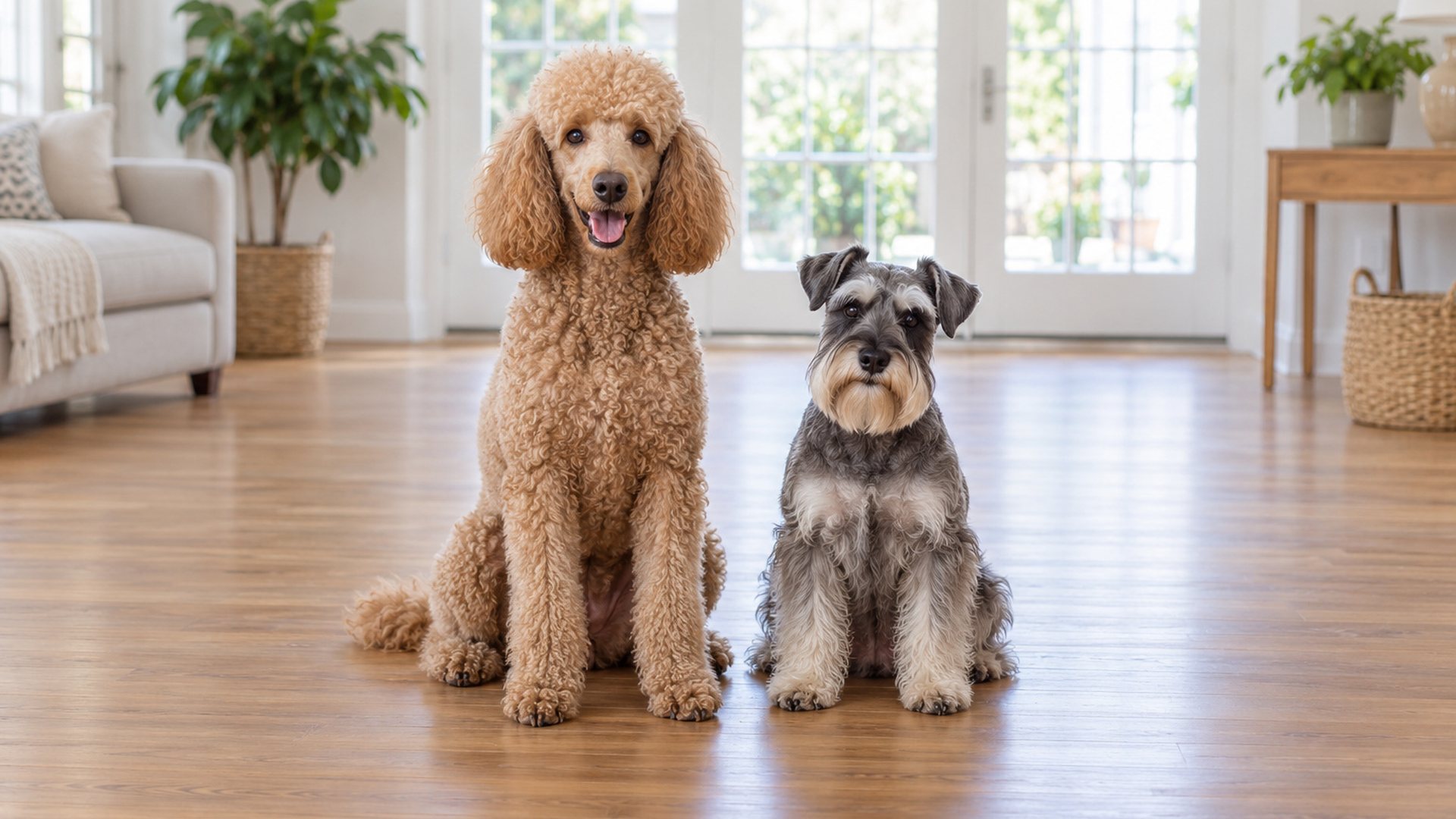
Low-shedding dogs are breeds with hair-type or wiry coats that drop very little fur around the home, such as Poodles, Bichon Frises, Maltese, Yorkshire Terriers, Schnauzers and Portuguese Water Dogs. They are easier on your sofa, but they are not “allergy-free”: research has found no evidence that any breed is truly hypoallergenic, and most low-shedding coats need regular professional grooming.
This guide groups the best-known low-shedding breeds by size and energy, explains what the allergy research actually found, sets out the real grooming commitment (and cost) behind a coat that does not shed, and gives you a list of questions to ask a breeder or rescue before you commit.
At a glance
- Low-shedding breeds lose less loose hair, but every dog sheds some hair, dander and saliva proteins.
- A Dutch study found the main dog allergen was actually higher in the coats of so-called hypoallergenic breeds, with no difference in airborne allergen in their homes.
- The American Kennel Club itself says there are no 100% hypoallergenic dogs, breeds or mixed breeds.
- Non-shedding coats keep growing, so most need clipping every few weeks plus brushing at home.
- Choose on energy, size and temperament first, then coat. A low-shedding dog that does not suit your lifestyle is not a good match.
What “low shedding” really means
All dogs lose hair. The difference is how that hair behaves. Heavy shedders, such as many double-coated breeds, have a dense undercoat that is dropped in large amounts, often seasonally. Low-shedding breeds tend to have a single coat of continuously growing hair (like the Poodle or Maltese), a tight curly coat that traps loose hairs (like the Bichon Frise), or a wiry coat that is hand-stripped or clipped (like many terriers and Schnauzers).
That has two practical effects. First, you see much less hair on floors and clothes. Second, the hair that is shed often stays caught in the coat, which is why these breeds mat quickly without brushing and regular grooming.
The hypoallergenic myth: what the research found
If you are choosing a low-shedding dog because someone in your home has a dog allergy, this section matters more than any breed list.
Dog allergies are triggered mainly by proteins found in skin flakes (dander), saliva and urine, not by hair itself. The best-studied of these is called Can f 1. Two well-known studies looked at whether so-called hypoallergenic breeds really produce less of it:
- Vredegoor and colleagues (2012, Journal of Allergy and Clinical Immunology) compared Labradoodles, Poodles, Spanish Water Dogs and Airedale Terriers with Labrador Retrievers and other dogs in the Netherlands. Can f 1 levels in hair and coat samples were higher, not lower, in the “hypoallergenic” group. Airborne allergen levels in homes showed no difference between breeds, and the variation within each breed was large. The authors concluded there was no evidence for classing any breed as hypoallergenic.
- Nicholas and colleagues (2011, American Journal of Rhinology and Allergy) measured dog allergen in house dust in US homes and compared homes with dogs described online as hypoallergenic against homes with other dogs. They found no difference in allergen levels under any of the ways they grouped the breeds.
The practical lesson is that individual dogs vary more than breeds do. Someone with a dog allergy may react less to one particular dog and badly to another dog of the same breed. If allergies are a concern, speak to your doctor or an allergy specialist before choosing a dog, and spend real time with the specific dog before you commit.
Low-shedding dog breeds by size
The breeds below are widely described by the American Kennel Club and breed clubs as having low-shedding coats. Energy levels are general guides; individual dogs differ, and mixes (such as “doodles”) can inherit any coat type, including a shedding one.
Small low-shedding dogs
| Breed | Coat type | Energy | Grooming notes |
|---|---|---|---|
| Maltese | Long, silky single coat | Low to moderate | Daily brushing if kept long; many owners keep a short “puppy clip” |
| Yorkshire Terrier | Fine, silky hair | Moderate | Regular brushing and trims; tangles easily |
| Bichon Frise | Curly, dense coat | Moderate | Frequent brushing and regular professional grooming |
| Toy and Miniature Poodle | Curly, continuously growing | Moderate to high | Regular clipping and brushing to the skin |
| Miniature Schnauzer | Wiry outer coat | Moderate to high | Clipping or hand-stripping; beard needs regular cleaning |
| Coton de Tulear, Bolognese | Soft, fluffy hair | Low to moderate | Mats quickly without brushing |
Medium low-shedding dogs
| Breed | Coat type | Energy | Grooming notes |
|---|---|---|---|
| Standard Schnauzer | Wiry, harsh coat | High | Clipping or hand-stripping |
| Portuguese Water Dog | Curly or wavy | High | Regular clipping; needs plenty of exercise |
| Lagotto Romagnolo | Dense curls | High | Regular trimming; curls can cord or mat |
| Spanish Water Dog | Curly, can cord | High | Coat care differs from Poodle-style clipping |
| Soft Coated Wheaten Terrier | Silky, wavy | Moderate to high | Frequent brushing to prevent mats |
| Kerry Blue Terrier, Bedlington Terrier | Soft, wavy or woolly | Moderate to high | Regular professional trims |
Large low-shedding dogs (big dogs that shed less)
| Breed | Coat type | Energy | Grooming notes |
|---|---|---|---|
| Standard Poodle | Curly, continuously growing | High | Regular clipping; very trainable and active |
| Giant Schnauzer | Wiry, dense | High | Clipping or stripping; needs work and training |
| Irish Water Spaniel | Tight curls | High | Regular trimming; a strong swimmer |
| Afghan Hound | Long, fine hair | Moderate to high | One of the most demanding coats to maintain |
| Airedale Terrier | Wiry | High | Hand-stripping or clipping |
For the bigger picture on matching a dog’s size, energy and temperament to your home, read how to choose the right dog breed. Coat type is only one piece of that decision.
Do popular breeds shed? Quick answers
- Do Yorkshire Terriers shed? Very little. Their fine, hair-like coat grows continuously and needs regular brushing and trims.
- Do Maltese dogs shed? Very little. The single silky coat tangles easily, so frequent brushing is essential.
- Do Cavalier King Charles Spaniels shed? Yes. Cavaliers are moderate shedders, with feathered fur that needs brushing several times a week.
- Do Bernese Mountain Dogs shed? Yes, a lot. Berners have a thick double coat that sheds year-round and heavily at seasonal changes. They are not a low-shedding choice.
The hidden cost: grooming a coat that does not shed
A coat that does not fall out has to be cut. This is the part many breed listicles leave out. Most Poodle-type, Bichon-type and silky coats need a professional groom every few weeks, plus brushing right down to the skin at home several times a week. Skipping it leads to mats, which pull on the skin, trap moisture and can hide skin problems. Severely matted dogs often have to be clipped very short, which can be uncomfortable for them.
Grooming prices vary widely by country, city, dog size and coat condition, and prices change, so ask a few local groomers for quotes at the time you are choosing. Build that amount, multiplied by the number of visits a year, into your budget alongside food, insurance and vet care. The guide to dog ownership costs helps you plan the full picture.
| Coat type | Home care | Professional care | Shedding around the home |
|---|---|---|---|
| Curly (Poodle, Bichon) | Brush to the skin several times a week | Regular clipping every few weeks | Very low |
| Silky long hair (Maltese, Yorkie) | Frequent brushing; face and eye care | Regular trims | Very low |
| Wiry (Schnauzer, many terriers) | Weekly brushing; beard cleaning | Clipping or hand-stripping | Low |
| Short single coat | Weekly brush | Rarely needed | Low to moderate |
| Double coat (Husky, Bernese, many shepherds) | Frequent brushing, more during coat “blows” | Optional deshedding | High, often seasonal |
For a coat-by-coat walkthrough of brushes, bathing and trims, see home grooming by coat type, and keep nails in check with nail trimming at home. Gentle, reward-based handling from puppyhood makes grooming visits far less stressful.
Questions to ask a breeder or rescue
- What coat type do this dog’s parents (or this dog) have, and how much do they shed in a normal week?
- For mixes such as doodles: can you show me the coats of adult dogs from previous litters? Coat type in mixes is not guaranteed.
- How often is this dog groomed now, and how do they cope with brushing, bathing and clippers?
- What is their energy level and daily exercise need? (Compare it with the guide on how much exercise a dog needs.)
- What health screening have the parents had for problems common in the breed?
- If someone in my home has allergies, can we spend time with this specific dog, more than once, before deciding?
- If it does not work out, will you take the dog back? Reputable breeders and rescues usually will.
Organisations such as the RSPCA and Dogs Trust encourage people to think carefully about lifestyle, time and budget before taking on any dog, and many rescues are happy to talk through coat care and allergies with you.
Common mistakes
- Treating “hypoallergenic” as a guarantee. The research does not support it. Test with the actual dog and speak to an allergy specialist.
- Choosing on coat alone. A high-energy Standard Poodle or Giant Schnauzer in a home that cannot meet its exercise needs is an unhappy match.
- Underbudgeting grooming. Low shedding usually means frequent professional grooming for life.
- Assuming every doodle is low shedding. Mixes can inherit a shedding coat from either parent.
- Brushing only the top of the coat. Mats form close to the skin; brush through to the base of the hair.
- Leaving grooming training until later. Start short, positive handling and brushing sessions from the first week at home.
Quick decision checklist
- Can I meet this breed’s exercise and mental stimulation needs every day?
- Can I afford professional grooming every few weeks for the dog’s whole life?
- Am I willing to brush to the skin several times a week?
- If allergies are involved, have we spoken to a doctor and spent time with this exact dog?
- Is the breeder or rescue open about coat, health and temperament, and will they take the dog back if needed?
- Have I planned how to introduce the dog to my household? (See how to introduce a new dog safely.)
Sources this guide draws on: American Kennel Club breed information and its guidance on hypoallergenic dogs, Vredegoor and colleagues (2012), “Can f 1 levels in hair and homes of different dog breeds”, Journal of Allergy and Clinical Immunology, Nicholas and colleagues (2011), “Dog allergen levels in homes with hypoallergenic compared with nonhypoallergenic dogs”, American Journal of Rhinology and Allergy, and RSPCA and Dogs Trust guidance on choosing a dog.
Handy gear for this guide
Practical picks we think suit this topic. As an Amazon Associate, Mind A Dog earns from qualifying purchases, at no extra cost to you. Prices and availability are set by Amazon and may vary by country.
- Swihauk Self-Cleaning Slicker Brush
Lifts loose undercoat, then a button clears the hair off the pins.
View on Amazon - Casfuy Quiet Dog Nail Grinder
Two-speed grinder for gradual, gentle nail trims at home.
View on Amazon - Hepper Bio-Enzyme Pet Stain and Odour Spray
Enzyme cleaner for accidents on carpets, floors and bedding.
View on Amazon
Frequently asked questions
What dog breeds shed the least?
Breeds with curly, silky or wiry coats tend to shed the least, including Poodles, Bichon Frises, Maltese, Yorkshire Terriers, Schnauzers, Portuguese Water Dogs and Lagotto Romagnolos. Hairless breeds such as the Chinese Crested and Xoloitzcuintli also shed very little hair, though they need skin care instead.
Are there big dogs that don’t shed?
No dog sheds nothing, but several large breeds shed very little, including the Standard Poodle, Giant Schnauzer, Irish Water Spaniel, Airedale Terrier and Afghan Hound. All of them are active and need serious grooming commitment.
Are low-shedding dogs better for allergies?
Not reliably. Studies have found no difference in household allergen levels between so-called hypoallergenic breeds and other dogs, and one found higher allergen levels in their coats. Individual dogs vary, so speak to your doctor and spend time with the specific dog first.
Do low-shedding dogs need more grooming?
Usually, yes. Their hair keeps growing and shed hairs stay trapped in the coat, so they need regular brushing to the skin and professional clipping or trimming every few weeks to avoid painful mats.
Are doodles and other Poodle mixes low shedding?
Some are, but it is not guaranteed. A mix can inherit a shedding coat, a non-shedding coat or something in between. Ask to see the coats of adult dogs from the same parents.
A low-shedding dog can be a wonderful fit, as long as you choose for the whole dog, not just the coat. Match energy and temperament to your life, budget honestly for grooming, and if allergies are involved, let time with the actual dog guide you. That is how you end up with a happy home and far less hair on the sofa.