Dogs eat their own poop, and other dogs’ poop, mainly because it is a natural, inherited behaviour rather than a sign of bad behaviour or a missing nutrient. A large survey led by Benjamin Hart at the University of California, Davis, found that dogs who do it almost always target fresh stools and are often greedy eaters, and the researchers suggest it may be a leftover instinct from wolves keeping their dens clean of parasites. Occasionally, though, a sudden new habit can point to a medical problem, so it is worth a vet check if it starts out of nowhere.
This guide explains what the research actually found, the medical reasons to rule out, why punishment and taste-deterrent products rarely work, and the kind, practical plan that does: removing the opportunity, teaching a reliable “leave it” with rewards, and making life more interesting for your dog.
At a glance
- Eating poop (vets call it coprophagia or coprophagy) is common and usually normal dog behaviour, even though it is unpleasant for us.
- In the UC Davis survey, 16 percent of dogs were frequent poop eaters, and the vast majority went for stools no more than two days old.
- The same survey found no link with diet or age, and owners reported almost no success with commercial deterrent products.
- Picking up straight away and supervising in the garden is the most dependable fix; reward-based training helps on walks.
- Never punish your dog for it. See your vet if the habit is new, or comes with weight loss, hunger or tummy upsets.
What the research says about why dogs eat poop
The most useful study for owners is a pair of online surveys published in the journal Veterinary Medicine and Science in 2018 by Hart and colleagues. Owners of more than 1,500 dogs answered the first survey, and a second survey gathered around 1,500 more responses from owners of dogs known to eat stools. The key findings were:
- It is common. About 16 percent of dogs were described as frequent stool eaters (seen doing it at least six times), and around 23 percent had been seen doing it at least once.
- Fresh is the target. More than 80 percent of the dogs who ate stools went for ones no more than two days old.
- Greedy eaters are more likely to do it. Dogs described as greedy around food were more likely to be stool eaters.
- House-training was not affected. Stool-eating dogs were just as easy to house-train as other dogs, which suggests they still have a normal dislike of soiling their own space.
- Diet and age were not linked. The researchers found no evidence that the type of food or the dog’s age explained the habit.
- Multi-dog homes saw more of it. Dogs living with other dogs were more likely to be stool eaters, as reported in summaries of the study.
- Some breed groups showed it more. Coverage of the study reported that hounds and terriers were the groups most often affected.
The den-cleaning theory
Hart’s team suggested a reason based on wolf behaviour. Many intestinal parasite eggs passed in faeces are not immediately infectious; they take a couple of days to develop. A wolf that quickly cleaned up fresh droppings near its resting den would remove them before they became a risk. The researchers argue that some dogs have inherited this tendency, which fits neatly with the strong preference for fresh stools. It is a theory, not a proven fact, but it explains the pattern better than older ideas about missing nutrients.
Other everyday reasons
- Mothers and puppies. Mother dogs naturally clean up after young puppies, and puppies explore everything with their mouths. Many puppies grow out of it.
- Opportunity. A garden full of stools, or a litter tray at nose height, is a temptation that is always there.
- Boredom and hunger. Dogs with little to do, or who are very food-motivated, may scavenge more. These are inferences from everyday experience rather than survey findings, but they are easy to address.
- Attention. A dramatic reaction from an owner can accidentally turn poop into a brilliant game of chase.
Eating poop belongs to the same family of puzzling instincts as rolling in smelly things and grass-eating. Our guide to why dogs do the things they do explains the five drivers behind most odd behaviours, and our guide to why dogs eat grass covers that habit in depth.
When poop eating could be medical
Most poop eating is behaviour, but some health problems can increase hunger or affect digestion so that a dog seeks out extra food. Ask your vet for a check if:
- The habit starts suddenly in an adult dog who never did it before
- Your dog seems constantly hungry, is losing weight or looks thinner despite eating
- There is diarrhoea, greasy or bulky stools, vomiting or a change in drinking
- Your dog has recently started a new medicine and their appetite has jumped
- You have seen worms or segments in their stools
Your vet may check your dog’s weight and body condition, examine a stool sample for parasites and suggest blood tests if anything points that way. Eating stools can also pass on intestinal parasites, so ask your vet about a sensible worming plan. Our guide to worms in dog poop explains what to look for and how to keep the household safe.
| Clue | More likely behavioural | Worth a vet check |
|---|---|---|
| When it started | Puppyhood, or has always done it | Started suddenly as an adult |
| Which stools | Fresh stools in the garden or on walks | Any stools, with frantic hunger |
| Body condition | Healthy weight, good energy | Weight loss, poor coat, low energy |
| Digestion | Normal stools | Diarrhoea, greasy stools, vomiting |
| Appetite | Food-motivated but normal | Suddenly ravenous, or drinking far more |
Why punishment and deterrent products are not the answer
It is tempting to shout, grab or scold, but punishment tends to backfire. A dog who is told off for eating poop may simply learn to eat it faster, or to do it out of sight, and it can damage their trust in you. The American Veterinary Society of Animal Behavior’s position statement on humane dog training recommends reward-based methods and advises against aversive techniques, because of the risks to welfare and the human-dog bond.
Taste-deterrent powders and chews added to food are widely sold, but owners in the UC Davis survey reported success rates of between zero and two percent for the commercial products tested. Behaviour and management approaches as owners described them also scored low on their own, which tells us something important: there is no magic fix. What works best is a combination of removing the opportunity and teaching a better alternative, applied consistently.
A kind, step-by-step plan to stop dogs eating poop
- Get a vet check first if any of the medical clues above apply, so you are not trying to train away a health problem.
- Pick up straight away. Because dogs target fresh stools, prompt clean-up is the single most dependable step. Go out with your dog at toilet times and bag it as soon as they finish.
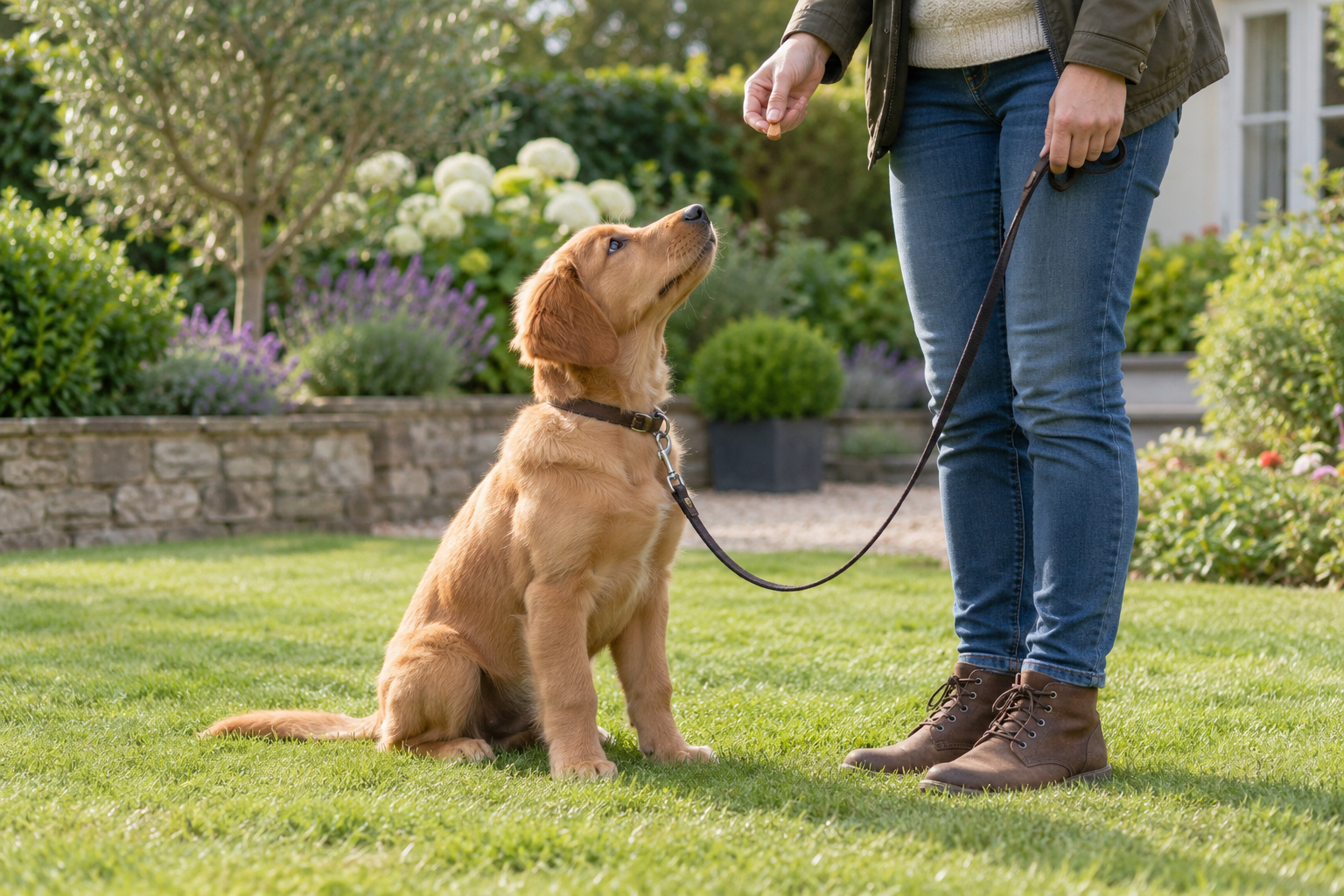
- Reward toileting, then call them away. As soon as your dog has been, say “yes” and hand over a tasty treat near you, away from the spot. This builds a habit of turning to you after toileting, a lovely extension of house-training.
- Manage the litter tray. Put the cat’s tray where the dog cannot reach it, such as behind a baby gate with a cat-sized gap or on a raised surface the cat can use.
- Teach “leave it” with rewards (see the steps below) so you can interrupt kindly on walks.
- Use a lead in hotspots. On walks through areas with lots of droppings, a lead or long line lets you guide your dog past without a battle.
- Add enrichment. Sniffing, chewing and food puzzles give your dog satisfying jobs to do. Try easy enrichment ideas or a puzzle feeder to slow down a greedy eater.
- Stay calm when it happens. No chasing or shouting. Call your dog cheerfully, reward them for coming, and quietly clean up.
Teaching a reward-based “leave it”
- Hold a treat in a closed fist. Let your dog sniff and nudge. The moment they pull back, even slightly, say “yes” and give a different treat from your other hand.
- Repeat until your dog backs off your fist straight away, then add the words “leave it” just before you present your hand.
- Place a treat on the floor under your hand. Reward your dog for looking away from it or at you.
- Gradually uncover the treat for a second or two at a time, rewarding every time your dog chooses not to go for it.
- Practise with lower-value items on the floor while your dog is on a lead, rewarding generously with something better from you.
- Only then try it on walks, starting at a distance from tempting things and rewarding with your best treats.
Keep sessions short and upbeat. Small, soft, high-value rewards work best; our guide to the best treats for training explains how to choose them. If you are new to this style of training, positive reinforcement dog training covers the basics.
Common mistakes
- Telling your dog off or rubbing their nose in it. This damages trust and can teach them to eat faster or hide.
- Chasing your dog to get it off them. A chase is a fun game, and it makes grabbing poop more rewarding.
- Relying on powders or sprays alone. Survey evidence suggests these rarely work on their own.
- Leaving the garden unchecked. If stools are there, a determined dog will find them.
- Assuming it is a vitamin deficiency. Research found no link with diet, so changing foods is unlikely to fix it unless your vet finds a reason.
- Ignoring a sudden change. A new habit in an adult dog, especially with weight loss, needs a vet check.
- Using aversive tools. Spray collars, shock collars and similar devices are unkind and unnecessary.
Sources this guide draws on: Hart and colleagues’ 2018 paper “The paradox of canine conspecific coprophagy” in Veterinary Medicine and Science, Stanley Coren’s summary of that study in Psychology Today, and the American Veterinary Society of Animal Behavior position statement on humane dog training.
Handy gear for this guide
Practical picks we think suit this topic. As an Amazon Associate, Mind A Dog earns from qualifying purchases, at no extra cost to you. Prices and availability are set by Amazon and may vary by country.
- Outward Hound Fun Feeder Slo Bowl
Ridged bowl that slows down dogs who gulp their meals.
View on Amazon - LUKITO Lick Mat for Dogs (2 Pack)
Spread a little dog-safe food over it for a quiet licking activity.
View on Amazon - Amazon Basics Airtight Pet Food Storage Containers (3 Piece)
Keeps kibble and treats fresh and out of reach.
View on Amazon
Frequently asked questions
Why do dogs eat their own poop?
Mostly because it is a natural, inherited behaviour. Research from UC Davis found stool eaters overwhelmingly target fresh droppings, which fits the theory that dogs inherited a den-cleaning instinct from wolves. Greedy eaters and dogs in multi-dog homes are more likely to do it.
Is it harmful if my dog eats poop?
Eating their own fresh stools is usually more unpleasant than dangerous, but eating other animals’ droppings can pass on intestinal parasites and germs. Keep up a worming plan your vet recommends, and see your vet if your dog becomes unwell afterwards.
Will my puppy grow out of eating poop?
Many puppies do, especially if they never get much opportunity to practise it. Clean up promptly, reward them for coming to you after toileting and teach “leave it” early. If it carries on into adulthood, the same kind plan still applies.
Does pineapple or a food additive stop dogs eating poop?
There is no good evidence for it. In the UC Davis survey, owners reported success rates of between zero and two percent for the commercial products tested. Prompt clean-up, supervision and reward-based training are far more reliable.
Why does my dog eat cat poop?
Cat food is usually richer than dog food, which may be part of why many dogs find cat stools so appealing. Move the litter tray out of the dog’s reach, for example behind a baby gate with a cat-sized gap, and scoop it often.
Should I take my dog to the vet for eating poop?
Yes, if the habit starts suddenly in an adult dog or comes with weight loss, constant hunger, diarrhoea, vomiting or a change in drinking. Your vet can check for parasites or digestive problems before you focus on training.
Eating poop is one of the least charming things dogs do, but it is rarely a sign that anything is wrong with your dog or your training. Clear it up quickly, reward the choices you want, and keep your dog’s mind busy, and most households can make it a rare event rather than a daily battle.