
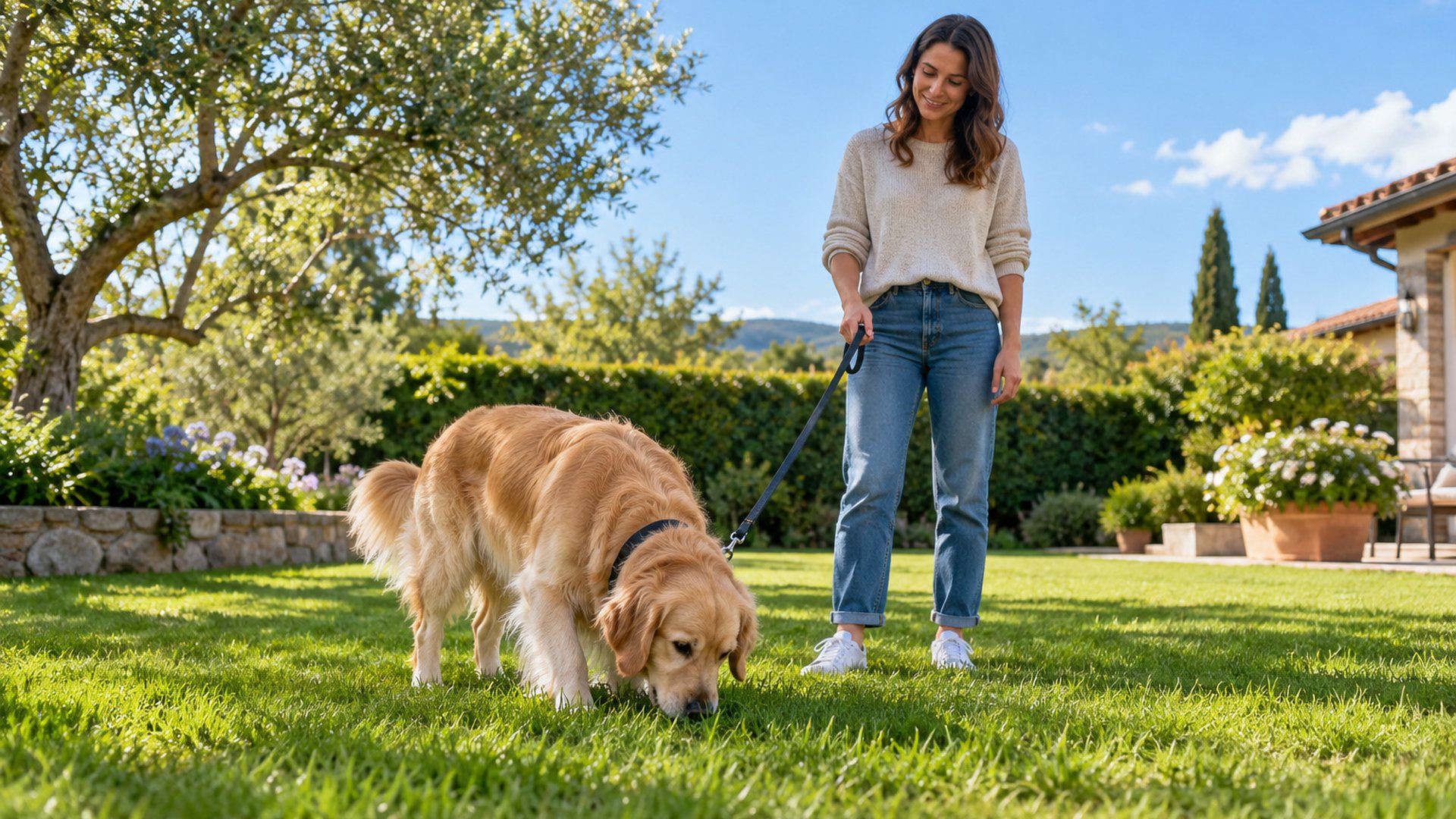
Dogs eat grass mostly because it is a normal, common behaviour, not because they are ill. In the largest owner survey on the subject, most grass-eating dogs did not seem unwell beforehand and did not usually vomit afterwards, and researchers think the habit may be inherited from wild ancestors that also eat plants. Occasional grazing is generally fine, but a sudden change, frantic eating, repeated vomiting, or grass that has been sprayed with chemicals are reasons to call your vet.
This guide looks at what the research actually found, the leading theories, how to tell normal grazing from a warning sign, how to keep grass eating safe, and kind ways to give a grazing dog something better to do.
At a glance
- Very common: in a small clinic-based survey led by researchers at the University of California, Davis, 79% of owners said their dog ate plants, and grass was by far the favourite.
- Usually not a sign of sickness: in the larger internet survey, only 8% of plant-eating dogs frequently seemed ill beforehand, and 22% frequently vomited afterwards.
- Younger dogs graze more often and were less likely to seem ill or vomit.
- When to worry: a sudden increase, frantic gulping, repeated vomiting, lethargy, poor appetite or changes in poo.
- Safety first: keep dogs off lawns treated with weedkillers, pesticides or fertilisers, and away from toxic garden plants.
What the research actually found
Much of what is written about grass eating repeats myths. The most useful evidence comes from a 2008 study by Sueda, Hart and Cliff, published in Applied Animal Behaviour Science, which surveyed owners of dogs that were otherwise healthy.
| Question | What the study found |
|---|---|
| How common is plant eating? | In the clinic-based group, 79% of owners (37 of 47) said their dog ate plants. Grass was the main plant for 95% of those dogs. |
| How often? | In the internet survey of 1,571 dogs, 68% of plant eaters did so daily or weekly. |
| Is grass the favourite? | Grass was the most commonly eaten plant for 79% of plant-eating dogs in the internet survey. |
| Are dogs ill beforehand? | Only 8% frequently seemed ill before eating plants; 92% rarely did. |
| Do they vomit afterwards? | 22% frequently vomited afterwards; 78% rarely did. |
| Does age matter? | Younger dogs ate plants more often and were less likely to seem ill before or vomit after. |
| Does diet matter? | Diet type, sex and breed group were not linked to how often dogs ate plants. |
The authors concluded that plant eating is a normal behaviour in dogs and not usually linked to illness or a dietary shortage. It is worth knowing the limits: the larger survey used a self-selected online sample and relied on owners’ reports, so it describes patterns rather than proving causes.
Hunger may play a part
A small study at the University of New England in Australia, led by Bjone and colleagues, offered 12 dogs grass three times a day for six days. Dogs spent more time eating grass before their kibble meal than after it, and less as the day went on, and they were less likely to graze when full. The researchers suggested grass may partly act as a food source. With only 12 dogs, it is a useful clue rather than a final answer.
Why do dogs eat grass? The main theories
No single explanation fits every dog, and more than one reason can apply. These are the ideas with the most support.
1. It is a normal, inherited behaviour
Wild canids eat plant material too. VCA Animal Hospitals notes that studies of wolf droppings find grass in roughly 11% to 47% of samples. Sueda and colleagues suggest grazing may be an inherited trait that survived domestication.
2. A possible role in moving parasites along
The same researchers proposed that plant material might help sweep intestinal worms through the gut, pointing to wolf droppings where worms were wrapped in grass, and to the fact that younger animals, who tend to carry more parasites, graze more often. They were clear that this idea is untested in pet dogs. Good parasite control, agreed with your vet, matters far more than any grazing habit.
3. Hunger, fibre or simply liking it
Some dogs seem to enjoy the taste or texture of fresh grass, especially new spring growth. VCA mentions fibre as one possible reason, and the Bjone study hints that hungrier dogs graze more.
4. Boredom, attention or anxiety
VCA also lists boredom, attention-seeking and anxiety as possible drivers. A dog left with little to do may graze to pass the time, and some dogs learn that eating grass reliably gets a reaction from their person. If grass eating rises at times of stress, our guide to the hidden signs of stress in dogs can help you look for the bigger picture.
5. An upset stomach (less often than people think)
The popular belief is that dogs eat grass to make themselves sick. The research suggests this is the exception rather than the rule: most grazing dogs are not unwell first and do not vomit after. Some dogs with a sore stomach may graze more, though, which is why a change in the pattern matters.
Normal grazing or a reason to see the vet?
The question to ask is not “does my dog eat grass?” but “has anything changed?” Use this as a guide, and call your vet whenever you are unsure.
| Usually normal | Worth a vet call |
|---|---|
| Calm nibbling of grass on walks or in the garden | Frantic, gulping grass eating, especially if it is new |
| A long-standing habit that has not changed | A sudden increase in how often or how much your dog eats |
| Occasional vomiting of grass, with your dog bright and eating normally afterwards | Repeated vomiting, or vomiting with lethargy, poor appetite or a painful belly |
| Normal stools and energy | Diarrhoea, blood in stools, weight loss or straining |
| Grazing on untreated lawn or verge | Eating grass that may have been sprayed with weedkiller, pesticide or fertiliser |
| Grass only | Eating soil, stones, fabric or other non-food items as well |
VCA notes that frequent vomiting or other signs of stomach discomfort can point to problems such as gastric reflux, inflammatory bowel disease or pancreatitis, which a vet needs to rule out. Our guide on how to know when to call the vet explains how to judge urgency, and our overview of dog gut health and digestion covers everyday digestive care.
Can dogs eat grass safely? A quick safety checklist
Untreated grass itself is not usually the problem. What is on it, or growing near it, can be. Run through this checklist for your garden and regular walking routes.
- Chemicals: keep your dog off lawns, parks and verges recently treated with weedkillers, pesticides or fertilisers, and follow the product label’s advice on keeping pets away. VCA warns that these chemicals can be toxic to dogs.
- Toxic plants: many common garden and house plants are harmful to dogs. The ASPCA publishes a searchable list of toxic and non-toxic plants; check yours, and remove or fence off anything risky.
- Parasites: grass in busy dog areas can be contaminated with other dogs’ poo, which can carry worm eggs. Keep up the parasite control your vet recommends.
- Sharp grass seeds: barbed seed heads can work their way into ears, paws, eyes and noses, particularly in summer. Check your dog after walks through long grass, and see your vet if your dog suddenly shakes their head, sneezes repeatedly or licks one paw.
- Long or tough grass: long blades swallowed quickly are more likely to come back up. Steer your dog towards short, untreated patches.
- Clippings: do not let your dog eat piles of cut grass, which can be gulped in large amounts.
Grow a safe grazing patch
If your dog loves to graze, a pot or small patch of untreated grass that you control can be a simple compromise. You know nothing has been sprayed on it, and you can let your dog nibble there freely.
How to redirect grass eating kindly
For a healthy dog that grazes calmly on safe grass, VCA suggests there may be no need to stop it at all. If your dog eats a lot of grass, or you walk somewhere you cannot be sure is chemical-free, reward-based redirection works well. Never scold or punish grass eating: it is a natural behaviour, and punishment only adds stress.
- Take tasty treats on walks and reward your dog for walking past grass, or for looking at you.
- Teach a cheerful “this way” cue: say it, change direction, and reward when your dog follows. Our guide to positive reinforcement dog training explains how to build cues like this.
- Swap grazing for sniffing. Sniffing is deeply satisfying for dogs. Scatter a few treats on a safe patch and say “find it”.
- Add more enrichment at home. Food puzzles, chews and scent games give bored dogs something better to do. Try our easy dog enrichment ideas, a food puzzle, or simple scent work at home.
- Check exercise and routine. High-energy dogs may graze less with more varied walks and play. Mixing in new routes, sniff walks and short play sessions often helps.
- Look at meal timing. Since some dogs graze more when hungry, ask your vet whether splitting the daily food into more meals might suit your dog.
Common mistakes
- Assuming grass eating means your dog is sick. For most dogs it is normal behaviour.
- Ignoring a change in the pattern. A sudden increase, frantic grazing or repeated vomiting deserves a vet call.
- Forgetting about chemicals. Treated lawns, parks and verges are the real risk.
- Punishing your dog. It does not address the reason and can damage trust. Redirect and reward instead.
- Relying on grazing to “clear worms”. That idea is unproven; use the parasite plan your vet recommends.
- Missing grass seeds. Head shaking, sneezing or paw licking after a walk can mean a seed has lodged somewhere.
Grass eating sits alongside many other puzzling habits, from rolling in smelly things to the zoomies. For more, read why dogs do the things they do.
Sources this guide draws on: Sueda, Hart and Cliff, “Characterisation of plant eating in dogs”, Applied Animal Behaviour Science (2008); Bjone and colleagues’ study of grass-eating patterns in the domestic dog at the University of New England; VCA Animal Hospitals’ guidance on why dogs eat grass; and the ASPCA’s list of toxic and non-toxic plants.
Handy gear for this guide
Practical picks we think suit this topic. As an Amazon Associate, Mind A Dog earns from qualifying purchases, at no extra cost to you. Prices and availability are set by Amazon and may vary by country.
- Outward Hound Fun Feeder Slo Bowl
Ridged bowl that slows down dogs who gulp their meals.
View on Amazon - LUKITO Lick Mat for Dogs (2 Pack)
Spread a little dog-safe food over it for a quiet licking activity.
View on Amazon - Amazon Basics Airtight Pet Food Storage Containers (3 Piece)
Keeps kibble and treats fresh and out of reach.
View on Amazon
Frequently asked questions
Is it OK for my dog to eat grass?
For most healthy dogs, occasional grazing on untreated grass is normal and not harmful. Make sure the grass has not been sprayed with chemicals, keep up parasite control, and talk to your vet if the habit changes or comes with other signs.
Why does my dog eat grass and then throw up?
Some dogs do vomit after eating grass, particularly long blades swallowed quickly, but research suggests most grazing dogs do not. Occasional vomiting in an otherwise bright dog is usually not a concern; repeated vomiting, or vomiting with lethargy or poor appetite, needs a vet check.
Does eating grass mean my dog has an upset stomach?
Not usually. In the largest survey, only 8% of plant-eating dogs frequently seemed ill before grazing. A sudden increase in grass eating, or frantic grazing, can sometimes go with stomach discomfort, so watch for changes.
Do dogs eat grass because they are missing something in their diet?
The research found no link between diet type and how often dogs ate plants, and the authors concluded grazing was not usually due to a dietary shortage. If you have concerns about your dog’s diet, ask your vet.
Why does my puppy eat so much grass?
Younger dogs graze more often than older ones, according to the survey, and puppies explore the world with their mouths. Supervise outdoors, keep chemicals and toxic plants out of reach, and use reward-based redirection if they are eating a lot.
Should I stop my dog eating grass?
You do not need to stop calm grazing on safe grass. Redirect your dog if the grass might be treated, if they are eating large amounts, or if they also eat soil or other non-food items, and see your vet if anything about the habit changes.
Grass eating is one of the most normal things a dog does, even if it looks odd to us. Keep the grass chemical-free, watch for changes, offer plenty of sniffing and enrichment, and save your worry for the signs that genuinely matter.