
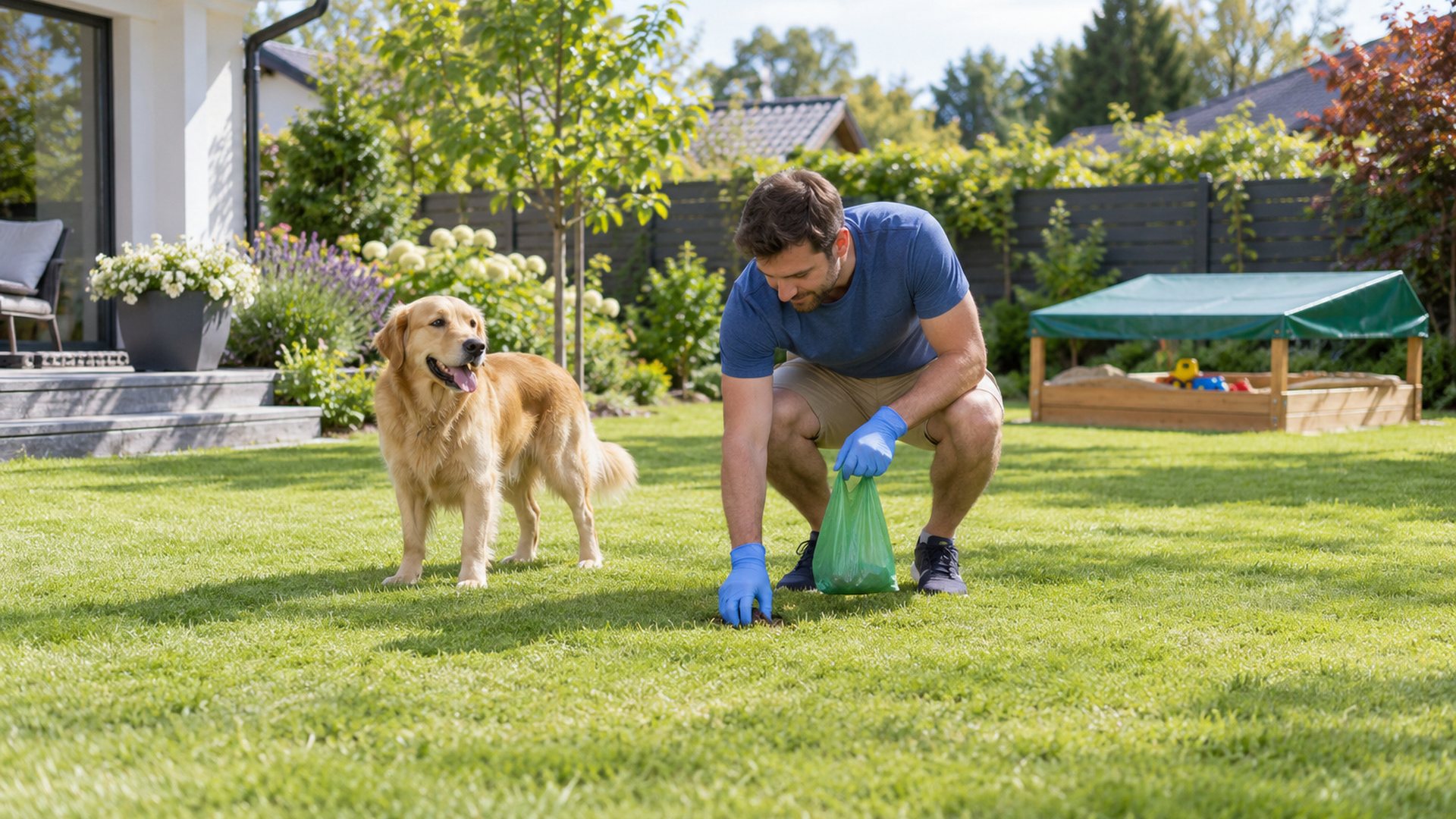
If you see worms in your dog’s poop, the most likely culprits are tapeworm segments, which look like small grains of rice, or large roundworms, which can be passed in faeces or vomited, especially by puppies. Hookworms and whipworms usually are not visible at all, because dogs shed only microscopic eggs, so a clean-looking stool does not rule worms out. Either way, the next step is the same: collect a sample and book a vet visit so the worm can be identified and treated correctly.
This guide explains how to recognise the common worms in dogs, how dogs pick them up, why some families need to take extra care, and how to build a sensible prevention routine with your vet. It describes products only in general terms, because the right choice and schedule depend on your dog and where you live.
At a glance
- Rice-like segments in poo or stuck to the fur near the tail usually mean tapeworm, often linked to fleas.
- Visible roundworms are most common in puppies, who can be infected by their mother before birth or through nursing.
- Hookworms and whipworms are rarely seen with the naked eye; a vet’s faecal test is how they are found.
- Some dog worms can affect people, so daily poo pick-up and handwashing matter, especially around children.
- Prevention is a vet-led routine: regular faecal testing, year-round parasite control suited to your area, and flea control.
What do worms in dog poop look like?
Use this table to describe what you see to your vet. It is a guide to help you notice and report, not a way to diagnose at home, because more than one parasite can be present at once.
| Worm | Can you see it? | What owners may notice | How dogs usually get it |
|---|---|---|---|
| Tapeworm (most commonly Dipylidium caninum) | Often, as segments | Small, flat, rice-like segments in poo, on bedding or stuck to fur around the bottom; some dogs scoot or lick the area | Swallowing infected fleas while grooming, or eating infected prey, raw meat or offal (other tapeworm species) |
| Roundworm (Toxocara canis, Toxascaris leonina) | Sometimes | Large, round-bodied worms in faeces or vomit; puppies may look pot-bellied, grow poorly or have a dull coat | From the mother before birth or through milk, or by swallowing eggs from the environment or eating transport hosts such as rodents |
| Hookworm (Ancylostoma, Uncinaria) | Rarely | Often no signs in healthy adults; puppies may have pale gums, weakness, poor growth and dark, tarry diarrhoea | Swallowing larvae, larvae entering through the skin, or through a mother’s milk |
| Whipworm (Trichuris vulpis) | Rarely | Light infections may show nothing; heavier ones can cause diarrhoea, weight loss and sometimes fresh blood in faeces | Swallowing eggs from contaminated soil, which can stay infective for long periods |
The Merck Veterinary Manual notes that hookworm eggs typically do not appear in faeces until around 16 days after infection, and the Companion Animal Parasite Council warns that young puppies can become seriously ill with hookworms before eggs show up on a test. That is one reason vets treat puppies on a schedule rather than waiting for a positive result.
Things that are often mistaken for worms
Not everything wriggly or white in a stool is a parasite. Undigested food such as rice, grass fibres, bits of toy or chew, and fly larvae that land on a stool left outside can all look alarming. Fly larvae in particular appear on poo that has been sitting in the open, not in a fresh sample. If you are not sure, take a photo and a fresh sample to your vet rather than guessing.
Why some worms are not visible
Many adult worms live attached to the gut wall and only release eggs, which are far too small to see. VCA Animal Hospitals explains that roundworms, hookworms and whipworms usually shed only microscopic eggs into stool, which is why a vet examines a sample under a microscope. Even then, a single negative test does not guarantee a dog is worm-free, because eggs are not shed all the time. Regular testing, as your vet advises, gives a more reliable picture.
Signs of worms in dogs
Many dogs, especially healthy adults, show no signs at all. When signs do appear, they can include:
- Visible segments or worms in faeces, vomit or around the bottom
- Scooting or frequently licking under the tail
- Diarrhoea, sometimes with mucus or blood
- Vomiting
- Weight loss despite a normal appetite, or poor growth in puppies
- A pot-bellied appearance in puppies
- A dull or scruffy coat
- Pale gums, weakness or low energy, which can point to blood loss from hookworms
- Coughing in young puppies, as some larvae pass through the lungs
Pale gums, weakness, black tarry stools or a puppy that is not thriving need prompt veterinary attention. Our guide on how to know when to call the vet explains how to judge urgency.
What to do if you find worms in your dog’s poop
- Do not panic. Worms are common and very treatable with veterinary guidance.
- Collect a fresh sample in a clean, sealed bag or container, ideally including any worms or segments you can see. Store it somewhere cool and away from food until your appointment.
- Take a clear photo in case the sample dries out, as tapeworm segments often do.
- Book a vet appointment and mention any other signs, your dog’s age, diet, flea history and whether they hunt or scavenge.
- Follow the treatment plan exactly, including any repeat doses or follow-up tests your vet asks for.
- Treat for fleas if needed, because flea tapeworms often return if fleas are not controlled.
- Clean up thoroughly: pick up all faeces, wash bedding and wash your hands well.
- Keep watching: VCA notes that dead worms may be passed soon after treatment; contact your vet if you keep seeing worms or other signs.
Avoid buying wormers on a guess. Different products target different parasites, and dosing depends on accurate weight and your dog’s health, so your vet’s choice matters.
Can people catch worms from dogs?
Some dog worms are zoonotic, meaning they can affect people. The risk is low with good hygiene, but it is real, so it is worth knowing how it happens.
- Roundworms: the US Centers for Disease Control and Prevention (CDC) explains that people can become infected by accidentally swallowing roundworm eggs from soil or food contaminated with dog or cat faeces. The eggs need two to four weeks in the environment before they become infective, and then can survive for months or years. Young children who play in soil or sandpits are a particular concern.
- Hookworms: according to the Companion Animal Parasite Council, dog hookworm larvae in contaminated soil or sand can cause itchy, winding skin tracks in people, usually through bare skin contact.
- Flea tapeworm: the Companion Animal Parasite Council notes that fleas can pass tapeworms to people, which happens when an infected flea is accidentally swallowed. Good flea control protects the whole household.
Because roundworm eggs take weeks to become infective, picking up poo every day is one of the most effective protective habits. If you have concerns about your own or your family’s health, speak to your doctor.
Building a worm prevention routine with your vet
Parasite risks vary a lot by country, climate and lifestyle, which is why the Companion Animal Parasite Council encourages a plan based on each dog’s health and lifestyle, and why your vet’s local knowledge matters wherever you live. Use this checklist as the basis of a conversation at your next check-up.
- Puppies: ask about a worming schedule from the first weeks of life, and regular faecal tests in the first year. CAPC recommends testing puppies at least four times in their first year. Our puppy first-year guide shows how this fits alongside other early care, including the puppy vaccine schedule.
- Adult dogs: ask how often your dog should have a faecal test; CAPC suggests at least twice a year for adults, depending on health and lifestyle.
- Year-round control: ask whether your dog needs year-round, broad-spectrum parasite control in your area.
- Flea control: keep fleas under control to break the tapeworm cycle. See our guide to flea and tick prevention for dogs.
- Lifestyle risks: tell your vet if your dog hunts, scavenges, eats raw meat or offal, visits dog parks often or lives with young children.
- Daily hygiene: pick up poo every day, wash hands after handling your dog or cleaning up, and cover sandpits.
- Food: discuss the parasite risks of raw feeding with your vet before choosing it. Our guide on what to feed your dog covers diet options.
Prevention approaches compared
| Approach | What it involves | Strengths | Limitations |
|---|---|---|---|
| Routine preventive treatment | Giving vet-recommended parasite control on a regular schedule | Covers dogs between tests; protects against parasites that are hard to detect early | Must suit the parasites in your area; not every product covers every worm |
| Regular faecal testing | Your vet checks samples under a microscope | Shows what is actually present; helps confirm a routine is working | A single negative result can miss intermittent shedding |
| Hygiene and environment | Daily poo pick-up, handwashing, covered sandpits, flea control | Protects people and other pets; cheap and simple | Does not treat a dog that is already infected |
Most vets combine all three, and the right mix depends on your dog’s age, lifestyle and location.
Common mistakes
- Assuming no visible worms means no worms. Hookworms and whipworms are rarely seen.
- Guessing the product. Choosing a wormer without knowing the parasite, or without an accurate weight, can leave the real problem untreated.
- Forgetting the fleas. Treating tapeworm without flea control often leads straight to reinfection.
- Leaving poo in the garden. Eggs can build up in soil and stay infective for a long time.
- Skipping follow-up. Some treatment plans need repeat doses or a re-test to clear the infection fully.
- Mistaking fly larvae for worms. Check a fresh sample instead of one that has been outside.
For more on keeping your dog’s digestion healthy overall, see our guide to dog gut health and digestion.
Related guide: Dog Diarrhoea: How to Know When It’s Serious and Act Right.
Sources this guide draws on: the Merck Veterinary Manual for dog owners on gastrointestinal parasites of dogs, the Companion Animal Parasite Council guidelines and its Pets and Parasites owner materials, VCA Animal Hospitals guidance on what to do if you see worms in your pet’s poop and the US Centers for Disease Control and Prevention pages on toxocariasis.
Handy gear for this guide
Practical picks we think suit this topic. As an Amazon Associate, Mind A Dog earns from qualifying purchases, at no extra cost to you. Prices and availability are set by Amazon and may vary by country.
- Earth Rated Dog Poop Bags, Unscented (270 Bags)
Thick, leak-proof bags on refill rolls.
View on Amazon - Hepper Bio-Enzyme Pet Stain and Odour Spray
Enzyme cleaner for accidents on carpets, floors and bedding.
View on Amazon - EVERLIT Pet First Aid Kit (95 Pieces)
Bandages, gauze and basics in one bag for home, car or hikes while you contact your vet.
View on Amazon
Frequently asked questions
What do tapeworms look like in dog poop?
Tapeworms usually show up as small, flat segments that look like grains of rice, either in fresh faeces or stuck to the fur around the bottom. Take a sample or photo to your vet to confirm.
How do dogs get worms?
Puppies often get roundworms from their mother before birth or through milk. Dogs also pick up worms by swallowing eggs or larvae from contaminated soil, through the skin (hookworms), by swallowing infected fleas (tapeworms), or by eating prey animals or raw meat that carry parasites.
Can I catch worms from my dog?
Some dog worms can infect people, mainly through accidentally swallowing roundworm eggs from contaminated soil or through skin contact with hookworm larvae. Picking up poo daily, washing hands and covering sandpits greatly lower the risk. Speak to your doctor if you have health concerns.
Are white worms in dog poop always tapeworms?
Not always. Rice-like segments usually point to tapeworm, but roundworms can also be pale, and fly larvae on stools left outside are often mistaken for worms. A vet check on a fresh sample is the reliable way to know.
How often should my dog be checked for worms?
It depends on age, lifestyle and region. The Companion Animal Parasite Council suggests faecal testing at least four times in a puppy’s first year and at least twice a year for adults. Your vet will tailor this to your dog.
Can my dog have worms with no symptoms?
Yes. Many healthy adult dogs with roundworms, hookworms, whipworms or tapeworms show no obvious signs, which is why routine testing and prevention matter even when your dog seems well.
Finding worms in your dog’s poop is unpleasant but common, and it is very manageable with the right help. Collect a sample, see your vet, control fleas and keep up daily clean-ups, and you will protect your dog and your family at the same time.