
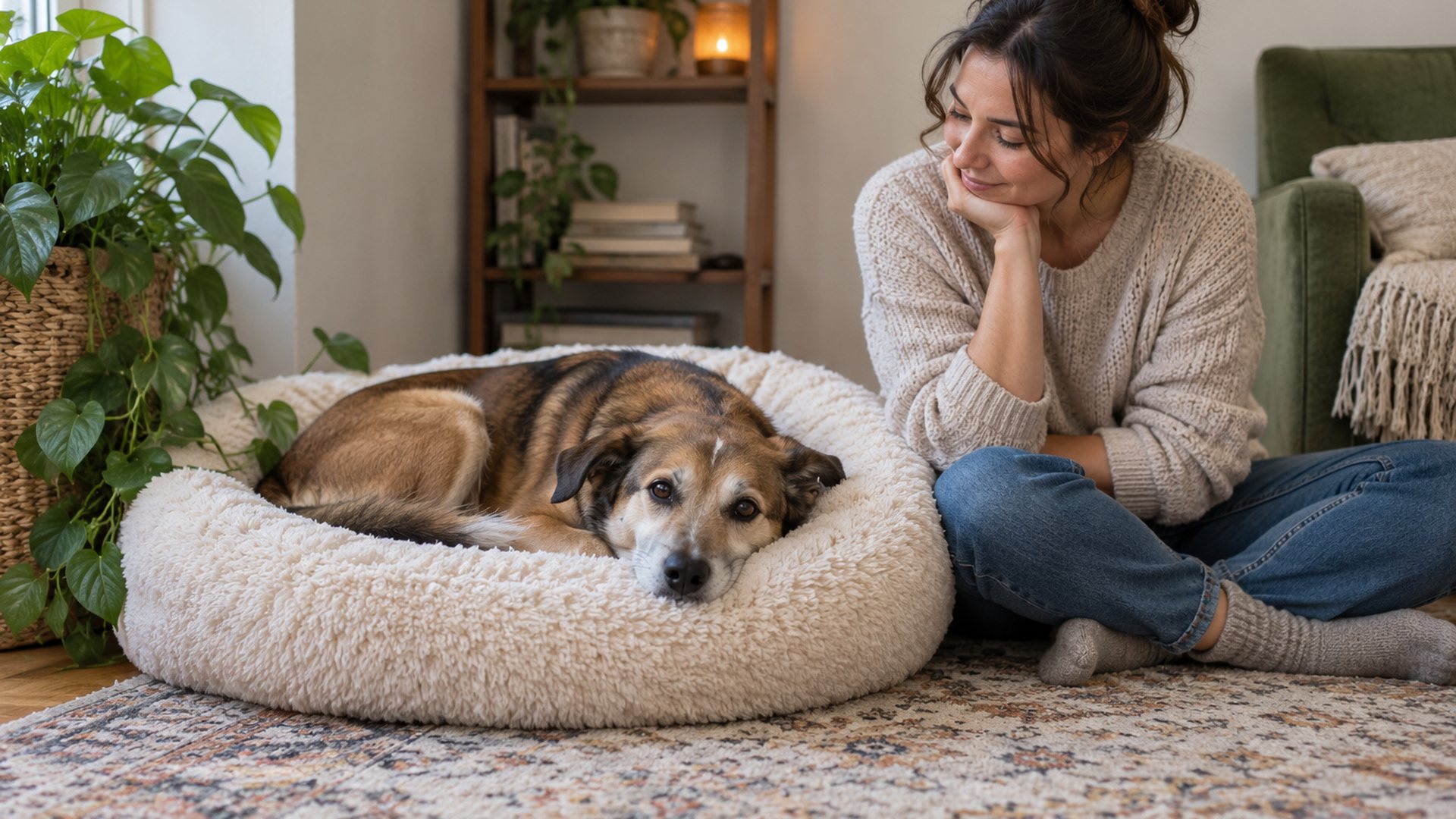
When you bring home a rescue dog, the kindest plan is a quiet, predictable first few weeks: a calm first night with a safe resting space, a simple daily routine from day one, and very few visitors, outings or new experiences until your dog starts to relax. Most rescue dogs need time to decompress after the stress of a shelter, foster home or long journey, and the behaviour you see in week one is rarely the dog you will know in month three. Patience early on is what lets their real personality come through.
This guide gives a practical plan for the first night, the first week and the first month with an adopted dog. It explains the popular “3-3-3 rule” and its limits, how to set up a routine, how to start gentle reward-based training, and which signs mean it is time to bring in a qualified trainer or your vet. Introducing your new dog to other pets and people is covered in depth in a separate guide, linked below.
At a glance
- Prepare before pick-up: a quiet resting area, secure fencing and doors, ID on the collar and the dog’s current food.
- First night: keep it low-key, offer toilet breaks, let your dog choose whether to approach, and expect little sleep for everyone.
- First week: same times for meals, walks, toilet breaks and rest; household members only; short, calm outings.
- First month: gentle reward-based training, gradual new experiences and a non-urgent vet check.
- The 3-3-3 rule is a rough guideline, not science: some dogs settle in days, others take many months.
Why rescue dogs need time to decompress
Even a confident dog has just lost everything familiar: people, smells, sounds, routine and often other dogs. Shelters can be noisy and busy, and transport is tiring. Stress hormones do not switch off the moment a dog walks through your door, and stress can build up from several small triggers in a row, something trainers call trigger stacking. A dog in that state may seem shut down and unusually quiet, or restless and over-excited, or may have toilet accidents, refuse food or startle easily.
Guidance from shelters such as the Toronto Humane Society and from the American Kennel Club stresses the same core idea: keep things low-key, give the dog a private space to retreat to, avoid forcing interaction, and hold off on visitors and busy outings for the first few weeks. Fearful or anxious dogs may need weeks or months before they feel at ease.
The 3-3-3 rule: useful, but only a guideline
The 3-3-3 rule is widely shared by rescue groups. It suggests that a new dog spends roughly the first three days feeling overwhelmed, the first three weeks learning the routine, and the first three months starting to feel truly at home. Its origin is unclear, and it is not based on published research; treat it as a reminder to be patient, not a timetable.
| Phase | What the 3-3-3 rule suggests | What it can miss |
|---|---|---|
| First 3 days | Dog may be nervous, sleepy, unsure or not eating much | Some dogs look relaxed straight away, then show stress-related behaviour later as they gain confidence |
| First 3 weeks | Dog learns the routine and begins to show more personality | Fearful dogs, ex-street dogs and dogs with little prior home experience often need much longer |
| First 3 months | Dog feels secure and bonded | Bonding is gradual; new challenges (visitors, moving house, a new pet) can bring a temporary step back at any stage |
The practical takeaway: plan for a slow start whatever your dog looks like on day one, and judge progress by your own dog’s body language rather than the calendar. The guide to hidden signs of stress in dogs shows what to look for, such as lip licking, yawning out of context, whale eye and a tucked tail.
Before pick-up: a short preparation checklist
- Ask the shelter or foster carer what food your dog eats, their toilet routine, any known fears, how they behave with other animals and children, and any health care or medicines already given.
- Set up a quiet resting area away from the front door and busy walkways: a bed, water, and perhaps a crate with the door open or a pen. The guide to crate training without the guilt explains how to make a crate a positive space.
- Check fences, gates and doors. New rescue dogs can bolt when frightened. Agree a household rule about closing doors.
- Get ID ready: a collar or harness that fits well, an ID tag, and the microchip details updated to your contact details. The comparison of a GPS dog tracker vs microchip covers extra options.
- Buy the same food the dog is used to, so you can change gradually later if needed.
- Stock high-value treats for rewarding calm behaviour and building trust.
- Plan the journey home: a secure crate or car harness, a towel that smells of the shelter if available, and a direct route.
- Clear your calendar for a few days if you can, and postpone any planned gatherings.
The first night with a rescue dog
The first night is about safety and calm, not bonding milestones. Keep expectations low.
- Arrive home quietly. Take your dog straight to the toilet area on lead before going inside, and reward them when they go.
- Let them explore one or two rooms on a loose lead or with doors closed, rather than the whole house at once.
- Show them water and their resting area, then sit nearby and let them choose whether to come to you. Avoid hugging, leaning over them or reaching for their collar.
- Offer a small meal of their usual food. Many dogs eat little at first; tell your vet if your dog has not eaten for more than a day or two, or straight away if they also seem unwell.
- Plan toilet breaks late in the evening and possibly once during the night. Many adult dogs need a refresher in house training in a new home.
- Decide where they sleep. Some dogs settle better near people; others prefer a quieter spot. A bed in or just outside your bedroom often helps an anxious dog.
- Expect some whining, pacing or restlessness. Calm, quiet reassurance is fine. Never scold a dog for being unsettled.
The first week: routine first, everything else later
Predictability helps dogs relax. From the first full day, keep meals, toilet breaks, walks, play and rest at roughly the same times. Choose a schedule your household can actually maintain, and agree house rules so everyone responds to the dog the same way.
Keep the world small
For the first week or two, keep contact to the people who live with the dog. Walks can be short and quiet, at calm times of day, rather than busy parks or cafés. Let your dog watch the world from a distance rather than meeting every dog and person you pass.
Toilet training refresher
Even dogs described as house-trained can have accidents in a new place. Take them out after waking, after meals, after play and every few hours, and reward them for going in the right spot. Clean accidents with an enzyme cleaner and never punish them. The week-by-week house-training plan is written for puppies but the same reward-based steps work for adult dogs.
Build trust with food and choice
Drop treats near your dog without asking for anything, let them approach you rather than the other way around, and reward any calm, voluntary behaviour such as lying down, coming over or looking at you. This builds the foundations that later training relies on.
Other pets and children
Introductions to resident dogs, cats and children need a careful, step-by-step plan, ideally spread across several days. The guide on how to introduce a new dog safely covers this in detail, so this guide does not repeat it. Always supervise young children with a new dog, and give the dog a space where children are not allowed to follow.
The first month: settling in and starting training
Once your dog eats, sleeps and toilets reasonably reliably and seems more relaxed with the household, you can start gently widening their world and introducing short training sessions.
| Timeframe | Focus | Keep in mind |
|---|---|---|
| First night | Safety, toilet breaks, quiet resting space | Let the dog choose when to approach |
| Days 2 to 7 | Fixed routine, household only, short calm walks | Accidents and odd eating are common |
| Weeks 2 to 4 | Short reward-based training sessions, a vet check, gradual new places and people | Watch body language; go back a step if your dog seems overwhelmed |
| Months 2 to 3 and beyond | Broader socialising, longer outings, more training | New behaviours can appear as confidence grows; seek help early |
Start training with tiny sessions
A few minutes at a time is plenty. Start with easy, useful behaviours: responding to their name, a hand target, sitting or lying down for a treat, and settling on a mat. The beginner’s guide to positive reinforcement dog training explains how to mark and reward good choices. Reward-based methods are especially important with rescue dogs, whose history you may not know; punishment can increase fear and damage the trust you are building.
Book a vet check
Arrange a non-urgent vet appointment within the first few weeks to review vaccinations, parasite control, microchip details and general health, and to discuss any behaviour concerns. Go sooner if your dog shows signs of illness, such as ongoing diarrhoea, coughing, vomiting, not eating or lethargy. Some shelters suggest leaving routine non-urgent visits until a week or two after arrival so the dog has had time to settle; ask your vet what suits your dog.
Practise short absences
Many rescue dogs attach strongly to their new people. Build up time alone gradually, starting with a few seconds behind a door, so being alone becomes normal. If your dog panics when left, the guide on easing separation anxiety in dogs explains the next steps.
When to call a trainer or your vet
Get help early rather than waiting for a problem to become a habit. Contact your vet first if a behaviour change could have a medical cause, such as pain, toileting problems or sudden irritability. Look for a qualified reward-based trainer or behaviour professional if your dog:
- growls, snaps or bites, or guards food, toys or resting places;
- is still very fearful of household members, or hides for most of the day, after the first couple of weeks;
- reacts strongly to other dogs or people on walks;
- panics or destroys things when left alone;
- shows no improvement, or gets worse, despite a calm routine.
Never punish a growl: it is your dog’s warning, and removing it makes a bite without warning more likely. The guide on how to choose a dog trainer explains which qualifications and methods to look for, and many shelters and rescue groups offer post-adoption support, so ask yours what is available.
Common mistakes
- A welcome party. Visitors, outings and new places in the first week can overwhelm a dog that is already stressed.
- Judging the dog on day one. A quiet dog may not be “calm”, and a nervous dog may blossom with time.
- Too much freedom too soon. Access to the whole house and garden can lead to accidents, chewing and escape attempts.
- Forcing affection. Hugging, picking up or following a dog that moves away can make them more anxious.
- Changing food straight away. A sudden switch can upset the stomach; change gradually if needed.
- Off-lead too early. Wait until recall is reliable and your dog is bonded to you.
- Using punishment or aversive tools. These can increase fear and break trust. Stick to rewards, management and patience.
- Waiting too long to get help. Early professional support is easier and kinder than fixing an established problem.
Sources this guide draws on: Toronto Humane Society guide to bringing home an adopted dog; American Kennel Club guidance on decompression for new dogs; rescue-community descriptions of the 3-3-3 guideline.
Handy gear for this guide
Practical picks we think suit this topic. As an Amazon Associate, Mind A Dog earns from qualifying purchases, at no extra cost to you. Prices and availability are set by Amazon and may vary by country.
- MidWest iCrate Double Door Dog Crate (36 inch)
Folding wire crate with a divider panel, so it can grow with your dog.
View on Amazon - rabbitgoo No-Pull Dog Harness (Medium)
Front and back leash clips and adjustable straps for comfortable walks.
View on Amazon - Outward Hound Fun Feeder Slo Bowl
Ridged bowl that slows down dogs who gulp their meals.
View on Amazon
Frequently asked questions
How long does it take a rescue dog to settle in?
It varies widely. Some dogs relax within days, while fearful or under-socialised dogs can take several months. The 3-3-3 rule (three days, three weeks, three months) is a helpful reminder to be patient, but it is not a fixed timetable.
Where should a rescue dog sleep on the first night?
Choose a quiet, safe spot where your dog can rest without being disturbed, with water nearby. Many anxious dogs settle better close to their people, for example in a bed or open crate in or near a bedroom. Watch what helps your dog relax and adjust from there.
Should I let visitors meet my rescue dog in the first week?
It is usually best to wait. Shelter guidance commonly suggests limiting contact to the household for the first couple of weeks, then introducing visitors slowly, one at a time, with treats and an easy escape route for the dog.
When should I start training a rescue dog?
Trust-building with treats and rewarding calm behaviour can start straight away. More formal training sessions usually work better after the first week or two, once your dog is eating, sleeping and toileting reasonably reliably. Keep sessions short and always reward-based.
Is it normal for a rescue dog not to eat at first?
Many dogs eat less for the first day or so because of stress. Offer their usual food in a quiet place. If your dog has not eaten for more than a day or two, or also has vomiting, diarrhoea or lethargy, contact your vet.
The first month with a rescue dog sets the tone for years together. Keep the world small, the routine steady and the rewards generous, and let your dog show you, at their own pace, who they really are.