
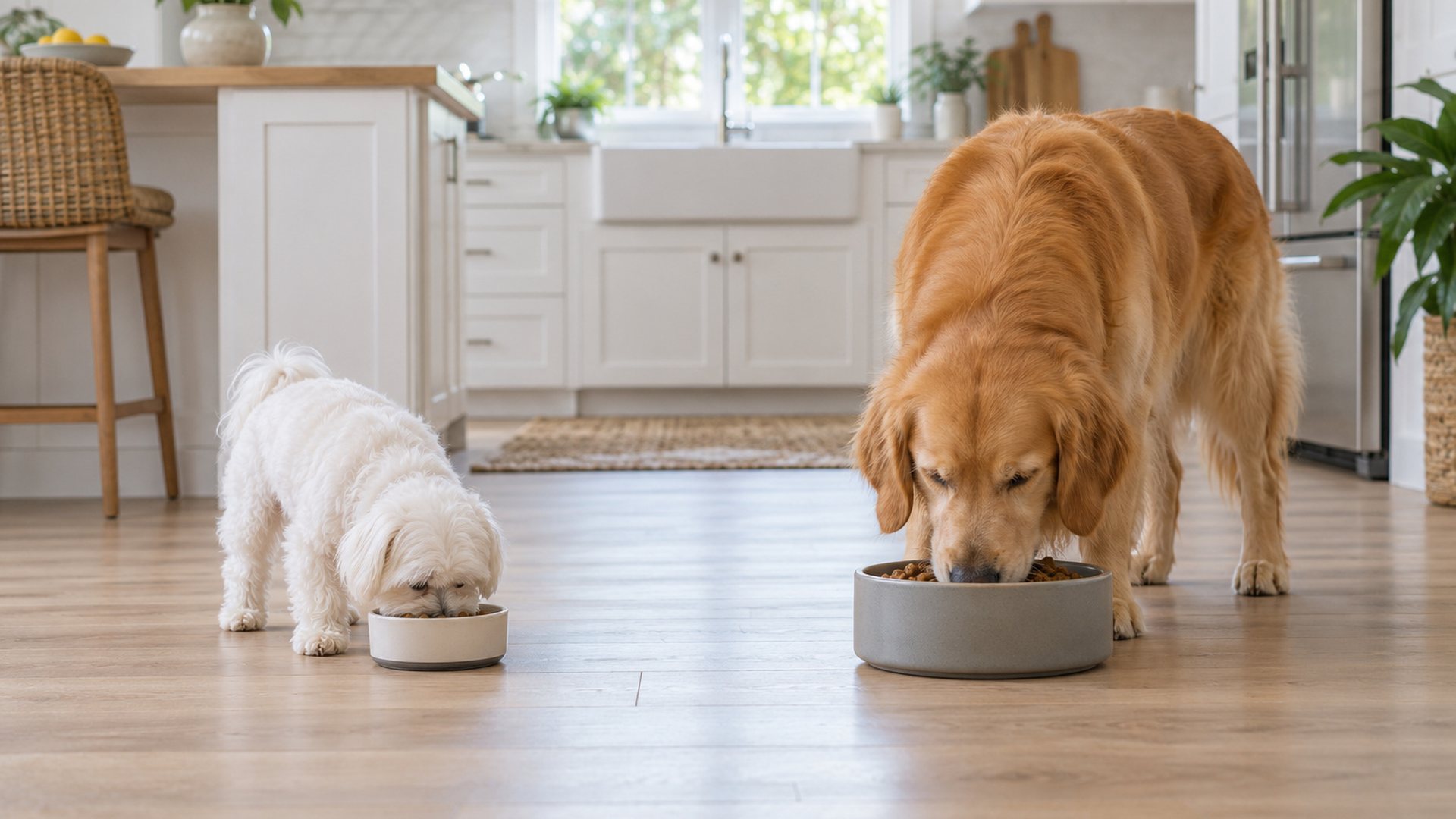
Small breed dog food is a complete and balanced diet made with smaller kibble and, usually, more calories in each mouthful, because small dogs need more energy for their body weight than big dogs. Large-breed puppy food does the opposite job: it controls calories and calcium so big puppies grow steadily rather than too fast. Beyond size, the most important thing is a food labelled complete and balanced for your dog’s life stage, fed in the right amount for a lean body shape.
This guide explains how feeding changes with size, what really matters for toy and small dogs such as Bichons and Toy Poodles, what large-breed puppies need, and where breed marketing goes further than the evidence.
At a glance
- Size matters more than breed: a food for small dogs suits most dogs under about 10 kg as adults, whatever their breed.
- Small dogs need more calories per kilogram, but they gain weight fast because a few extra treats are a big share of their day.
- Toy puppies need small, frequent meals, and weakness or wobbliness in a tiny puppy needs a vet straight away.
- Large-breed puppies need a food that meets the large-size growth standard, with controlled calcium.
- Breed-specific foods are a marketing choice, not a requirement; check the label, not the picture.
Why size changes what a dog needs
A tiny dog and a giant dog have the same basic nutrient needs, but they handle food very differently. Small dogs burn energy faster relative to their body size and have small stomachs, so they do well with energy-dense food in small pieces. Large and giant dogs grow for longer as puppies and carry more weight on their joints, so controlled growth and a lean body are the priorities.
Dog size groups are not officially fixed, and food companies draw the lines in different places. As a rough working guide used in this article:
| Size group | Typical adult weight | Examples | Feeding priorities |
|---|---|---|---|
| Toy | Under about 5 kg | Toy Poodle, Chihuahua, Yorkshire Terrier | Tiny kibble, frequent meals for puppies, careful portion control, dental care |
| Small | About 5 to 10 kg | Bichon Frise, Miniature Dachshund, Shih Tzu | Small kibble, calorie-dense food in measured amounts, treat discipline |
| Medium | About 10 to 25 kg | Border Collie, Cocker Spaniel, Staffordshire Bull Terrier | Match food to activity level; watch weight after neutering |
| Large | About 25 to 45 kg | Labrador, Golden Retriever, German Shepherd | Large-breed puppy growth food; lean body condition for joint health |
| Giant | Over about 45 kg | Great Dane, Newfoundland | Slow, steady puppy growth over a longer period; vet guidance on switching to adult food |
Many mixed-breed and bull-breed dogs, including dogs often called “pitbulls”, sit across the medium and large groups. Feed for your individual dog’s expected adult size and body shape rather than the breed name.
Feeding toy and small dogs
Calories: more per kilo, but less room for error
Small dogs need more energy per unit of body weight than large dogs, so food for small dogs is often higher in fat and calories per cup. That is helpful for a tiny stomach, but it means a small overpour or a few extra treats can tip a small dog into weight gain quickly. A single biscuit can be a meaningful share of a toy dog’s daily calories. Weigh food with kitchen scales rather than guessing with a scoop, and follow the treat budget explained in our guide to what to feed your dog.
Kibble size and texture
Small kibble is easier for little mouths to pick up and chew. That is the most practical difference in small breed dog food. Some small dogs prefer wet food or a mix; both are fine if the food is complete and balanced. Our comparison of wet and dry dog food covers the trade-offs.
Teeth matter more in small dogs
Research from the Royal Veterinary College’s VetCompass programme, published in 2021, looked at over 22,000 dogs in the UK and found that dogs under 10 kg had about three times the risk of dental disease of dogs weighing 30 to 40 kg, with the Toy Poodle among the highest-risk breeds. No food replaces toothbrushing, but a daily routine and regular vet checks matter even more for small dogs. See our guide to dog dental care for a simple routine.
Toy puppies and low blood sugar
Very small puppies have tiny energy reserves, so they need several small meals a day. Veterinary guidance for toy and small breeds suggests at least three meals a day for puppies under about four months. A toy puppy who becomes weak, wobbly, unusually sleepy, trembles or collapses needs a vet immediately, because these can be signs of low blood sugar.
Dog food for a Bichon, a Toy Poodle and other small breeds
People often search for dog food for Bichons or tips on feeding toy poodles as if each breed needs its own recipe. The honest answer is that a Bichon Frise, which the American Kennel Club describes as weighing roughly 12 to 18 pounds (about 5.5 to 8 kg), is fed like any other small dog: a complete and balanced small-breed or all-sizes food, measured by weight, adjusted to keep a visible waist. A Toy Poodle is fed the same way, in smaller amounts, with extra care around puppy meal frequency and teeth.
Where individual dogs differ, it is usually for health reasons rather than breed: some dogs have food sensitivities, some have dental problems that make dry food hard, and some put on weight easily. Those are conversations to have with your vet. If your dog is itchy or has ongoing tummy upsets, our guide to dog allergies and itching explains what to note for your vet.
Feeding large and giant breeds
Large-breed puppies: the calcium rule
Large and giant puppies are sensitive to too much calcium and too many calories while their skeleton is growing. In the United States, the Association of American Feed Control Officials (AAFCO) sets a separate standard for puppies expected to reach 70 lb (about 32 kg) or more as adults, with a lower maximum calcium level than for smaller puppies. Foods that meet it will say they are complete and balanced for growth “including growth of large size dogs (70 lb or more as an adult)”. Other regions use their own standards, such as those from FEDIAF in Europe, so check the life-stage statement on the label wherever you live.
Two practical rules follow. Do not add calcium supplements to a complete puppy food unless your vet tells you to. And avoid “all life stages” foods that do not mention large-size growth for a big puppy.
Growth pace and weight
The aim is steady growth with a lean body, not the biggest puppy possible. Weigh your puppy regularly, use body condition rather than the bag chart alone, and ask your vet when to switch to adult food, as larger breeds generally stay on puppy food for longer than small breeds. A lean adult weight also takes pressure off joints; our guide to joint health in dogs explains why.
Retrievers and other food-loving breeds
If you are looking for the best dog food for Golden Retrievers or a retriever dog food, the most useful step is portion control rather than a special formula. Labradors in particular are known for strong food motivation, and research from the University of Cambridge has linked a gene variant common in the breed to weight gain. Measured meals, a strict treat budget and plenty of daily exercise help more than any breed-specific recipe.
Choosing a food by size: a step-by-step checklist
- Estimate your dog’s adult size group. Use the parents’ size, your vet’s estimate or your adult dog’s current lean weight.
- Check the life-stage statement. It should say complete and balanced for growth, adult maintenance or all life stages, and for large puppies, include large-size growth.
- Check the kibble size suits your dog’s mouth. Small pieces for toy and small dogs; a size your dog can chew comfortably for everyone else.
- Look at calories per cup or per 100 g. This helps you compare foods and avoid overfeeding.
- Weigh the daily portion. Start with the label guide, then adjust by body condition.
- Set a treat budget. A widely used rule from the World Small Animal Veterinary Association is that treats should make up no more than about 10% of daily calories.
- Change foods gradually. Mix old and new over about a week.
- Review every few months. Body shape, energy, stools and coat tell you whether the food suits your dog.
Our guide on how to read a dog food label walks through each part of the label.
Small vs large breed food compared
| Feature | Small breed food | Large breed puppy food | All-sizes food |
|---|---|---|---|
| Kibble size | Small | Larger | Medium |
| Calories per cup | Often higher | Often moderate, to slow growth | Varies |
| Calcium focus | Standard growth or adult levels | Controlled, meeting large-size growth standards | Check the label for large puppies |
| Best for | Toy and small adults; small puppies if labelled for growth | Puppies expected to be large or giant adults | Many medium adults; small or large adults if kibble suits |
| Main risk | Easy to overfeed | Underfeeding or overfeeding growth if portions are not checked | Wrong choice for a large-breed puppy if growth standard is missing |
Common mistakes
- Feeding by the scoop. Scoops vary hugely. Small dogs especially need food weighed.
- Believing breed packaging over the label. A picture of your breed on the bag does not make it a better food.
- Giving a large puppy an ordinary puppy food. Check for the large-size growth statement.
- Adding calcium or bone meal to a complete diet. This can do more harm than good for growing puppies.
- Forgetting treats and chews. For a 5 kg dog, a few treats can be a big part of the day.
- Skipping meals for toy puppies. Tiny puppies need small, regular meals.
- Ignoring teeth. Small dogs are at higher risk of dental disease; brushing matters more than any kibble claim.
Sources this guide draws on: World Small Animal Veterinary Association (WSAVA) Global Nutrition Committee guidelines; Association of American Feed Control Officials (AAFCO) dog food nutrient profiles, including the large-size growth standard; FEDIAF nutritional guidelines for complete and complementary pet food; Royal Veterinary College VetCompass research on dental disease in dogs (2021); American Kennel Club breed information; University of Cambridge research on the POMC gene in Labradors (2016).
Handy gear for this guide
Practical picks we think suit this topic. As an Amazon Associate, Mind A Dog earns from qualifying purchases, at no extra cost to you. Prices and availability are set by Amazon and may vary by country.
- Outward Hound Fun Feeder Slo Bowl
Ridged bowl that slows down dogs who gulp their meals.
View on Amazon - LUKITO Lick Mat for Dogs (2 Pack)
Spread a little dog-safe food over it for a quiet licking activity.
View on Amazon - Amazon Basics Airtight Pet Food Storage Containers (3 Piece)
Keeps kibble and treats fresh and out of reach.
View on Amazon
Frequently asked questions
Do small dogs really need small breed dog food?
Not always. A complete and balanced all-sizes food can work for a small dog if the kibble is small enough and you weigh portions carefully. Small breed food simply makes it easier, with smaller pieces and more calories in less volume.
What is the best dog food for a Bichon Frise?
A complete and balanced food for small dogs or all sizes, fed in measured amounts to keep a lean shape. There is no evidence that Bichons need a breed-specific recipe. If your Bichon has itchy skin, tear staining you are worried about or tummy problems, ask your vet before changing foods.
How many times a day should I feed a toy poodle?
Toy puppies under about four months usually need at least three small meals a day, then most adults do well on two. Your vet can advise if your dog is very small or has health conditions.
When should a large-breed puppy switch to adult food?
Later than a small puppy, because big dogs keep growing for longer. Ask your vet to judge the timing based on your puppy’s size and growth.
Can a small dog eat large breed food?
The nutrition may be fine, but the kibble may be too big to chew comfortably, and the calorie density may not suit them. A food designed for small dogs or all sizes is usually a better fit.
Are breed-specific dog foods worth it?
They can be good foods, but they are not necessary. What matters is the life-stage statement, the right kibble size and the right amount. Paying more for a breed name on the bag does not guarantee a better diet.
Feeding by size is mostly about simple, steady habits: the right kibble, the right life-stage label and a portion you actually weigh. Get those right, keep an eye on your dog’s waistline and teeth, and you will be feeding well whatever their breed.