
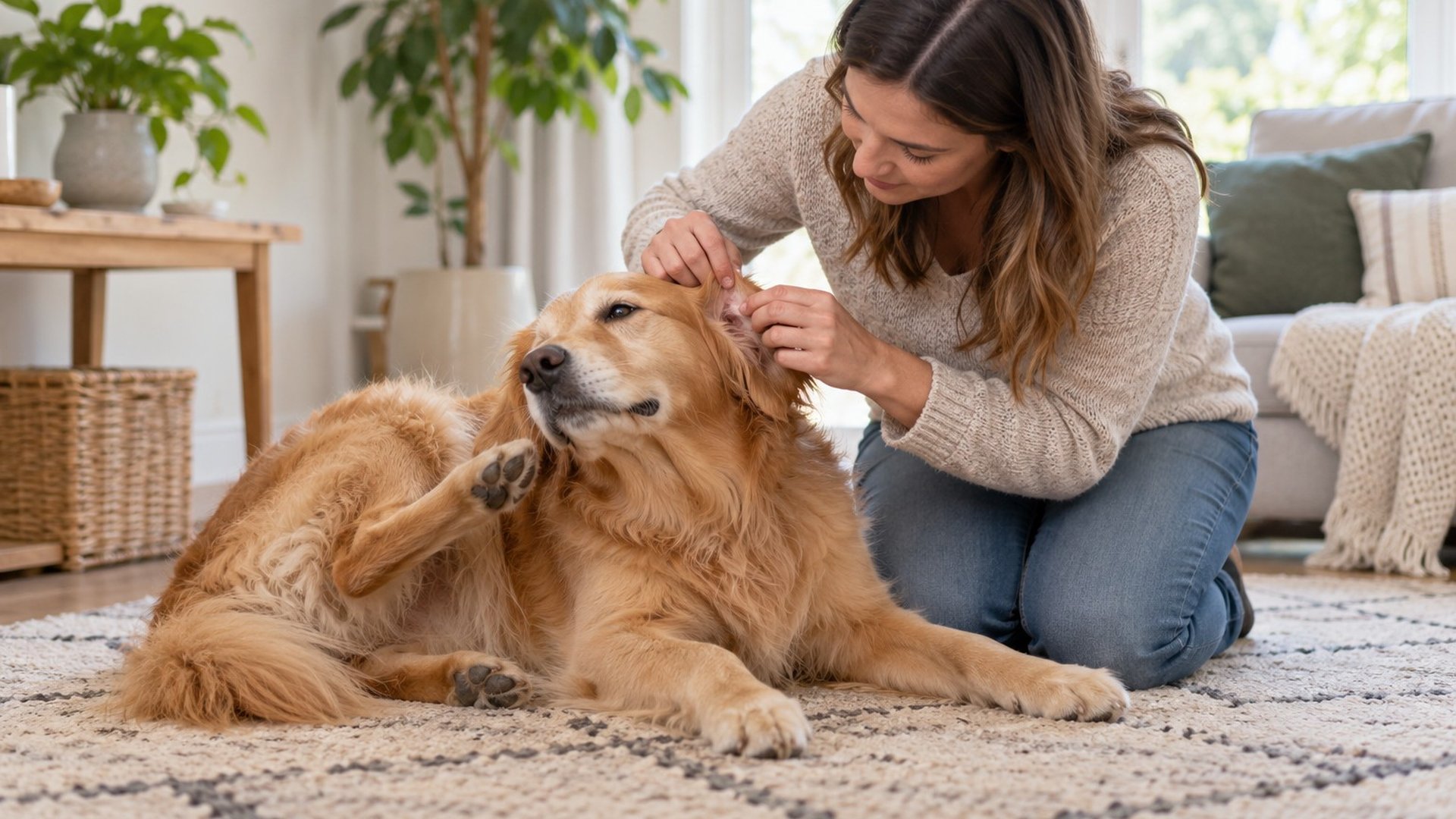
Constant itching, scratching or licking the paws is most often a sign that your dog’s skin is uncomfortable, and allergies are among the most common reasons. Fleas, environmental allergens such as pollens and dust mites, reactions to food, skin or ear infections, and sometimes boredom or stress can all look similar at home. Because the causes overlap, the right next step is a vet visit, ideally with a clear record of what you have noticed.
This guide explains the common causes in plain language, shows which signs tend to point where, gives you a simple symptom diary to take to your appointment, explains why food elimination trials need to be run with your vet, and lists the signs that mean you should not wait. It is education only. It does not replace an examination, and it does not suggest any medicines.
At a glance
- Occasional licking and scratching is normal. Licking that is frequent, intense, or leaves red, damp, stained or thinning fur is not.
- Fleas are a common trigger, and a flea-allergic dog can react strongly even when you cannot find any fleas.
- Environmental allergies often show on the paws, face, ears, armpits and belly, and may come and go with the seasons.
- Food reactions can only be confirmed with a strict vet-supervised elimination trial, usually lasting at least eight weeks.
- Swelling of the face, hives, breathing difficulty, collapse, or sudden severe pain need urgent veterinary care.
Normal grooming or a problem? How to tell
Dogs lick their paws after walks, after eating and as part of normal grooming. That is not a concern. It becomes worth investigating when you notice any of these:
- Licking or chewing that goes on for minutes at a time, or wakes your dog (or you) at night
- Reddish-brown staining of the fur between the toes or on the legs, which is caused by saliva
- Red, damp, greasy or smelly skin between the toes or pads
- Hair loss, thickened or darker skin, scabs or sores
- Rubbing the face on carpets or furniture, or scooting
- Head shaking, scratching at the ears, or a smell or discharge from the ears
- Limping, or reluctance to have the paws touched
If one or more of these lasts more than a few days, or keeps coming back, book a vet appointment.
The common causes of itching and paw licking
Fleas and flea allergy
Some dogs are allergic to flea saliva, so a single bite can set off intense itching. According to the Merck Veterinary Manual, the signs of flea allergy dermatitis in dogs mainly appear on the middle to lower back, the base of the tail and the back and inner thighs. The manual also notes that a diagnosis can be based on history and signs, not only on finding fleas, which matters because a well-groomed dog may show few fleas. Consistent, year-round flea prevention for every pet in the home is usually part of the plan. Our guide to flea and tick prevention for dogs explains why gaps in cover cause trouble.
Environmental allergies (atopic dermatitis)
Many itchy dogs are reacting to things in their environment, such as pollens, moulds or house dust mites. Vets call this atopic dermatitis. The Merck Veterinary Manual describes it as commonly affecting the paws, face, ears, the folds of the front legs, armpits and belly, with signs usually first appearing between six months and three years of age. It can be seasonal, all year round, or all year round with seasonal flare-ups. It is a long-term condition that is managed rather than cured, so a good relationship with your vet matters.
Food reactions
Some dogs react to an ingredient in their diet, most often a protein. Food reactions can cause the same itchy skin, paw licking and ear problems as environmental allergies, and some dogs also have digestive signs such as soft stools, vomiting or wind. There is no reliable quick test at home. The way vets confirm a food reaction is a carefully controlled elimination diet trial, explained below. If your dog has ongoing tummy troubles too, our guide to dog gut health covers what normal digestion looks like.
Skin and ear infections
Bacterial and yeast infections are common in itchy dogs, often developing because the skin is already inflamed from an allergy. The Merck Veterinary Manual notes that these secondary infections often make the itch worse. Signs include a greasy or musty smell, redness, pimples or crusts, and dark, waxy ear discharge. Repeated ear infections can sometimes be the only visible sign of an underlying allergy. Infections need a vet’s diagnosis.
Something on or in the paw
Licking focused on one paw, especially with limping, may point to a grass seed, splinter, cut, torn nail, insect sting, burn from a hot surface, or a sore between the toes. Contact with irritants such as some cleaning products, lawn treatments or de-icing salt can also make paws itchy. If you walk on hot or rough ground, see how to judge a surface before you walk and whether your dog needs boots.
Boredom, stress or habit
Some dogs lick as a way to self-soothe when they are bored, under-stimulated, anxious or left alone. This is usually worth considering only after your vet has ruled out medical causes, because itchy skin and stress licking can look identical, and one can lead to the other. Signs of stress elsewhere in the body, such as lip licking, yawning and pacing, are explained in our guide to the hidden signs of stress in dogs. Enough exercise, sniffing and mental work can help; our list of easy dog enrichment ideas is a good place to start.
Which signs tend to point where
This table is a guide to help you describe what you see to your vet. It is not a way to diagnose your dog, because the causes often overlap and a dog can have more than one at the same time.
| Possible cause | Where you often see it | Pattern you might notice | What your vet may look at |
|---|---|---|---|
| Flea allergy | Lower back, base of the tail, back of the thighs | Sudden, intense itching; may flare in warmer months | Fleas or flea dirt, flea prevention history for all pets |
| Environmental allergy | Paws, face, ears, armpits, belly | Often starts in young adult dogs; may be seasonal or year-round | Age of onset, seasonal pattern, ruling out other causes |
| Food reaction | Paws, face, ears, rear end; sometimes digestive signs | Year-round itching that does not follow the seasons | Diet history, possibly a supervised elimination trial |
| Skin or ear infection | Between toes, skin folds, ears | Smell, greasiness, redness, discharge, often alongside an allergy | Skin or ear samples examined under a microscope |
| Something in the paw | Usually one paw | Sudden start, limping, focused licking | Careful paw examination |
| Boredom or stress | Often front paws or legs | Licking when alone, bored or anxious, with no skin changes at first | Ruling out medical causes first, then routine and environment |
What to observe and record before your vet visit
Itchy dogs are often seen when the skin looks better than it did last week, so a simple record helps your vet enormously. Keep a symptom diary for one to two weeks, or from today until your appointment.
- Rate the itch daily on a simple scale from 0 (no itching) to 10 (constant itching that stops sleep or play).
- Note where. Paws, face, ears, armpits, belly, back, base of tail, rear end.
- Note when. After walks, at night, after meals, when left alone, in certain seasons or weather.
- Take photos of red or stained areas in good light, on the same spot every few days.
- Write down everything your dog eats, including treats, chews, table scraps, flavoured toothpaste and anything they find on walks.
- Record parasite prevention for your dog and every other pet in the home, including the last date given.
- Note recent changes: new food, new bedding or washing powder, moving house, new garden plants, a new pet, a change in routine.
- Note any other signs: ear shaking, smell, soft stools, vomiting, weight change, changes in thirst or energy.
Take the diary and photos with you. Also bring the packaging or the exact name of the food and treats your dog has.
Why elimination diets must be vet-supervised
Swapping to a new food from the pet shop and waiting a week or two rarely gives a clear answer. A proper elimination trial is a diagnostic test, and it needs to be planned and supervised by your vet for several reasons.
- It takes time. VCA Animal Hospitals’ guidance describes feeding the elimination diet for at least eight weeks, then reintroducing foods one at a time to see whether the signs return.
- It must be strict. During the trial, nothing else should go in your dog’s mouth: no treats, chews, table scraps, flavoured toothpaste or flavoured supplements. Even small slips can spoil the result and mean starting again.
- The diet has to be truly suitable. Over-the-counter “limited ingredient” foods may contain traces of other ingredients from the manufacturing process. Your vet can recommend an appropriate diet for the trial.
- It must stay complete and balanced. Home-prepared trial diets can leave a dog short of essential nutrients over several weeks. If home cooking is considered, it should be designed with veterinary or veterinary nutritionist input, especially for puppies.
- Other causes need managing at the same time. If fleas or an infection are also present, the trial result will be confusing unless they are dealt with too.
- The challenge phase confirms the answer. Reintroducing foods under your vet’s guidance tells you what to avoid long term, so you do not restrict your dog’s diet more than necessary.
For training during a trial, ask your vet which pieces of the trial food can be used as rewards. Our guide on what to feed your dog covers everyday nutrition once you know what suits them.
When it is urgent
Contact your vet or an emergency clinic straight away if your dog has any of these:
- Swelling of the face, muzzle, lips or eyes, or sudden hives (raised bumps)
- Difficulty breathing, repeated vomiting, collapse or weakness, especially after an insect sting or new food
- A rapidly spreading red, wet or oozing patch of skin
- Bleeding, an open wound, or a paw they will not put weight on
- A swollen paw, or a grass seed you can see entering the skin
- Head tilt, loss of balance, or a painful, very smelly ear
- Your dog seems unwell in themselves: quiet, off food, or in obvious pain
If you are unsure how urgent something is, our calm guide on when to call the vet can help you decide.
What you can do safely while you wait for your appointment
- Keep up your vet-recommended flea prevention for every pet in the home, and wash your dog’s bedding.
- Gently rinse and pat dry paws after walks if your dog has been on grass, sand or treated surfaces.
- Do not apply human creams, essential oils or home remedies to your dog’s skin without your vet’s advice; some are harmful to dogs and can also make the skin harder to assess.
- Do not change several things at once, such as food, shampoo and bedding, as it makes it harder to see what helped.
- Offer calm enrichment, such as sniffing games, to give your dog something else to focus on, and reward them gently when they settle.
- Never punish licking or scratching. Your dog is uncomfortable, not misbehaving.
Common mistakes to avoid
- Assuming it is “just a habit”. Behavioural licking is a diagnosis made after medical causes are ruled out, not before.
- Ruling out fleas because you cannot see any. Flea-allergic dogs can react to very few bites.
- Treating only some pets for fleas. Untreated pets in the home can keep the problem going.
- Running a casual food swap. A short, unsupervised change of food rarely gives a reliable answer and can mislead you.
- Stopping a plan as soon as your dog looks better. Many allergies flare again, so follow your vet’s advice on long-term management and rechecks.
- Waiting too long. Itchy skin can become infected and much harder to settle the longer it goes on.
Allergies can also show up as red, itchy eyes and pink eye, so it helps to know which eye signs need a vet straight away.
Repeated ear infections are one of the most common allergy signs in dogs, so mention any head shaking or smelly ears to your vet.
Related guide: Hypoallergenic Dog Food: How to Choose the Right One Safely.
Sources this guide draws on: the Merck Veterinary Manual’s sections on canine atopic dermatitis and flea allergy dermatitis, and VCA Animal Hospitals’ guidance on elimination-challenge diet trials in dogs. This guide is general education; always see your vet for diagnosis and treatment.
Handy gear for this guide
Practical picks we think suit this topic. As an Amazon Associate, Mind A Dog earns from qualifying purchases, at no extra cost to you. Prices and availability are set by Amazon and may vary by country.
- EVERLIT Pet First Aid Kit (95 Pieces)
Bandages, gauze and basics in one bag for home, car or hikes while you contact your vet.
View on Amazon - Hepper Bio-Enzyme Pet Stain and Odour Spray
Enzyme cleaner for accidents on carpets, floors and bedding.
View on Amazon - Portable Dog Water Bottle with Food Container
Fresh water and a snack on walks and car trips.
View on Amazon
Frequently asked questions
What are the most common dog allergy symptoms?
Itching, scratching, licking or chewing the paws, rubbing the face, red or stained skin, hair loss, repeated ear infections and a musty skin smell are all common. Some dogs with food reactions also have digestive signs. Many of these signs overlap with other conditions, so a vet examination is needed to work out the cause.
Why does my dog lick their paws at night?
Itching often seems worse when a dog is resting and has fewer distractions, so night-time licking is common in allergic dogs. It can also happen with paw injuries or when a dog is settling themselves. If it is disturbing their sleep or leaving red, stained or damp skin, see your vet.
Can a dog suddenly develop allergies?
Yes. A dog can develop an allergy to something they have been exposed to for a long time, including an ingredient they have eaten for years. Environmental allergies often first appear in young adult dogs, but new itching at any age deserves a vet check, as other conditions can cause it too.
How do I know if my dog has a food allergy or an environmental allergy?
You often cannot tell from the signs alone, because both can affect the paws, face and ears. A seasonal pattern can suggest an environmental cause, while year-round signs may suggest food, but neither is certain. A vet-supervised elimination diet trial is the accepted way to confirm a food reaction.
Are dog allergies curable?
Some causes can be removed, such as fleas when prevention is consistent, or a specific food ingredient once it is identified. Environmental allergies are usually managed over a dog’s lifetime rather than cured. Your vet can build a long-term plan that keeps your dog comfortable.
Is paw licking ever a behaviour problem?
It can be, especially in dogs who are bored, under-exercised or anxious when left alone. Your vet should rule out medical causes first. After that, more enrichment, a predictable routine and kind, reward-based support can help.
An itchy dog is an uncomfortable dog, and you are the person best placed to notice the pattern. Keep a short diary, keep parasite prevention consistent, and see your vet early. With the right diagnosis, most itchy dogs can be helped to feel much more comfortable in their own skin.