
Head shaking, scratching at the ear, a bad smell, redness and dark or yellowish discharge are the classic signs of an ear infection in dogs. Most ear infections have an underlying cause, very often allergies, so the right first step is a vet check: the vet can see whether the eardrum is intact and what is growing in the ear before anything is put into it. Home remedies and leftover drops can make a sore ear worse.
This guide covers the signs, how urgent each one is, the common causes, why the vet tests before treating, what happens at the appointment, and how to help stop ear infections coming back, including a short, reward-based plan to make ear checks easy.
At a glance
- Signs: head shaking, scratching, smell, redness, discharge, a sore ear and sometimes a head tilt.
- The infection is usually a symptom. Allergies, ear shape, moisture, mites and grass seeds are common triggers.
- Don’t clean or put anything into a sore ear before a vet has looked.
- Yeast, bacteria and ear mites can look alike; a quick swab at the vet tells them apart.
- Repeat infections mean the underlying cause needs tackling, not just the ear.
Signs of an ear infection in dogs
An infection of the outer ear canal is called otitis externa. Look out for:
- Shaking the head or flapping the ears more than usual.
- Scratching at the ear or rubbing the head along the floor or furniture.
- A sour, yeasty or unpleasant smell.
- Redness or swelling inside the ear flap or at the opening of the canal.
- Dark brown, black, yellow or greenish discharge.
- Pain: flinching, crying or pulling away when the ear or head is touched.
- In long-standing cases, crusty, thickened skin and a narrowed ear opening.
Get to know what your dog’s healthy ears look and smell like, so changes stand out. A dog that shakes its head once after a nap is normal; a dog that keeps shaking and scratching is telling you something.
How urgent is it?
Ear infections are rarely life-threatening, but they are uncomfortable and some signs mean the problem has spread deeper. Use this table to decide how quickly to call the vet, and see this guide to when to call the vet for other symptoms.
| What you notice | Possible meaning | How urgent |
|---|---|---|
| Occasional head shake, clean, pale ears, no smell | Normal | No action; keep checking monthly |
| Scratching plus a smell | Early outer ear infection | Vet in the next few days |
| Dark, waxy or crumbly discharge | Yeast, bacteria or ear mites | Vet in the next few days |
| Red, swollen, painful ear; dog won’t let you touch it | Active, painful infection | Vet within 24 hours |
| Sudden one-sided head shaking after a walk in long grass | Possible grass seed or other foreign body | Same day |
| Head tilt, loss of balance, flicking eye movements, drooping face | Possible middle or inner ear involvement | Same day |
| Puffy, fluid-filled, pillow-like ear flap | Aural haematoma, a painful swelling of the ear flap that can follow an ear infection | Vet within 24 hours |
The Merck Veterinary Manual’s owner information explains that when infection reaches the inner ear, dogs can show a head tilt towards the affected side, loss of balance, difficulty standing and uncontrollable eye movements, and that facial nerves running through the middle ear can be affected. These signs need a vet promptly.
What causes ear infections in dogs
Vets think of ear disease in layers. Something starts the problem (a primary cause), some dogs are more prone because of their ears (predisposing factors), and once the ear is inflamed, yeast and bacteria take advantage (secondary infection). Treating only the yeast or bacteria clears the ear for a while; finding the primary cause is what stops it coming back.
Allergies
The Merck Veterinary Manual lists allergies, including environmental allergies (atopic dermatitis), adverse food reactions and contact allergies, among the main primary causes. VCA Animal Hospitals notes that allergies are involved in up to 43% of cases and are a common reason for repeat infections. Itchy ears often travel with other allergy signs such as paw licking, face rubbing and itchy skin, so it helps to know how to spot allergy signs in dogs.
If your vet suspects a food allergy, they may suggest a strict diet trial. That is a vet-guided process, but understanding how to choose the right diet will help you follow it.
Ear shape, hair and moisture
Dogs with large, floppy or hairy ears are more prone, according to VCA, with Cocker Spaniels, Miniature Poodles and Old English Sheepdogs among the examples. Narrow ear canals and lots of hair in the canal also play a part. Moisture is another trigger: the Merck Veterinary Manual lists excess moisture, including from swimming, as a predisposing factor. Any breed can still be affected.
Ear mites and parasites
Ear mites are tiny parasites that cause intense itching and dark, crumbly discharge. VCA notes they are found most often in puppies and kittens, and that adult dogs can pick them up from infected puppies or cats. If one pet in the home has ear mites, ask your vet whether the others need checking too.
Grass seeds and other foreign bodies
The Merck Veterinary Manual lists foreign bodies among the primary causes of ear disease, and grass seeds are a familiar example. Sudden head shaking or pawing at one ear after a walk through long grass is a reason to see a vet the same day.
Other health problems
Hormonal conditions such as an underactive thyroid, other skin diseases, growths and polyps can also lie behind repeat ear problems. Your vet may suggest further tests if infections keep returning.
Yeast, bacteria or mites? Why the vet tests first
Search results often promise you can tell the cause from the smell or colour. There are some patterns, but they overlap, and many ears have more than one problem at once. This table explains the common differences; it is not a way to diagnose at home.
| Cause | Often looks like | Often affects | How it’s confirmed |
|---|---|---|---|
| Yeast (Malassezia) | Brown, greasy discharge, itchy ear, musty or yeasty smell | Allergic dogs and dogs with moist, floppy ears | Vet swab examined under the microscope |
| Bacteria | Yellow or green discharge, redness, pain, strong smell | Any dog; often on top of another problem | Vet swab under the microscope; sometimes a lab culture |
| Ear mites | Dark, dry, crumbly “coffee ground” debris, intense itching | Puppies, and pets living with infested animals | Vet examination and microscope check of the debris |
The microscope check (cytology) matters because different organisms need different medicines. VCA explains that over-the-counter drops are not appropriate without a diagnosis, because the right medicine depends on the cause.
Can I treat a dog ear infection without a vet?
It is a very common search, and the wish to help quickly is completely understandable. The honest answer is that a vet check is the safe first step, for three reasons:
- The eardrum. If the eardrum is damaged, some ear products can reach the middle ear and cause harm. VCA notes that a ruptured eardrum can make some medicines cause hearing loss. Only an otoscope check shows whether the eardrum is intact.
- The cause. Yeast, bacteria, mites and grass seeds all need different approaches. Guessing can mean weeks of the wrong treatment while the ear gets sorer.
- Home remedies can sting or harm. PetMD advises against using alcohol, hydrogen peroxide or essential oils in dogs’ ears, and the Merck Veterinary Manual warns that vinegar mixtures can irritate the ear lining. Powders can clump and irritate. Leftover drops from another pet or an old prescription may be the wrong medicine and unsafe if the eardrum is damaged.
What you can do at home is keep your dog comfortable, stop them scratching the ear raw where you can, and book the appointment.
What happens at the vet
A typical ear appointment includes:
- A look down the ear with an otoscope to check the canal and confirm the eardrum is intact.
- A swab of the discharge, stained and examined under a microscope to see whether yeast, bacteria or mites are present.
- Cleaning in the clinic if the ear is full of debris. Very sore ears sometimes need sedation so the vet can examine and clean them properly.
- A treatment plan based on what was found, with clear instructions for how to give it.
- A recheck visit. VCA notes several rechecks may be needed before an infection fully resolves. Don’t skip it just because the ear looks better.
For repeat or severe infections, the vet may send a sample for culture, investigate allergies, or recommend imaging. Long-term untreated infections can thicken and narrow the ear canal and damage the eardrum, so catching problems early matters.
Before the vet visit: a checklist
- Don’t clean the ear first, so the vet can see it as it is and take a useful sample.
- Note when the signs started and which ear, or both.
- Note any swimming, bathing or walks in long grass in the days before.
- List previous ear infections and what was used.
- List your dog’s food, treats and any known allergies.
- Bring any products you’ve already used, so the vet knows what has been in the ear.
After diagnosis: helping prevent repeat ear infections
Once your vet has found the cause, a simple routine can help keep the ears healthy:
- Follow the cleaning plan your vet gives you. The right cleaner and frequency depend on your dog. PetMD suggests cleaning healthy ears only when wax or debris builds up, rather than on a fixed schedule, and checking them about once a month.
- Never put cotton buds into the ear canal. They can push wax deeper and damage the eardrum.
- Dry the ears after swimming or bathing, gently wiping the visible part of the ear with a towel or soft cotton pad.
- Manage allergies with your vet, because that is often what keeps the cycle going.
- Keep hair around the ear opening tidy in hairy-eared breeds. See grooming around the ears for your dog’s coat type.
- Check ears weekly in prone dogs, so you notice smell or redness early.
Dogs with recurrent ear problems can need ongoing care, so it is worth knowing whether insurance covers repeat conditions before you choose a policy.
Teaching your dog to enjoy ear handling
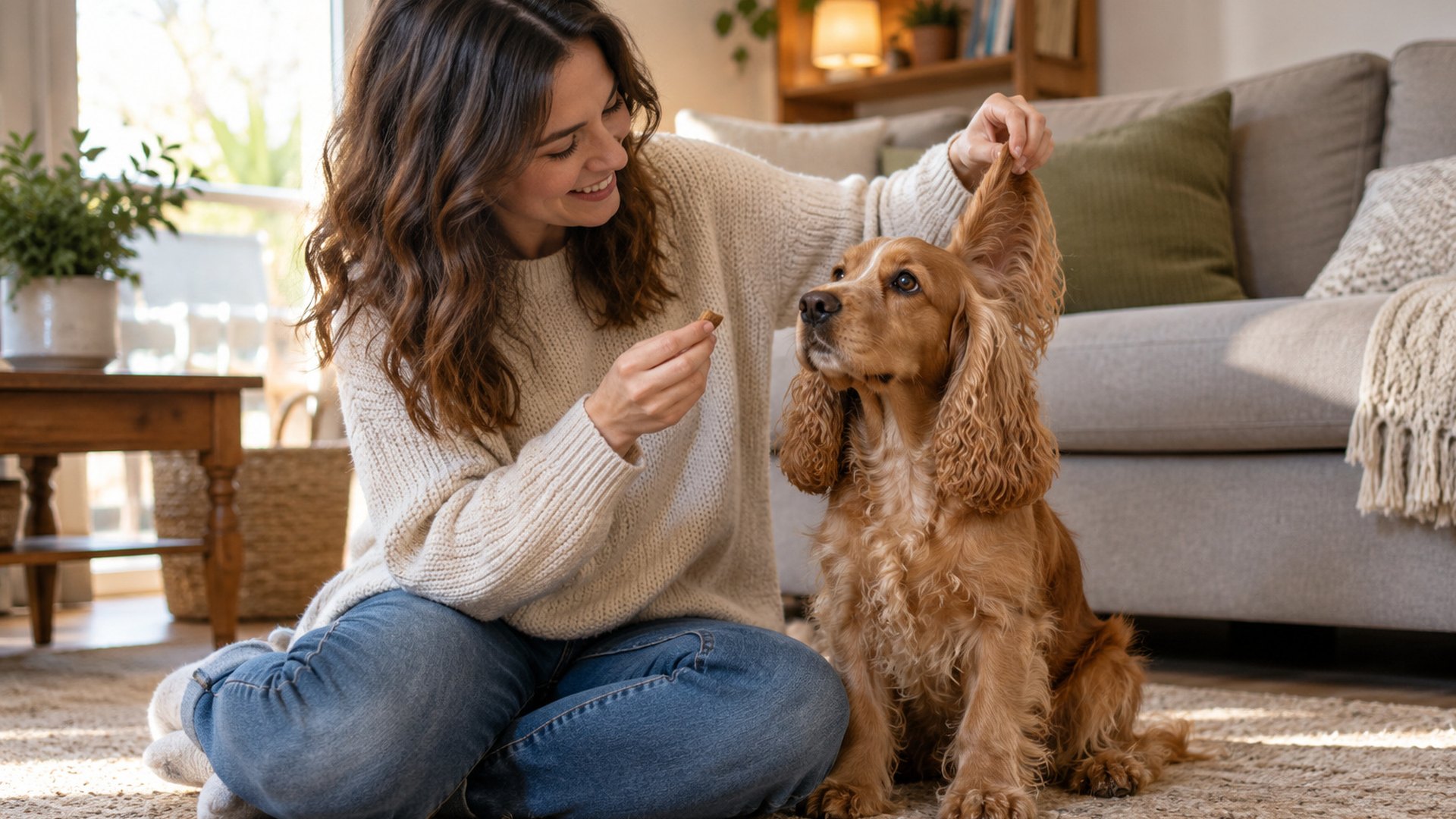
Ear checks, vet examinations and any prescribed treatment are far easier for a dog who is relaxed about having their ears touched. Never hold a frightened dog down by force: it makes the next time harder. Instead, build the habit with small, rewarded steps, using the same approach that makes stress-free nail trims possible.
- Touch and treat. Briefly touch the side of your dog’s head, then give a tasty treat. Repeat a few times.
- Hold and treat. Gently hold the base of the ear for a second, then treat.
- Lift and treat. Lift the ear flap and look inside for a moment, then treat.
- Wipe and treat. Touch the outer ear with a soft, dry cotton pad, then treat.
- Build slowly. Add a second or two each session, only when your dog is relaxed at the current step.
Keep sessions to a minute or two, stop if your dog moves away or shows stress, and go back a step next time. Practise on healthy ears; if an ear is already sore, leave handling to the vet. For more on the method, see reward-based training basics.
Common mistakes
- Cleaning a sore ear before the vet check, which can hurt and remove the evidence the vet needs.
- Using home remedies such as vinegar, hydrogen peroxide, alcohol or essential oils.
- Using cotton buds deep in the ear canal.
- Stopping prescribed treatment early because the ear looks better, without checking with your vet.
- Using another pet’s leftover medicine.
- Treating each infection without asking why it keeps happening.
- Restraining a frightened dog by force instead of building calm handling skills.
Eye problems need the same prompt vet check; see our guide to cherry eye in dogs.
Sources this guide draws on: the Merck Veterinary Manual sections on otitis externa and on middle and inner ear infections in dogs; VCA Animal Hospitals’ owner information on ear infections in dogs; and PetMD’s owner guidance on cleaning dogs’ ears.
Handy gear for this guide
Practical picks we think suit this topic. As an Amazon Associate, Mind A Dog earns from qualifying purchases, at no extra cost to you. Prices and availability are set by Amazon and may vary by country.
- EVERLIT Pet First Aid Kit (95 Pieces)
Bandages, gauze and basics in one bag for home, car or hikes while you contact your vet.
View on Amazon - Hepper Bio-Enzyme Pet Stain and Odour Spray
Enzyme cleaner for accidents on carpets, floors and bedding.
View on Amazon - Portable Dog Water Bottle with Food Container
Fresh water and a snack on walks and car trips.
View on Amazon
Frequently asked questions
How can I tell if my dog has an ear infection?
Watch for head shaking, scratching at the ear, a bad smell, redness and discharge, and for your dog flinching when the ear is touched. If you notice these, book a vet visit; a head tilt or loss of balance needs a vet the same day.
Can I treat my dog’s ear infection without a vet?
It is not a good idea. The vet needs to check that the eardrum is intact and find out what is causing the infection, because the wrong product, or one used with a damaged eardrum, can make things worse.
Why does my dog keep getting ear infections?
Repeat infections usually mean there is an underlying cause that has not been dealt with, most often allergies. Ear shape, moisture, hormonal conditions and a treatment course stopped too early can also play a part, so ask your vet to look for the reason.
What does a yeast ear infection in a dog smell like?
Owners often describe a musty, sour or yeasty smell, usually with brown, greasy discharge. Smell alone can’t tell yeast from bacteria, though, so a vet swab is the only reliable way to know.
Are dog ear infections contagious to other pets or people?
Ear mites can spread between pets in the same home, especially from puppies and cats. Most other ear infections are driven by the individual dog’s own underlying problem, such as allergies, but ask your vet if you have several pets.
How often should I clean my dog’s ears?
Many healthy dogs rarely need their ears cleaned. Check them about once a month, clean only when there is visible wax build-up, and follow your vet’s plan if your dog is prone to infections or swims a lot.
A smelly, itchy ear is common and very treatable. The real win is working with your vet to find and manage the cause, so the next infection never gets started.