
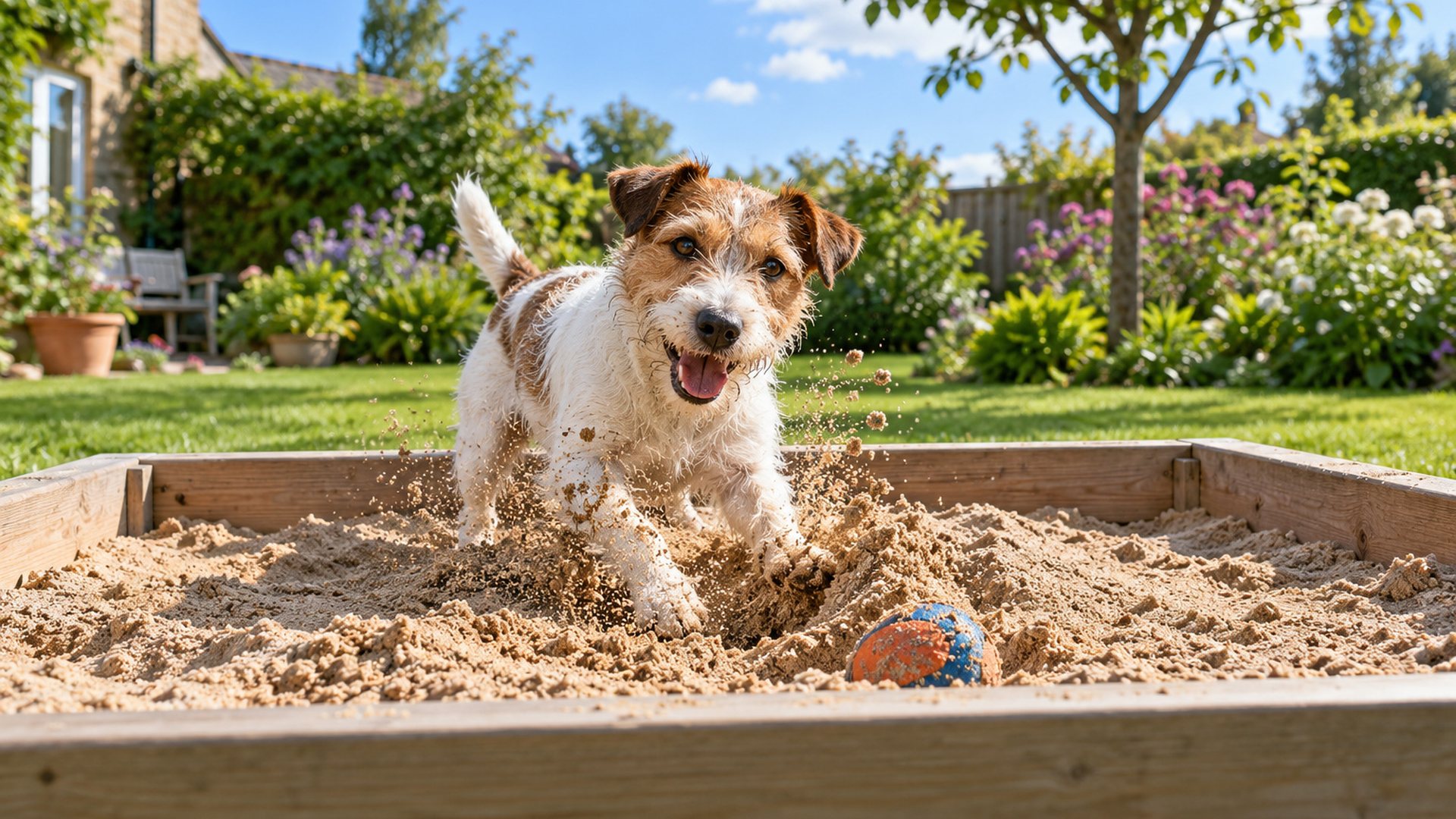
The kindest and most reliable way to stop a dog from digging in the wrong places is to work out why they dig, meet that need another way, and give them a “yes” place to dig, such as a sandpit, where digging is rewarded. Punishment, deterrent sprays and tricks like filling holes with water do not remove the reason for digging and can make a dog anxious, so this guide leaves them out.
Below you will find the main reasons dogs dig holes (and dig in their beds), a simple way to work out which one applies to your dog, step-by-step instructions for building a dig pit, and humane ways to keep a dog from digging under the fence.
At a glance
- Digging is normal dog behaviour. Some breeds, including many terriers and Dachshunds, were bred for it.
- The most common reasons are fun, boredom, heat, hiding treasures, chasing burrowing animals and trying to escape.
- A well-placed dig pit with buried toys gives your dog a legal outlet; reward every dig there.
- Meet the underlying need: more exercise and enrichment, shade and water, company, or secure fencing.
- Reward-based methods are recommended by the American Veterinary Society of Animal Behavior for all training and behaviour problems.
Why do dogs dig?
To a dog, digging is not naughty. It is useful, self-rewarding and often great fun. Animal welfare groups such as Pasadena Humane list the usual reasons as exercise and fun, relieving boredom or stress, stashing toys and treats, finding buried things, reaching cool soil and escaping under fences. Understanding which reason drives your dog is the key to choosing the right fix.
Breed and drive
Terriers, Dachshunds and some hounds were developed to dig after burrowing animals, and northern breeds such as Huskies often dig cool hollows to lie in. For these dogs, digging is a deep-seated behaviour. You will get far further by giving it an outlet than by trying to remove it.
Boredom and excess energy
A young or active dog left in the garden with nothing to do will often invent a hobby, and digging is a favourite. If holes appear mostly when your dog is alone, or on days with little exercise, boredom is a likely cause.
Heat and comfort
Dogs dig shallow beds to reach cooler earth in hot weather, often in shady spots near the house or under bushes. In cold weather some dig to make a sheltered nest.
Hunting and smells
Holes along a line, near tree roots or in one patch of lawn can mean your dog has detected moles, mice, insects or other burrowing animals. Fertilisers like blood and bone and fresh compost can also draw a dog to dig.
Hiding treasures
Some dogs bury chews, bones or toys to “save” them, then dig them up later.
Escape
Digging along the fence line usually means your dog wants to get somewhere: to a dog or person next door, to roaming wildlife, to find you, or away from something that frightens them, such as fireworks. Escape digging can be a sign of separation distress or fear, which needs a different plan (see easing separation anxiety in dogs).
Why do dogs dig in their beds?
Scratching and circling on a bed or blanket before lying down is a very common, normal behaviour. Dogs appear to be arranging their bedding into a comfortable nest, and it may also help them settle and spread their scent. It is rarely a problem. Give your dog a bed that can cope with a bit of scratching, and only check with your vet or a qualified behaviour professional if bed digging becomes frantic, constant or comes with other signs of stress. The guide to signs of stress in dogs can help you tell the difference, and why dogs do the things they do covers other odd but normal habits.
Work out your dog’s reason
| What you notice | Likely reason | Best first fix |
|---|---|---|
| Holes in random spots, digging looks playful | Fun, energy, breed drive | Dig pit plus more exercise and play |
| Digging mainly when left alone | Boredom, or possibly distress | Enrichment before and during alone time; check for separation distress |
| Shallow hollows in shade, on hot days | Cooling down | Shade, a raised cooling bed, water, and time indoors in heat |
| Holes along a line or near roots | Hunting burrowing animals or insects | Supervise, redirect to scent games, address the wildlife humanely |
| Digging near the fence, often at one spot | Escape or wanting to reach something | Secure the fence base, reduce triggers, supervise |
| Digging in fresh garden beds or compost | Interesting smells | Fence off beds, store fertiliser and compost out of reach |
| Digging and then burying chews | Caching treasures | Let them bury in the dig pit; offer chews indoors |
How to build a dig pit (dog dig box)
A dig pit gives your dog a place where digging is not just allowed but rewarded. Pasadena Humane recommends making it big enough for your dog to stretch out and turn around, filling it with sand or soil, and using toys and treats to encourage digging there.
- Pick the spot. Choose somewhere your dog already likes to dig, ideally partly shaded. Many dogs pick the coolest corner of the garden.
- Mark the edges. Use a child’s sandpit, a shallow raised frame of untreated timber, or simply a clearly marked area of soil. Clear edges help your dog learn where the “yes” zone is.
- Fill it. Use clean play sand or loose, untreated soil mixed with a little sand so it is easy to dig. Avoid treated timber, chemicals and anything with sharp pieces.
- Load it with treasure. Bury a favourite toy or a few treats just under the surface while your dog watches.
- Invite and reward. Encourage your dog to dig, and praise or treat the moment they find the toy. Use a cue such as “dig it” if you like.
- Make it harder over time. Bury items a little deeper and in different spots, and sometimes bury things when your dog is not watching so the pit becomes a place to check.
- Keep it fresh. Turn the sand regularly, dampen it in hot weather so it holds shape, and cover it when not in use if neighbourhood cats might use it.
- Redirect kindly. If your dog starts digging elsewhere, calmly call them to the pit and reward digging there. No scolding needed.
If you do not have a garden, a large, sturdy box or a shallow tub filled with clean shredded paper, fleece strips or ball-pit balls with treats hidden inside gives a similar outlet indoors.
Meet the need behind the digging
A dig pit works best alongside changes that address your dog’s main reason for digging.
- More daily activity. Walks, sniff time and play suited to your dog’s age and breed. The guide on how much exercise a dog needs gives a starting point.
- Brain work. Ten minutes of sniffing or problem-solving can tire a dog as much as a longer walk. Try scent work at home, puzzle feeders or ideas from the list of dog enrichment ideas.
- Comfort. Shade, fresh water and a raised cooling bed for hot days; a sheltered, warm resting spot for cold days. Bring your dog inside in extreme weather.
- Company. Many dogs dig less when they are not left outside alone for long periods. Supervised garden time is easier to manage than unsupervised hours.
- Training an alternative. Reward your dog for lying on a mat, playing with a toy or coming to you in the garden. Reward-based methods are explained in positive reinforcement dog training.
How to keep dogs from digging under the fence
Fence digging needs two things at once: making the fence secure so your dog stays safe, and reducing the reason they want to get out.
Secure the fence base
- Bury mesh along the fence line. Pasadena Humane suggests reinforcing the fence line, for example by burying chicken wire. Fix it securely to the bottom of the fence and bend it inwards along the ground (an “L” shape) under a layer of soil. Make sure cut ends point down or away and are well covered so they cannot catch paws or noses.
- Add a solid strip. Pavers, a concrete footing, sleepers or large stones laid along the base make digging there difficult.
- Plant a buffer. A garden bed with dog-safe, robust plants a little way in from the fence can create distance from the boundary.
- Check regularly. Walk the fence weekly to spot new holes or loose sections.
Reduce the reason to escape
- Block the view of triggers (dogs, cats, wildlife, passers-by) with screening if your dog is fixated on them.
- Meet social needs with more time together and, if your dog enjoys it, safe play with familiar dogs.
- If your dog digs out when frightened, for example during storms, keep them indoors at those times and work on noise fear with kind, gradual steps.
- If your dog digs out whenever left alone, speak to your vet or a qualified, reward-based behaviour professional, as this can point to separation distress.
Whatever else you do, make sure your dog is microchipped with up-to-date contact details and wears identification where local rules require it, in case they do get out.
What not to do
Forum answers often suggest harsh fixes. These are best avoided, because they can frighten or hurt your dog, damage your relationship, and do nothing about the reason your dog is digging. The American Veterinary Society of Animal Behavior recommends only reward-based methods for training and behaviour problems, noting there is no evidence that aversive methods are needed or more effective.
| Common advice | Why to skip it | Kinder alternative |
|---|---|---|
| Fill the hole with water and put the dog’s head in it | Frightening and cruel; teaches fear of you, not where to dig | Redirect to the dig pit and reward |
| Bury the dog’s poo or chilli in holes | Unhygienic or irritating; dogs simply dig somewhere else | Fence off favourite spots and offer a better place |
| Deterrent sprays, motion-activated sprays or noise devices | Can startle and stress dogs and may add fear to the garden | Supervise, manage access and meet the need |
| Shouting or punishing after you find a hole | Dogs cannot connect punishment with something done earlier | Prevent unsupervised digging and reward good choices |
| Electronic or shock fences | Aversive; not recommended | Secure physical fencing and supervision |
Common mistakes
- Only filling holes. The dog’s need is still there, so a new hole appears. Pair filling with a dig pit and enrichment.
- Making the dig pit boring. An empty sand patch is less exciting than your flower bed. Keep burying treasures.
- Leaving fertiliser, compost or bone meal accessible. These smell irresistible and some garden products can be harmful if eaten.
- Ignoring heat. A dog digging cool hollows needs shade and water, not a deterrent.
- Missing escape signs. Fence digging can point to fear or distress; address the emotion as well as the fence.
- Expecting overnight change. Habits take a few weeks to shift. Consistency matters more than intensity.
Your two-week digging plan
- Days 1 to 2: watch and note when, where and how your dog digs. Identify the main reason.
- Days 2 to 3: build the dig pit and secure any fence weak spots.
- Days 3 to 14: bury treasures daily, reward every dig in the pit, and supervise garden time.
- Every day: add one extra enrichment session and make sure exercise suits your dog.
- Throughout: fence off favourite “wrong” spots until the new habit is strong.
- End of week 2: review. If escape digging or distress continues, ask your vet or a reward-based behaviour professional for help.
Sources this guide draws on: the American Veterinary Society of Animal Behavior position statement on humane dog training (2021) and Pasadena Humane guidance on dogs who dig.
Handy gear for this guide
Practical picks we think suit this topic. As an Amazon Associate, Mind A Dog earns from qualifying purchases, at no extra cost to you. Prices and availability are set by Amazon and may vary by country.
- KONG Classic Stuffable Dog Toy (Medium)
Natural rubber toy you can fill with food and freeze for a long, settled chew.
View on Amazon - Outward Hound Nina Ottosson Dog Brick Puzzle
A level 2 treat puzzle that keeps a busy mind occupied indoors.
View on Amazon - LUKITO Lick Mat for Dogs (2 Pack)
Spread a little dog-safe food over it for a quiet licking activity.
View on Amazon
Frequently asked questions
Why do dogs dig holes?
Dogs dig for fun, to burn energy, to cool down, to hide or find treasures, to chase burrowing animals, and sometimes to escape. Some breeds, such as terriers and Dachshunds, have a particularly strong drive to dig.
What is the best way to stop a dog from digging in the garden?
Knowing how to stop a dog from digging starts with working out why your dog digs. Then meet that need: more exercise and enrichment, shade and water, or secure fencing. Give them a dig pit with buried toys and reward digging there, and supervise garden time while the new habit forms.
Do dogs grow out of digging?
Some young dogs dig less as they mature and calm down, but dogs with a strong breed drive often keep enjoying it. Giving a legal outlet usually works better than waiting for them to grow out of it.
Is a dig pit just teaching my dog to dig more?
No. It channels a natural behaviour into one place. Most dogs prefer a spot where digging pays off with toys and praise, so the pit tends to draw digging away from the lawn and beds.
What is the best way to stop a dog digging under a fence?
Secure the base with buried mesh, pavers or a concrete footing, check it regularly, and reduce the reason your dog wants to leave, such as boredom, loneliness, fear or a trigger next door. Supervise until you are confident the fence is secure.
Digging is your dog telling you something: they are bored, hot, excited by a smell, or keen to get somewhere. Listen to the reason, give them a happy place to dig, and keep your garden safe with management rather than punishment. You will save your lawn and build a stronger bond along the way.