
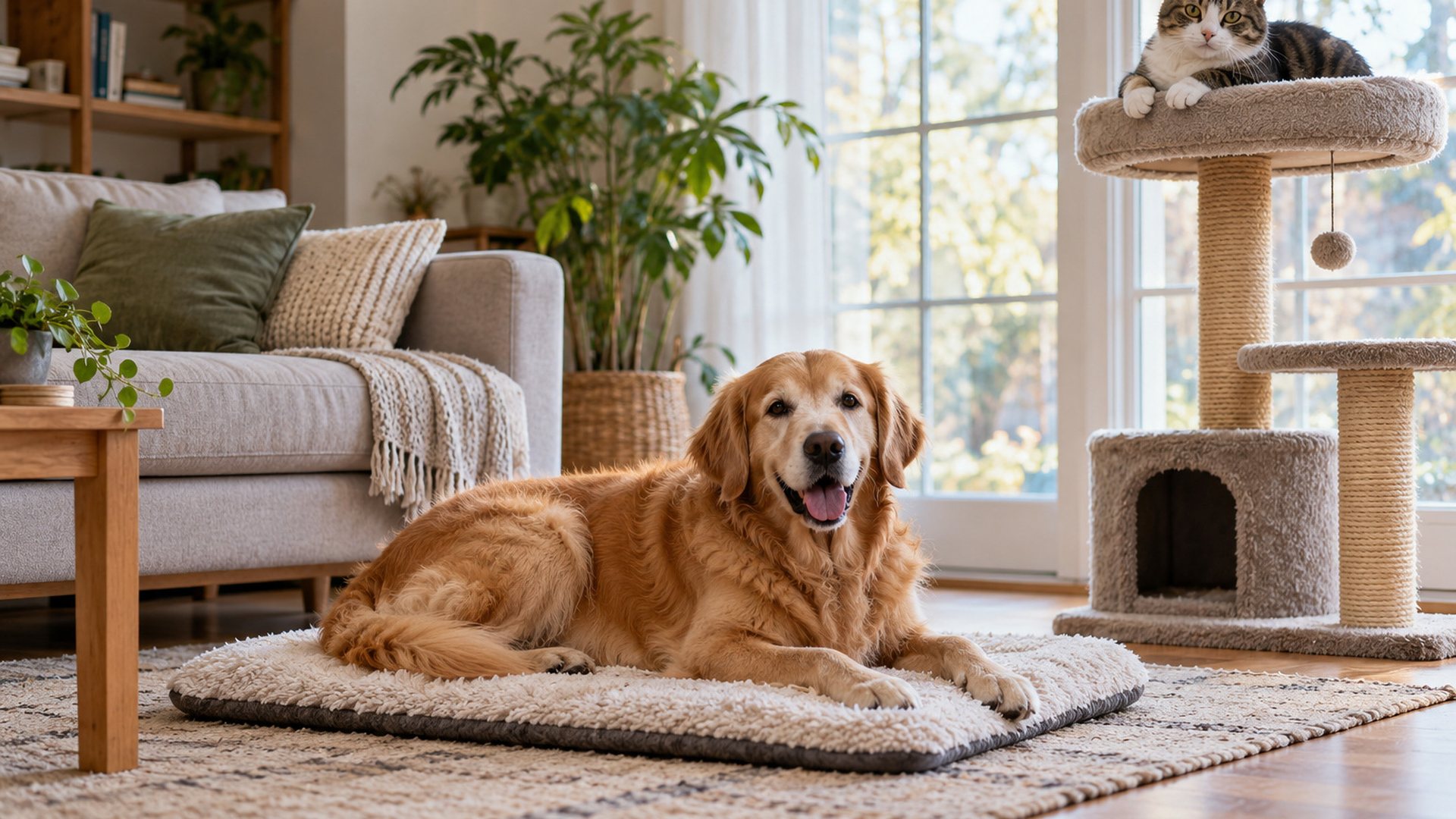
To introduce a cat to a dog, start by keeping them in separate areas and swapping their scents, then let them see each other through a tall gate while good things happen, and only then allow short, supervised meetings with the dog on a loose lead and the cat free to leave. The whole process is gradual and reward-based: you move to the next stage only when both animals are relaxed at the current one. Some pairs settle in days; others need weeks or months.
This article contains affiliate links. As an Amazon Associate I earn from qualifying purchases, at no extra cost to you. Affiliate disclosure.
This guide gives you a stage-by-stage plan, the body-language signs that tell you to slow down, how to adjust for puppies, kittens and dogs with a strong chase instinct, and when to bring in professional help.
At a glance
- Safety comes first. Dogs can injure a cat very quickly, and cats can injure dogs. Keep them apart whenever you cannot supervise.
- Go in stages: separate rooms and scent swapping, then a see-through barrier, then short lead-on meetings, then supervised freedom.
- The cat needs an escape plan. High shelves, cat trees and a dog-free room let the cat choose distance.
- Reward calm, never punish. Treat and praise the dog for looking at the cat and turning back to you; never use force, scolding or aversive tools.
- Slow down at the first sign of stress from either animal, and get professional help if the dog stays fixated on the cat.
Before you start: is this a good match?
A little honesty at the start saves a lot of stress later. The PDSA, a UK veterinary charity, points out that cats are naturally fairly solitary, so a dog is not “company” for a cat, and that a very nervous cat, or one with stress-related health problems, may be happiest as the only pet. A dog with a strong urge to chase small animals may not be safe with a cat at all.
Things that tend to help:
- Animals that grew up around the other species when young.
- A calm adult dog that already responds well to its name and to simple cues such as sit and settle.
- A confident cat that has somewhere high to go.
- For a rescue animal, a history from the shelter. Many rescues can tell you whether a dog has been assessed around cats.
Make sure both pets are healthy and up to date with vaccinations and parasite control before they share space. If you are adopting a dog, the site’s guide to bringing home a rescue dog covers the first weeks.
Set up your home first
- Give the cat a sanctuary room the dog cannot enter, with food, water, a litter tray, a bed, a scratching post and a hiding place. Best Friends Animal Society suggests choosing a room the dog does not need, such as a spare room rather than the room where the dog sleeps.
- Add height everywhere. Cat trees, cleared shelves and the tops of furniture let the cat watch from safety. Cats feel far more secure when they can look down on a new arrival.
- Fit a tall baby gate or a gate with a cat door. Check the cat cannot easily jump over it or squeeze through when you do not want it to, and that the dog cannot push it over.
- Move the litter tray and cat food out of the dog’s reach. Dogs often raid both, and a cat ambushed at the litter tray may start toileting elsewhere.
- Give the dog its own settling spot and something to do there, such as a chew or a food toy, so it has an easy, rewarding alternative to watching the cat.
How to introduce a cat to a dog: the stage-by-stage plan
Each stage has a simple “ready to move on” test. If either animal fails it, stay at that stage longer or step back one stage. There is no prize for speed, and one frightening encounter can undo weeks of progress.
| Stage | What happens | Ready to move on when |
|---|---|---|
| 1. Separate and scent swap | Animals live apart; swap bedding and scent cloths; feed on opposite sides of a closed door | Both eat normally near the door and sniff the other’s scent calmly |
| 2. Sight through a barrier | Short sessions where they see each other through a tall gate; dog rewarded for calm | Dog can glance at the cat and turn back to you; cat stays relaxed or curious |
| 3. Lead-on meetings in the same room | Dog on a loose lead and settled; cat free to move, climb or leave | Dog stays relaxed for whole sessions; cat moves around normally |
| 4. Supervised freedom | Dog off lead (or trailing a lightweight line indoors) while you watch closely | Several calm sessions in a row with no chasing |
| 5. Everyday life | Shared time while supervised; separated when you are out or busy | Ongoing; keep the cat’s escape routes and dog-free space for good |
Stage 1: Separate rooms and scent swapping
Let the new animal settle in its own space first. Then start exchanging smells. The PDSA suggests rubbing a clean cloth gently on the cat’s cheeks and another on the dog, then placing each cloth near the other animal’s bed. Swap bedding or toys too. Feeding each pet on its own side of a closed door helps link the other’s scent with something pleasant. Allow at least a few days for this stage, longer if either animal seems unsure.
Stage 2: First sight through a barrier
Choose a quiet time when the dog has already been walked and is relaxed. With the dog on a lead behind the gate and the cat free to approach or leave, keep the first sessions very short, just a minute or two. Every time the dog looks at the cat and then looks back at you, mark it with a word such as “yes” and give a treat. Best Friends describes this as a “Look at That” approach: the dog learns that seeing the cat predicts good things from you, and that turning away is the rewarded choice.
If the dog stares, whines or lunges, you are too close or the session is too long. Increase the distance, end on a calm note and try again later. If the cat stays to watch, it can earn a tasty treat or a favourite game well away from the gate. Keep treats away from the barrier itself so neither animal has a reason to guard food. Teaching the dog to settle on a mat beforehand makes this stage much easier.
Stage 3: Short meetings with the dog on a lead
When the dog can stay relaxed behind the gate, open it or meet in a room where the cat has plenty of high escape routes. Best Friends recommends two people where possible: one to watch and handle the dog, one to watch the cat. Keep the dog’s lead loose, ask for a sit or settle and reward it generously for staying calm. Never hold the cat in your arms to “meet” the dog and never block its way out; a cat that feels trapped is far more likely to panic or lash out.
Keep the room quiet, with the TV off and visitors elsewhere. End each session while both animals are still calm, and build up the time gradually over many sessions.
Stage 4: Supervised freedom
Only let the dog off the lead around the cat once you are confident it will not chase. Some owners use a lightweight trailing line indoors at first so they can step on it if needed, but only when they are right there watching. Keep sessions supervised and calm, and step back to Stage 3 if the dog starts to follow or stalk the cat.
Stage 5: Living together
Even when they seem to be friends, keep them apart when you are out or cannot watch. Leave the cat’s dog-free room and high spaces in place for good, and keep feeding and litter areas separate. Watch closely in new situations too: Best Friends notes that a dog that is calm indoors may still chase a cat outside.
Body language: when to go slower
Reading both animals is the most important skill in this whole process. If you are not yet confident with dog signals, the guides to reading dog body language and spotting signs of stress in dogs are worth reading first.
| Going well | Slow down or step back | |
|---|---|---|
| Dog | Loose body, soft eyes, can sniff the air then turn away, takes treats gently, responds to its name | Stiff body, hard stare or fixation, freezing, whining, barking, lunging, stalking, ignoring its name or refusing food |
| Cat | Moves around normally, eats, grooms, watches with relaxed ears, approaches out of curiosity | Ears flattened, tail swishing or puffed, arched back, hissing, hiding for long periods, not eating or not using the litter tray |
A dog that will not take a favourite treat is usually too aroused to learn. Increase distance and keep sessions shorter. A cat that hides for long periods, stops eating or toilets outside the tray is under real stress; the PDSA notes that stress can cause health problems in cats, so give the cat more space and time and talk to your vet if it continues.
Puppies, kittens and strong chasers
How to introduce a puppy to a cat
Puppies are not usually dangerous in intent, but they are bouncy and can quickly learn that chasing the cat is a fun game. Best Friends advises using gates and a lead until the puppy has more self-control. Reward the puppy for calm, give it plenty of its own play and chew outlets, and make sure the cat can always get out of reach. Gentle, positive experiences now are part of good puppy socialisation.
How to introduce a kitten to a dog
Kittens are small, fast and fragile, and their quick movements can excite even a gentle dog. Go more slowly than you would with an adult cat, keep the dog on a lead for longer, and never leave a kitten and dog together unsupervised. Give the kitten low hiding spots as well as high ones.
Dogs with a strong chase instinct
Some dogs, including many sighthounds, terriers and herding breeds, but by no means only them, are strongly driven to chase or stalk small, moving animals. Warning signs include intense staring, freezing, a lowered stalking posture, trembling with excitement and being unable to look away. If you see these, do not progress the introduction. Talk to a qualified reward-based behaviour professional before going further, and accept that some dogs may never be safe sharing space with a cat.
Helpful for introductions: on Amazon
A pressure-mounted gate lets your cat and dog see and smell each other safely during the early stages.
- Regalo Extra Wide Safety Gate: a wide, walk-through gate for doorways (check that your cat can still reach an escape route).
Prices and availability change. Check sizing against your own dog’s measurements and always supervise with new toys or equipment.
Common mistakes
- Rushing the first meeting. Letting them “sort it out” can lead to injury and a lasting fear.
- Punishing the dog for interest. Scolding, lead jerks, spray bottles or aversive collars may suppress signals without changing how the dog feels, and can make the cat seem like a predictor of bad things. Reward calm alternatives instead.
- Holding or cornering the cat. The cat must always be able to leave.
- Feeding them together too soon. Food close to both animals can trigger guarding or fights. Keep bowls and treats apart.
- Leaving them alone together after a few good days. Supervise for weeks, and separate them whenever you are out.
- Forgetting the cat’s needs. A cat that has lost its favourite rooms, litter tray access or quiet spaces will struggle, however good the dog’s manners are.
When to get professional help
Ask for help if the dog stays fixated on the cat after many sessions, if there has been a chase or a scuffle, if either animal seems constantly stressed, or if the cat stops eating or using its tray. Start with your vet, who can check for pain or illness and may refer you to a veterinary behaviourist. A qualified behaviour consultant or trainer who uses only reward-based methods can also coach you in person. The American Veterinary Society of Animal Behavior recommends reward-based training and advises against punishment-based methods; the guide on how to choose a dog trainer explains what to look for, and the introduction to positive reinforcement training covers the basics you will use throughout.
Your introduction checklist
- Cat sanctuary room set up with food, water, litter, bed and hiding spot
- High perches and escape routes in shared rooms
- Tall gate fitted and tested
- Litter tray and cat food out of the dog’s reach
- Dog’s settle spot, chews and food toys ready
- Small, tasty treats on hand and a marker word chosen
- Second person available for early meetings
- A plan to keep them separated when nobody is supervising
Introducing a dog to another dog follows a similar slow, positive approach; see how to introduce a new dog safely.
Sources this guide draws on: Best Friends Animal Society guidance on introducing dogs and cats; the PDSA’s advice on introducing cats and dogs; and the American Veterinary Society of Animal Behavior position on humane, reward-based training.
Frequently asked questions
How long does it take for a cat and dog to get along?
There is no fixed timeline. Best Friends notes that some dogs lose interest in a cat within hours, while others need days, weeks or months. Let the animals’ body language, not the calendar, decide when you move to the next stage.
Should I let my cat and dog fight it out?
No. A dog can seriously injure or kill a cat very quickly, and cats can injure dogs’ eyes and faces. A frightening encounter can also set the relationship back a long way. Keep early meetings controlled and step back at the first sign of tension.
Is it easier to introduce a kitten or an adult cat to a dog?
Kittens often adapt more easily to new companions, but they are also more vulnerable and their quick movements can trigger chasing. Adult cats with past positive experience of dogs can settle well. Either way, the same gradual stages and close supervision apply.
Can a dog with a high prey drive live with a cat?
Some can, with careful management and professional guidance, but some never will be safe. If a dog stares, stalks or cannot look away from the cat despite gradual training, stop progressing and speak to a qualified reward-based behaviour professional or your vet.
Should I use treats during introductions?
Yes, to reward the dog for calm choices, such as looking at the cat and then back at you. Keep treats away from the cat and away from the barrier so neither animal has a reason to guard food, and the PDSA suggests avoiding treats around both animals once the barrier comes down until they are comfortable together.
A slow, kind introduction gives your cat and dog the best chance of a peaceful, happy life together. Protect the cat’s escape routes, reward every calm moment and let the animals set the pace.