
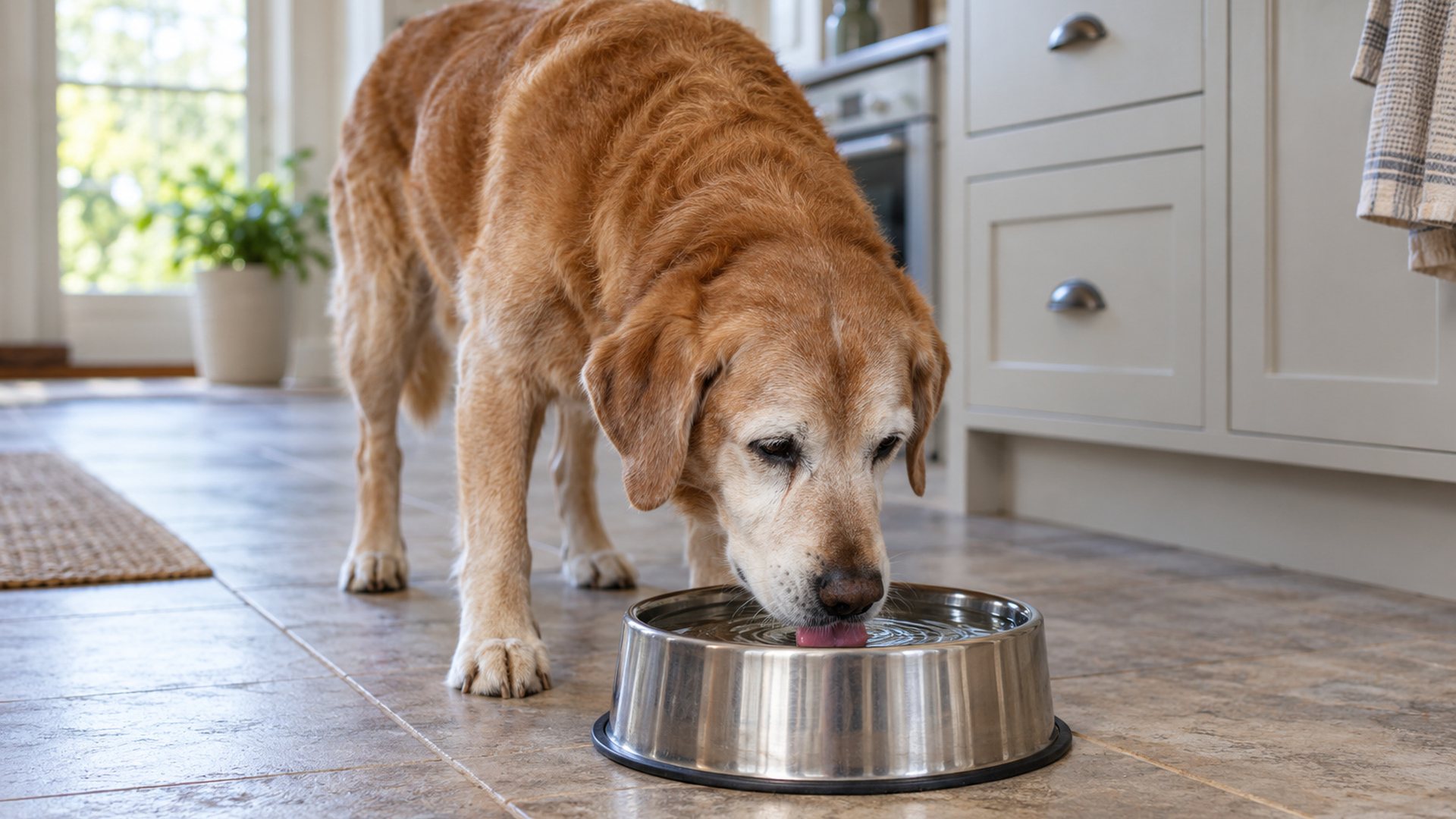
Kidney disease in dogs usually starts quietly: the first signs most owners notice are a dog drinking more water and needing to wee more often, sometimes alongside slow weight loss or a pickier appetite. Because healthy kidneys have a lot of spare capacity, a dog can lose a large share of kidney function before looking unwell, so any lasting change in thirst or urination is worth a vet visit rather than a wait-and-see. Your vet confirms kidney disease with blood and urine tests, then grades it so you both know where things stand.
This guide explains the early and later signs of kidney disease and kidney failure in dogs, the difference between sudden (acute) and long-term (chronic) problems, what each test your vet may run actually measures, and how the IRIS staging system works in plain words. It does not give treatment or medication advice: that belongs with your vet, who can see your dog’s results.
At a glance
- Earliest common signs: drinking more, weeing more (including accidents or night-time toilet trips) and gradual weight loss.
- Later signs: poor appetite, vomiting, lethargy, bad breath, mouth ulcers and pale gums.
- Sudden kidney injury is an emergency: if your dog may have eaten grapes, raisins or antifreeze, or suddenly stops weeing, call a vet straight away.
- Diagnosis needs both blood and urine: creatinine, SDMA, urine specific gravity, urine protein and blood pressure each tell your vet something different.
- IRIS staging (1 to 4) describes how much kidney function remains, and is only applied once chronic kidney disease is confirmed and stable.
What the kidneys do and why problems hide
A dog’s kidneys filter waste out of the blood, decide how much water to keep or release, and help balance minerals such as sodium, potassium and phosphorus. They also help regulate blood pressure and support red blood cell production. When kidney tissue is damaged, the remaining tissue works harder to compensate. That is why a dog with early kidney disease can seem completely normal at home.
According to the VCA Animal Hospitals owner guide to chronic kidney disease, waste products usually only build up enough to cause obvious illness once roughly two-thirds of kidney tissue has stopped working. Until then, the main clue is often a change in water balance: the kidneys lose their ability to concentrate urine, so the dog makes more, weaker urine and drinks more to keep up.
Acute vs chronic kidney disease
Owners often search for “kidney failure in dogs” and “kidney disease in dogs” as if they were one thing. Vets separate them into two broad patterns, and the difference matters because one is an emergency.
| Feature | Acute kidney injury | Chronic kidney disease (CKD) |
|---|---|---|
| How fast it develops | Hours to days | Months to years |
| Typical triggers | Toxins (such as grapes, raisins or antifreeze), some infections, blocked urine flow, severe dehydration or shock | Ageing kidneys, inherited or congenital problems, long-term inflammation, past infections, stones, some cancers |
| What owners notice | Sudden vomiting, collapse, weakness, little or no urine, refusing food | Gradual increase in thirst and urination, slow weight loss, coat and appetite changes |
| Urgency | Emergency: see a vet the same day, ideally immediately | Book a prompt appointment; earlier diagnosis gives more options |
| Outlook | Some dogs recover partly or fully with fast care | Long-term condition that vets monitor and manage over time |
If you think your dog has eaten something toxic, do not wait for signs and do not try home remedies. Ring your vet or an emergency clinic straight away and follow their instructions. The guide to which human foods are safe for dogs lists common kitchen hazards, including grapes and raisins.
Early signs of kidney disease in dogs
Early signs are easy to put down to hot weather, age or a change in routine. Watch for patterns that last more than a few days:
- Drinking more than usual: the water bowl empties faster, or your dog seeks out puddles, taps or the toilet.
- Weeing more often or in larger amounts: bigger wet patches on the grass, asking to go out at night, or accidents in a dog that was reliably house-trained.
- Pale, watery urine: urine that looks almost clear most of the time can reflect reduced concentrating ability.
- Gradual weight loss: often noticed as a bonier back or hips, sometimes before appetite changes.
- Fussier eating: leaving some meals, or wanting only certain foods.
None of these signs is specific to kidney disease. Increased thirst and urination can also come from diabetes, hormonal conditions, liver disease, urinary infections and some medicines. That is exactly why the next step is testing, not guessing.
Signs of kidney failure in dogs (later stages)
As kidney function falls further, waste products build up in the blood and the signs become broader. The VCA owner guide lists poor appetite, lethargy, vomiting, diarrhoea, pale gums from anaemia, bad breath and mouth ulcers among the later signs. Owners also describe a dull coat, weakness and a dog that simply seems “flat”.
Bad breath has many causes, and dental disease is far more common, so do not assume the kidneys are to blame. The guide to dog dental care explains what normal and abnormal mouths look like. Equally, repeated vomiting has many possible causes; the article on a dog throwing up yellow or foam covers when vomiting needs a vet the same day.
What your vet will check
Your vet will start with a history (water intake, urination, appetite, weight, diet, medicines, any possible toxin exposure) and a full physical examination, including feeling the kidneys, checking hydration, gums and mouth, and weighing your dog. Then come the tests. Here is what each one measures in plain words.
| Test | What it measures | Why it helps |
|---|---|---|
| Creatinine (blood) | A waste product from muscle that healthy kidneys filter out | The long-standing main marker of kidney filtering; can read low in thin dogs with little muscle |
| SDMA (blood) | A small molecule cleared almost entirely by the kidneys | Tends to rise earlier than creatinine and is less affected by muscle mass |
| Urea or BUN (blood) | A protein waste product | Adds to the picture but is affected by diet and hydration |
| Urine specific gravity | How concentrated the urine is | Dilute urine in a dog that is not over-drinking for another reason can be an early clue |
| Urine protein (UPC ratio) | How much protein leaks into urine compared with creatinine | Persistent protein loss is used to sub-stage CKD |
| Blood pressure | Pressure in the arteries | High blood pressure can accompany kidney disease and can damage eyes, heart, brain and kidneys |
| Phosphorus, potassium, red cell count | Minerals and anaemia | Show how the body is coping with reduced kidney function |
| Ultrasound or X-rays | Kidney size and shape | Look for stones, blockages, cysts or masses |
| Urine culture | Bacteria in urine | Checks for infection, which can affect or mimic kidney problems |
SDMA in plain words
SDMA (symmetric dimethylarginine) is a blood marker developed for routine use by the laboratory company IDEXX. The company’s published information states that SDMA rises on average when about 40 percent of kidney function is lost, and sometimes with as little as 25 percent, while creatinine may not rise until up to 75 percent is lost. The International Renal Interest Society (IRIS) uses a persistently raised SDMA as supporting evidence of chronic kidney disease even when creatinine is still in the normal range. One high reading on its own is a reason to retest, not a diagnosis.
Why the urine sample matters so much
Blood results alone can be misleading. A dog that is dehydrated can have raised creatinine with perfectly healthy kidneys, because less blood is reaching them. Concentrated urine in that situation tells your vet the kidneys are working; dilute urine tells a different story. Bring your dog without a recent toilet stop if your vet wants a first-morning sample, or ask whether they would like you to collect one at home in a clean container.
IRIS staging explained without the jargon
Once chronic kidney disease has been diagnosed, vets in many countries use the staging system from the International Renal Interest Society. IRIS states that staging should only be applied when CKD is confirmed and the dog is stable, which often means repeating blood tests a few weeks apart. Dogs recovering from a sudden kidney injury may need monitoring for around three months before they can be staged fairly.
Staging is based mainly on fasting creatinine and SDMA, measured on more than one occasion. Stage 1 means kidney disease is present but creatinine is still in the normal range; stage 4 means kidney function is severely reduced. IRIS reviews the exact cut-off values from time to time, so ask your vet which figures they are using rather than relying on a chart found online.
| IRIS stage | What it means in plain words | How dogs often seem |
|---|---|---|
| Stage 1 | Kidney damage is present, but filtering markers are near normal | Usually no obvious signs; found through screening or urine changes |
| Stage 2 | Mild loss of kidney function | Often well, perhaps drinking and weeing more |
| Stage 3 | Moderate loss of kidney function | Signs of illness are more likely, such as appetite and weight changes |
| Stage 4 | Severe loss of kidney function | Dogs are often unwell and need close veterinary care |
The two sub-stages
IRIS also sub-stages every dog by two extra measurements. The first is urine protein: dogs are classed as non-proteinuric, borderline proteinuric or proteinuric, and IRIS advises confirming protein loss on repeated samples over at least two weeks after ruling out other causes such as infection. The second is blood pressure, which IRIS recommends measuring in all dogs with CKD, with repeated readings needed to confirm it is persistently high. These sub-stages matter because protein loss and high blood pressure each influence how the disease is likely to progress and what your vet will want to monitor.
Checklist: what to do if you suspect kidney problems
- Measure water intake for two or three days. Fill the bowl with a known amount each morning and note how much you top up. Your vet will find real numbers far more useful than “a lot”.
- Note toilet habits. How often, how much, any accidents, any straining, and the colour of the urine.
- Weigh your dog if you can, or note any change in how ribs and hips feel.
- Write down everything your dog eats and takes, including treats, chews, supplements and any medicines.
- Think about possible toxin exposure in the past week, such as grapes, raisins, antifreeze or human medicines left within reach.
- Book a vet appointment and ask whether they would like a urine sample brought in.
- Ask questions at the appointment: which tests are being run, what each result means, when retesting is planned and what signs mean you should call sooner.
- Keep copies of results so you can track changes over time.
Living with a dog with chronic kidney disease
Management is always tailored by your vet to your dog’s stage, sub-stages and other health issues. It may include a change of diet, regular rechecks of blood, urine and blood pressure, and attention to hydration. Never restrict water for a dog with kidney disease unless your vet specifically tells you to: these dogs rely on drinking more to make up for urine they cannot concentrate. Make sure fresh water is always available, including on walks and in the car.
Diet changes should come from your vet, because the right food depends on test results. The broader guide on what to feed your dog explains how commercial diets are formulated. Because CKD is often a condition of older age, the guide to caring for a senior dog covers comfort, mobility and routine changes that help as dogs age, and the article on whether dog insurance is worth it explains how long-term conditions are usually treated by policies.
Common mistakes
- Taking water away from a dog that drinks a lot. This can cause dangerous dehydration. Measure intake and tell your vet instead.
- Waiting for appetite loss. By the time a dog stops eating, a large share of kidney function may already be lost.
- Treating one blood result as the whole story. Hydration, muscle mass and recent meals affect results. Repeat tests and urine checks give the real picture.
- Using a staging chart from the internet. Cut-off values are revised, and labs report in different units. Let your vet interpret your dog’s numbers.
- Changing diet or adding supplements without advice. Some products are unsuitable for dogs with kidney disease. Ask first.
- Skipping senior health checks. Many vets suggest routine blood and urine screening for older dogs; ask how often your vet recommends it.
- Waiting out a suspected poisoning. With grapes, raisins or antifreeze, signs can lag behind the damage. Call a vet immediately.
When to call the vet
Call the same day, or go to an emergency clinic, if your dog is vomiting repeatedly, collapses, seems very weak, produces little or no urine, or may have eaten something toxic. Book a prompt appointment for ongoing increased thirst or urination, unexplained weight loss, new accidents, or bad breath with reduced appetite. If you are unsure which category a sign falls into, the guide on how to know when to call the vet walks through the decision.
Related guide: Why Is My Dog Drinking So Much Water? Simple Signs to Watch.
Sources this guide draws on: International Renal Interest Society (IRIS) staging and treatment guidelines; VCA Animal Hospitals owner guide to chronic kidney disease in dogs; IDEXX published information on the SDMA test.
Handy gear for this guide
Practical picks we think suit this topic. As an Amazon Associate, Mind A Dog earns from qualifying purchases, at no extra cost to you. Prices and availability are set by Amazon and may vary by country.
- EVERLIT Pet First Aid Kit (95 Pieces)
Bandages, gauze and basics in one bag for home, car or hikes while you contact your vet.
View on Amazon - Hepper Bio-Enzyme Pet Stain and Odour Spray
Enzyme cleaner for accidents on carpets, floors and bedding.
View on Amazon - Portable Dog Water Bottle with Food Container
Fresh water and a snack on walks and car trips.
View on Amazon
Frequently asked questions
What are the first signs of kidney disease in dogs?
The most common early signs are drinking more water and weeing more often, sometimes with accidents or night-time toilet trips. Gradual weight loss and a fussier appetite may follow. Many dogs show no signs at all in early disease, which is why blood and urine screening is useful for older dogs.
Can a dog recover from kidney failure?
It depends on the type. Some dogs with acute kidney injury recover partly or fully if they receive fast veterinary care. Chronic kidney disease does not reverse, but many dogs live comfortably for a long time with veterinary management and regular monitoring. Your vet can give an outlook based on your dog’s stage and results.
Which dogs are most at risk?
Chronic kidney disease is more common in older dogs, and some breeds have inherited kidney conditions. Any dog can suffer acute kidney injury from toxins, some infections or a blocked urinary tract. Ask your vet whether your dog’s breed or history calls for earlier screening.
Is the SDMA test better than creatinine?
Neither replaces the other. SDMA tends to rise earlier and is less affected by muscle mass, while creatinine has a long track record. IRIS uses both, together with urine tests and blood pressure, to diagnose and stage chronic kidney disease.
How is kidney disease in dogs diagnosed?
Through a combination of history, physical examination, blood tests (creatinine, SDMA, urea, minerals and red cells), a urine test (concentration, protein and sometimes culture) and blood pressure measurement. Imaging may be added to look at kidney size and shape. Results are usually repeated to confirm the problem is persistent.
Kidney disease rewards owners who notice small changes early. Keep an eye on the water bowl, take real measurements, and bring them to your vet: those simple notes are often the first step to catching the problem while your dog still feels well.