Yes, plain peanut butter is generally safe and can be a good occasional treat for most dogs, as long as it contains no xylitol and is given in small amounts. Xylitol, a sweetener also sold as birch sugar or wood sugar, can drop a dog’s blood sugar dangerously within an hour, so the label check matters more than the brand. The best jar is usually the simplest one: peanuts, maybe a little salt, and nothing else.
This guide shows you how to read a peanut butter label in under a minute, how much fits into your dog’s daily treat allowance, which kinds to skip, and exactly what to do if you think your dog has eaten something containing xylitol.
At a glance
- Xylitol is the deal-breaker. Check every jar for xylitol, birch sugar, wood sugar or the additive code E967. If any appear, it is not for dogs.
- Simple is best. Look for peanuts as the main (ideally only) ingredient, with no added sugar or sweeteners and little or no salt.
- It is calorie-dense. One tablespoon of smooth peanut butter is roughly 95 calories, so small dogs need far less than you might think.
- Treats stay under 10%. Peanut butter counts towards the guideline that treats should make up no more than about a tenth of daily calories.
- Suspected xylitol is an emergency. Call your vet, an emergency clinic or an animal poison control service straight away, even if your dog seems fine.
Is peanut butter good for dogs, or just safe?
Peanut butter is best thought of as a useful, well-loved treat rather than a health food. It contains protein, fat, vitamin E and niacin, which is why sources such as the American Kennel Club describe it as fine in moderation. But a complete and balanced dog food already supplies the nutrients your dog needs, so peanut butter adds enjoyment and practical value (filling toys, hiding tablets, rewarding calm behaviour) rather than filling a nutritional gap.
The trade-off is fat. According to USDA nutrition data, smooth peanut butter is about half fat by weight, which is why it is so calorie-dense. For a lean, active Labrador, a fingertip of peanut butter in a toy is a small part of the day. For a toy breed, a dog that is already overweight, or a dog with a history of pancreatitis or other diet-sensitive conditions, the same amount can be a meaningful extra. If your dog has a medical condition or eats a prescription diet, ask your vet before adding any treat.
For a wider view of which people foods are safe, risky or toxic, see the site’s guide to what human foods dogs can eat.
What in peanut butter is bad for dogs?
Xylitol (the dangerous one)
The US Food and Drug Administration explains that dogs absorb xylitol quickly, which triggers a strong release of insulin and a rapid fall in blood sugar (hypoglycaemia). This can begin within 10 to 60 minutes of eating it, and without treatment it can become life-threatening. People do not react this way, which is why a product that is perfectly safe for you can be dangerous for your dog.
Xylitol is not in most peanut butters, but the FDA lists “some peanut and nut butters” among the products that may contain it, along with sugar-free gum and sweets, baked goods, sugar-free desserts, some medicines, chewable vitamins, mouthwash and toothpaste. It appears most often in products marketed as low-sugar, sugar-free, “keto” or “diet”.
Salt, sugar and added oils
These are not poisons in the small amounts found in a lick of peanut butter, but they add up. Added salt is unnecessary for dogs, added sugar adds empty calories, and extra oils (including palm oil, which some brands use to stop the oil separating) raise the fat content further. None of these make a jar dangerous the way xylitol does; they simply make an unsalted, peanuts-only jar the better everyday choice.
Flavoured and “spread” products
Chocolate peanut spreads, honey-roasted versions and peanut butter mixed with other ingredients can carry problems of their own. Chocolate is toxic to dogs (see the guide on what to do if your dog ate chocolate), and mixed spreads may contain sweeteners you would not expect. Treat anything beyond plain peanut butter as a different product that needs its own label check.
Which peanut butter is best for dogs? A side-by-side comparison
| Type of jar | Typical ingredients | Good for dogs? | What to watch |
|---|---|---|---|
| Peanuts-only, unsalted | Peanuts | Best everyday choice | Still calorie-dense; oil may separate, so stir well |
| Standard smooth or crunchy | Peanuts, sugar, salt, vegetable or palm oil | Usually fine in small amounts if no xylitol | Extra salt, sugar and fat; check the label every time |
| Dog-specific peanut butter | Varies by maker | Usually fine | Still read the label and count the calories |
| Reduced-sugar, “keto” or sugar-free | May include xylitol or other sweeteners | Avoid unless the label clearly shows no xylitol | Highest-risk category for xylitol |
| Chocolate or flavoured spreads | Peanuts plus chocolate, honey, sweeteners or flavourings | No | Chocolate is toxic; sweeteners may be present |
| Homemade (just ground peanuts) | Peanuts | Good, if unsalted | Keep portions small; store sealed and use promptly |
Is crunchy peanut butter good for dogs?
Crunchy peanut butter follows the same rules as smooth: no xylitol, minimal salt and sugar, small amounts. Smooth is easier to spread thinly into toys and lick mats and less likely to leave chunks for a fast gulper, so many owners find it more practical, especially for small dogs.
What about brand names?
People often search for whether a particular well-known brand is safe. The honest answer is that the label on the exact jar in your hand is the only reliable guide. Recipes change, and one brand may sell several versions side by side, including reduced-sugar lines. A brand that was xylitol-free last year is not a guarantee for the jar you buy today, and products differ between countries.
How to check a peanut butter label: a 60-second checklist
- Read the full ingredients list, not just the front of the jar. “Natural” and “healthy” are marketing words, not safety promises.
- Look for xylitol by any name: xylitol, birch sugar, wood sugar, or E967 (the additive number used in some countries).
- Be extra careful with “sugar-free”, “no added sugar”, “low sugar”, “keto” or “diet” labels, and check whether the nutrition panel lists sugar alcohols. If you cannot tell which sweetener is used, do not give it.
- Prefer peanuts as the only, or first and main, ingredient.
- Choose unsalted or low-salt where you can.
- Skip chocolate, honey-roasted or mixed spreads.
- Re-check each new jar, even of a brand you have bought before.
- Keep anything with xylitol out of reach, including sugar-free gum, toothpaste and supplements in handbags and on bedside tables.
How much peanut butter can a dog have?
A widely used veterinary guideline, repeated by the American Kennel Club and others, is that treats of all kinds should make up no more than about 10% of a dog’s daily calories. Peanut butter has to fit inside that allowance alongside training treats, chews and table titbits.
A worked example
Say your vet tells you a small adult dog needs about 400 calories a day. Ten percent of that is about 40 calories for all treats combined. One level tablespoon of smooth peanut butter is about 95 calories, so even half a tablespoon would use up more than the whole day’s treat allowance. A thin smear on a lick mat, or about a teaspoon at most, is a far better fit for that dog, and only on days when other treats are kept light.
Your own dog’s figure will depend on size, age, activity and body condition, so ask your vet for a daily calorie target rather than guessing. The table below uses rough household amounts to show how quickly peanut butter adds up.
| Amount | Approximate calories | What it means in practice |
|---|---|---|
| Thin smear on a lick mat (about ¼ teaspoon) | About 8 | Suits small dogs and daily use |
| 1 teaspoon | About 30 | A generous treat for a small dog |
| 1 tablespoon | About 95 | A large share of a medium dog’s treat allowance |
| 2 tablespoons | About 190 | Too much for most dogs as a single treat |
Calories are estimates based on USDA data for smooth peanut butter; brands vary.
Smart ways to use peanut butter
A little peanut butter goes a long way when it is spread thinly or made to last. That turns a high-calorie treat into a calm, enriching activity.
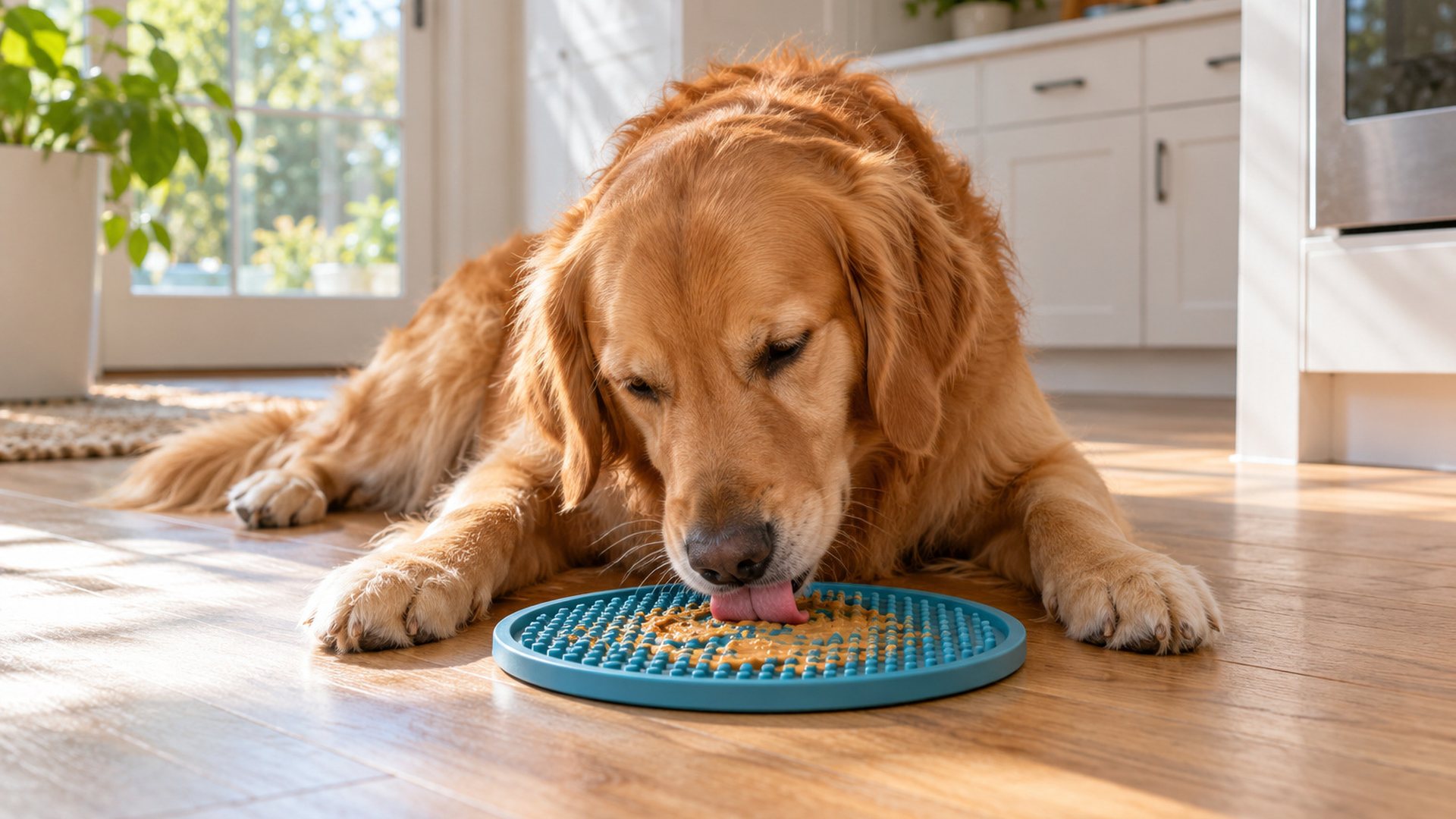
- Lick mats: spread a very thin layer across the textured surface. Licking is soothing for many dogs and slows the treat right down.
- Stuffed toys: smear a small amount inside a rubber toy and mix it with part of your dog’s normal food. The guide to what to put in a Kong has more fillings by age.
- Frozen for longer: freezing a filled toy makes it last longer, which can help during settling time or when you leave the house.
- Puzzle feeders: a dab of peanut butter on a puzzle can encourage a hesitant dog to try it. See how to choose a puzzle feeder.
- Hiding tablets: the FDA specifically reminds owners to check nut butter labels before using them to hide pills. Check with your vet first that the medicine can be given with food.
- High-value rewards: a quick lick from a spoon can reward something your dog finds hard, such as calm nail trims or vet-visit handling. For everyday training, small low-calorie treats are usually a better choice; see the guide to the best treats for training your dog.
For more low-calorie reward ideas, the site’s guide to healthy dog treats compares common options, and these enrichment ideas show other ways to keep a dog busy without adding many calories.
What to do if you think your dog ate xylitol
Because low blood sugar can begin within an hour, speed matters more than certainty. The FDA’s advice is clear: if you think your dog has eaten xylitol, contact your vet, an emergency vet clinic or an animal poison control service straight away and go in immediately. Your dog may need monitoring in hospital for 12 to 24 hours, because some serious effects can appear later.
- Remove the product so your dog cannot eat more.
- Keep the packaging or take a photo of the ingredients list, and estimate how much is missing.
- Note your dog’s approximate weight and when the product was eaten.
- Call your vet or an emergency clinic now, or a pet poison helpline where one is available in your country. Follow their instructions exactly.
- Do not try home remedies or wait for signs to appear. A dog can look normal at first.
Signs listed by the FDA include vomiting, then signs of low blood sugar such as reduced activity, weakness, staggering, poor coordination, collapse and seizures. Any of these after possible xylitol exposure is an emergency. The site’s guide on when to call the vet explains other situations that should not wait.
Common mistakes
- Trusting the front of the jar. “Natural”, “healthy” or “no added sugar” says nothing about xylitol.
- Assuming a familiar brand is always safe. Recipes and product lines change; read the label each time.
- Using a tablespoon as a “small” treat. For many dogs, that is most of a day’s treat calories.
- Forgetting the other xylitol sources. Sugar-free gum in a bag, human toothpaste and chewable vitamins cause problems too. Only use toothpaste made for dogs.
- Waiting to see if a dog gets sick. With xylitol, the time to call is as soon as you suspect it, not when signs start.
- Giving peanut butter to a dog on a special diet without asking. Dogs with pancreatitis, weight problems or other conditions may need a different treat.
Is peanut butter right for your dog?
Usually a good fit: healthy adult dogs at a good weight, dogs that need a high-value reward for something difficult, and dogs that benefit from slow licking activities.
Ask your vet first: dogs that are overweight, dogs with a history of pancreatitis or digestive upsets, dogs on prescription or weight-loss diets, and very small dogs, for whom even a teaspoon is a large share of the day’s calories. As with any new food, start with a tiny amount and watch for tummy upset.
Sources this guide draws on: US Food and Drug Administration consumer updates on xylitol and dogs; American Kennel Club guidance on dogs and peanut butter; USDA FoodData Central nutrition data for smooth peanut butter; and widely used veterinary guidance that treats should stay under about 10% of daily calories.
Handy gear for this guide
Practical picks we think suit this topic. As an Amazon Associate, Mind A Dog earns from qualifying purchases, at no extra cost to you. Prices and availability are set by Amazon and may vary by country.
- Outward Hound Fun Feeder Slo Bowl
Ridged bowl that slows down dogs who gulp their meals.
View on Amazon - LUKITO Lick Mat for Dogs (2 Pack)
Spread a little dog-safe food over it for a quiet licking activity.
View on Amazon - Amazon Basics Airtight Pet Food Storage Containers (3 Piece)
Keeps kibble and treats fresh and out of reach.
View on Amazon
Frequently asked questions
Can dogs eat peanut butter every day?
Many healthy dogs can have a very small amount daily, such as a thin smear on a lick mat, if it fits within their treat allowance and contains no xylitol. If you use peanut butter every day, keep the portion tiny and cut back on other treats. Your vet can help you set a sensible daily calorie budget.
What peanut butter is good for dogs?
The best choice is unsalted peanut butter with peanuts as the only or main ingredient and no added sweeteners. Dog-specific peanut butters are also fine, but still need a label check. Avoid reduced-sugar, “keto” and flavoured spreads unless the label clearly shows they contain no xylitol.
Are peanuts bad for dogs?
Plain, unsalted peanuts are not toxic to dogs, but they are high in fat and can be a choking hazard for small dogs or fast eaters. Salted, honey-roasted, chocolate-coated or spiced peanuts are not suitable. Peanut shells are hard to digest and are best kept away from dogs.
How fast does xylitol affect dogs?
According to the FDA, low blood sugar can start within 10 to 60 minutes of a dog eating xylitol, and other serious effects may take 12 to 24 hours to appear. That is why you should call your vet or an emergency clinic as soon as you suspect it, rather than waiting for signs.
Can puppies have peanut butter?
A tiny amount of xylitol-free peanut butter is generally fine for puppies once they are eating solid food, for example in a toy during settling time. Puppies are small and growing, so keep portions very small to protect their balanced puppy diet, and ask your vet if your puppy has a sensitive stomach.
Is peanut butter safe for cats?
The FDA notes that xylitol does not appear to be as dangerous for cats as for dogs, possibly because cats tend to avoid sweet foods. Even so, peanut butter is not a natural or necessary food for cats, and the same high fat content applies. Keep xylitol products away from all pets.
Plain, xylitol-free peanut butter, used sparingly and spread thin, is one of the easiest ways to make a dog’s day a little happier. Make the label check a habit, keep the portions small, and save your vet’s number in your phone in case you ever need it in a hurry.