
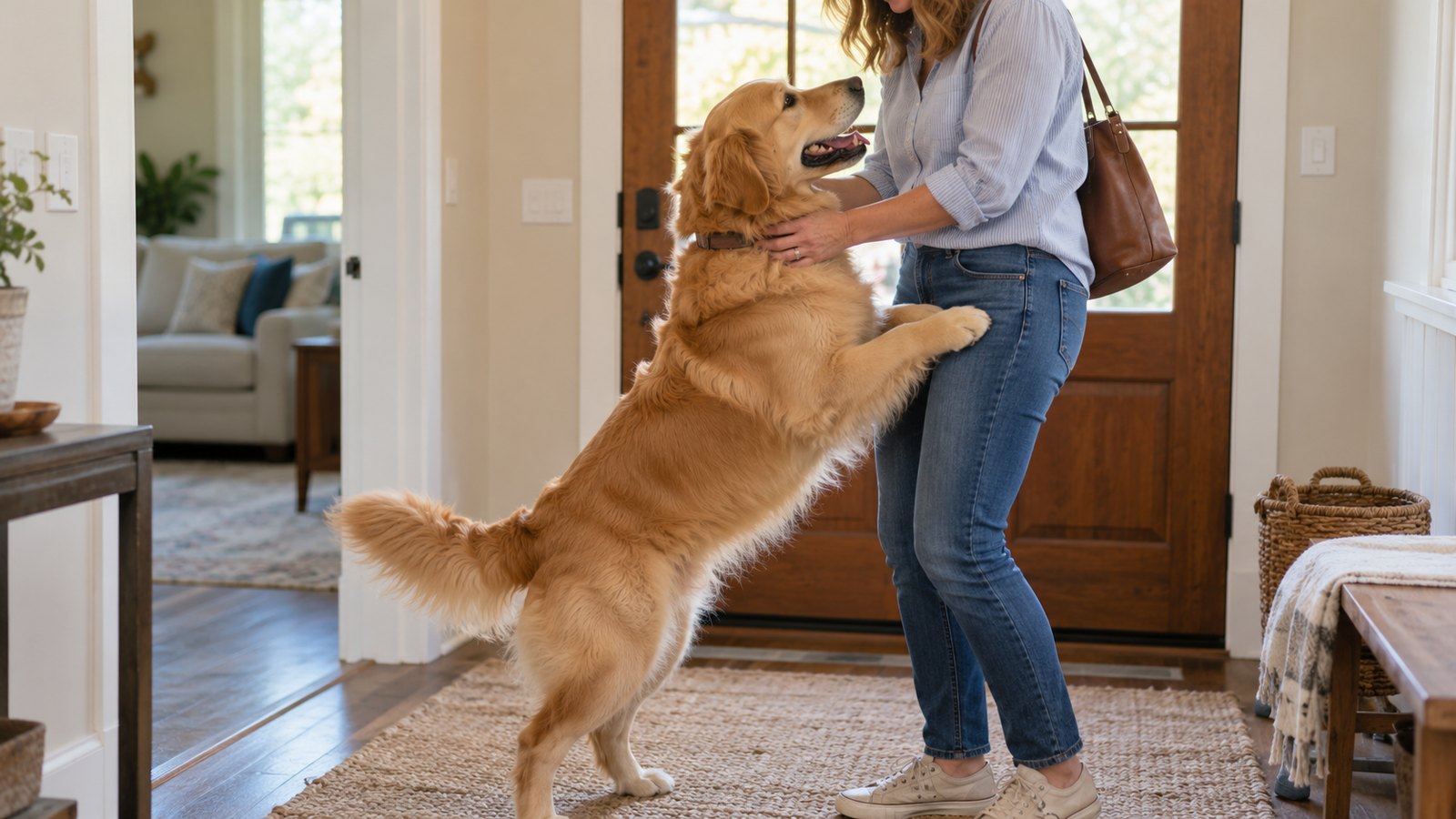
Jumping up is one of the most common things owners ask about, especially with puppies and young dogs. It can feel sweet when a small puppy does it, but a fully grown dog jumping on a child, an older relative or a visitor can knock someone over or frighten them. The good news is that jumping is easy to understand and, with kind and consistent training, very fixable.
At a glance: how to stop a dog jumping up
- Why they do it: to get attention, to greet your face, or because they are excited.
- What works: reward four paws on the floor, and give no attention for jumping.
- What to teach instead: sit, or a calm “off”, for every greeting.
- What to avoid: shouting, kneeing or pushing the dog, which can make them more excited or fearful.
- How long: most dogs improve within a few weeks of consistent practice, but every dog is different.
Why dogs jump on people
Dogs do not jump to be rude or to “take charge”. They jump because it works, and because greeting up close is natural for them.
- Attention: if jumping earns eye contact, touch or even a telling-off, the dog learns that jumping gets a response. Puppies who were cuddled for jumping often keep doing it.
- Greeting: dogs naturally try to reach faces to greet and sniff. Your dog is often just trying to say hello at your level.
- Excitement: walks, play and your arrival home can all bring a rush of energy, and jumping is one way it comes out.
- Information: a dog’s nose tells them a lot, and your face and hands are where the interesting smells are.
Because jumping is normal dog behaviour, the goal is not to punish it. The goal is to teach your dog a better way to say hello and make that better way pay off.
Six kind ways to stop jumping
1. Remove the reward: ignore the jumping
Stand still, fold your arms, turn away and say nothing. No eye contact, no touch, no talking. The moment all four paws are on the floor, calmly reward with a treat or a pat. Expect jumping to get a little worse before it improves, because the dog is testing whether it still works. Stay consistent, and make sure everyone in the house does the same.
2. Teach “sit” as the greeting
A dog cannot sit and jump at the same time. Practise sit away from the door first, then use it every time someone arrives. Ask for a sit before petting, before meals and before opening the door to the garden, so sitting becomes the way to get everything good.
3. Manage the environment
While your dog is learning, set them up to succeed. Use a lead or a baby gate when guests arrive, keep a basket of treats by the door, and ask visitors to greet your dog only when all paws are down. Management stops the habit from being practised in the meantime.
4. Meet their exercise and mental needs
A tired, mentally satisfied dog finds it easier to stay calm. Daily walks, sniffing time, and games such as hide-and-seek or food puzzles give your dog an outlet for energy. Our guide to stopping dog chewing has more ideas for keeping an active dog busy.
5. Practise with the things that excite them
Pick one trigger at a time, such as picking up the lead or coming in the door. Repeat it at a low level of excitement and reward calm behaviour, then slowly build up. Short, frequent sessions work better than long ones.
6. Teach “off” and a settle on a mat
Pair the word “off” with a reward when a dog takes their paws down, so it becomes a cue they understand rather than a telling-off. You can also teach your dog to go to a mat or bed and settle there when visitors arrive, which gives them something clear to do instead of jumping.
What not to do
- Do not knee, push or step on your dog. It can hurt them, and many dogs treat pushing as an exciting game.
- Do not shout or scold. Even negative attention can reward the jump.
- Do not be inconsistent. If jumping is allowed in old clothes but not in good ones, your dog cannot tell the difference.
- Do not use harsh devices or punishment. They can create fear and make behaviour problems worse.
Timeline and realistic expectations
Many dogs show clear improvement within a couple of weeks of consistent practice, but older habits and very excitable dogs can take longer. Progress is rarely a straight line. Expect good days and bad days, and celebrate small wins like one calm greeting. Puppies often grow out of the worst of it faster when jumping never gets rewarded. If you have just adopted, our rescue dog homecoming guide explains how to give a newly arrived dog time to settle. If you would like a book to work from, see our list of the best dog training books.
When to get professional help
Ask your vet first if the jumping is new or sudden, or if your dog seems uncomfortable, as pain can change behaviour. If your dog is also nipping, growling, guarding or very fearful, or if the jumping is causing injuries, speak to a qualified reward-based trainer or a veterinary behaviourist. This article is general information and does not replace personalised advice from your vet.
Frequently asked questions
Why does my dog jump up even after I tell them off?
Attention of any kind can reward the jump, including a telling-off. Quietly turning away and rewarding four paws on the floor is usually more effective.
Will my puppy grow out of jumping?
Some do, but many keep jumping if it keeps working. It is best to teach an alternative while they are young.
How do I stop my dog jumping on visitors?
Keep your dog on a lead or behind a gate at first, ask guests to ignore jumping, and reward sit or four paws down. Practise before guests arrive.
Is jumping a sign of dominance?
No. Jumping is usually about greeting, attention or excitement, not rank.
What if my dog is large and strong?
The same methods apply, but management matters more: use a lead or gate and ask guests to stay calm until your dog has learned to sit.
Conclusion
Stopping a dog from jumping is about patience and consistency, not punishment. Reward the greeting you want, remove the payoff for the one you do not, and give your dog plenty of exercise and mental stimulation. Within a few weeks you may be surprised at how polite your dog becomes.
Happy training,
Michelle